

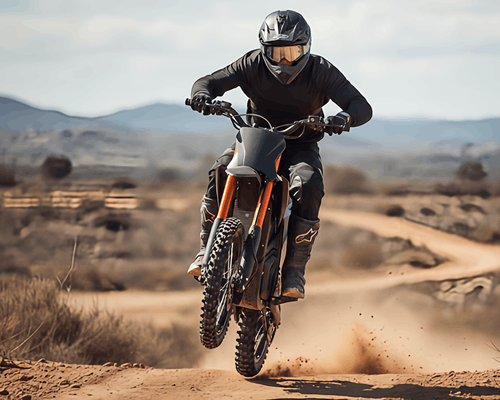
Buying an electric dirt bike feels like instant freedom, until you hit the question that decides whether the weekend is fun or frustrating: Where can I ride legally without getting turned around, fined, or sparking a conflict on the trail? Rules change based on who manages the land, what the route is designated for, and how your bike is classified. With a simple system, you can make the right call fast and ride with confidence.

Start Here: Is This Trail Legal for Your Electric Dirt Bike?
A trail can look perfect and still be off-limits. Most issues happen when riders assume that a dirt path automatically means it’s okay for motorized use. Before you unload your electric dirt bike, run this quick checklist, and you’ll avoid the most common mistakes.
Quick 60-Second Legal Checklist
- Read the posted signs first. “Non-Motorized” or “No Motor Vehicles” usually means you’re done before you begin.
- Look for motor-friendly labels. “OHV Area,” “Motorized Trail,” “Motorcycle Trail,” or clearly designated motor roads are strong green lights.
- Confirm with an official map when you’re on public land. In National Forests, the MVUM is the legal source for motorized route access.
- Avoid Wilderness areas entirely. Wilderness is typically closed to motorized use and can be enforced strictly.
- Match the trail to your bike type. Many high-power, throttle-capable machines are treated as OHVs rather than pedal-assist e-bikes.
- When it’s still unclear, call the office. A quick ranger district or park office call can save your whole day.
If you ride an electric dirt bike adult model with real torque and throttle control, it’s safest to assume motorized rules apply unless the land manager clearly states otherwise.
How to Find Legal Places Near You
After you know how to judge a trail, the next challenge is finding locations that welcome motorized riding instead of merely tolerating it. The easiest wins come from targeting places that are built for OHV traffic from the start.
For most riders, these are the most reliable options for an electric dirt bike:
- OHV Parks and riding areas that are designed for off-road bikes
- National Forest motorized routes that are explicitly shown as open on the MVUM
- BLM areas with motorized designations, where OHV travel is open and clearly defined
A quick way to keep your planning clean is to think in categories, then confirm with the authority that matters most for that location.
|
Riding Area Type |
Usually Works for Motor Riding? |
What You Must Confirm |
|
|
OHV Park |
Yes |
Entry rules, hours, required permits |
|
|
BLM Open OHV Area |
Often |
Route designation and closures |
|
|
National Forest Motorized Routes |
Often |
MVUM shows it’s open |
|
|
Hiking or MTB Singletrack |
Rarely |
Posted use rules, agency restrictions |
|
If you’re scanning dirt bikes for sale, this approach also prevents a common frustration: buying a capable electric dirt bike and then realizing your nearby trail system is almost entirely non-motorized.
Which Apps and Websites Help You Find Legal Trails?
Trail apps can save time, but they’re best used as discovery tools rather than final permission slips. A smart routine is locating potential riding areas with apps first, then confirming legality with official sources when the land is publicly managed.
onX Offroad
onX Offroad is strongest when land boundaries are messy, especially near trailheads that sit close to private property. It helps reduce property line mistakes, clarifies access routes into a riding area, and highlights public parcels that may be landlocked without a legal entrance.
Trailforks
Trailforks is useful for local trail discovery and community updates, and it includes e-bike access indicators such as allowed, not allowed, or unknown. That said, many systems inside Trailforks are built around mountain biking networks, so a route that looks attractive may still be non-motorized. For an electric dirt bike, it works best as a scouting tool, followed by a rule check.
Avenza Maps
Cell service drops fast in remote terrain, so offline mapping can turn a risky outing into a smooth one. The Forest Service provides georeferenced MVUM PDFs that can be used inside Avenza, allowing you to see your GPS position directly on the official motorized map.
Gaia GPS
Gaia GPS is popular for planning and overlays, including a U.S. Forest Service MVUM layer that helps riders understand access and restrictions while mapping a route.

What Public Land Rules Should You Check Before You Ride?
Once you leave a dedicated OHV park, legality depends on who manages the land. You don’t need to memorize regulations across the country, but you do need to know which source is “the one that counts” for your riding area.
National Forest: MVUM Is the Key
In National Forests, the MVUM defines which roads and trails are open to motor vehicles. The most reliable routine is to identify the forest and ranger district, download the MVUM, and confirm the specific segment you plan to ride before you head out.
BLM Land: Check OHV Designation and Local Closures
BLM guidance explains that e-bikes are allowed on roads and trails open to OHV use, and in areas designated open to OHV travel, while access on non-motorized trails requires written authorization. Since many electric dirt bike models are treated more like OHVs than standard e-bikes, the safest practice is sticking to clearly motorized areas unless the local field office confirms otherwise.
Local Requirements: State and County Rules Vary
Permits, OHV stickers, seasonal fire restrictions, and temporary closures can vary widely by state, county, and district. When you need certainty, a direct question works best: “Is this route open to motorized motorcycles or OHVs today?”
Ride Responsibly: Private Land, Trail Etiquette, and Safety Basics
Legal access is the baseline. Responsible behavior is what keeps areas open and prevents the kind of complaints that lead to closures. That matters to everyone riding an electric dirt bike adult setup and hoping for more places to ride next season.
Private Land: Permission First
Private land requires clear permission, and having it in writing, even as a text message, is far better than relying on assumptions. Property boundaries can be confusing near popular riding zones, so land-ownership tools help reduce accidental trespass and unnecessary conflict.
Trail Etiquette That Prevents Conflict
Even on motorized routes, you’ll still meet hikers, mountain bikers, families, and sometimes horses. Slowing down early when you see people ahead, passing wide and calmly, keeping speeds low near trailheads, and staying on the designated route all reduce conflict and limit trail damage that can trigger closures.
Safety Habits That Pay Off Fast
Exploring solo sounds great until a mechanical issue or navigation mistake turns into a long walk. Let someone know your riding area and expected return time, carry water and a basic tool kit, keep offline navigation available, and turn back when visibility drops or conditions shift. Those habits help keep small problems from becoming emergencies.

Ready to Ride? Choose an Electric Dirt Bike Built for Real Trails
Once you’ve mapped out a few legal spots, the last piece is choosing a ride setup that fits the terrain you’ll actually face. If you’re browsing dirt bikes for sale, look for suspension you can trust, enough range to finish your loop with margin, and torque that stays smooth on loose climbs. Pair that with a clear plan, offline maps, and basic safety habits, and every ride feels simpler. Less guesswork, fewer surprises, and a lot more time on the trail with your electric dirt bike.
FAQs
Q1: Does it require registration to operate an electric dirt bike?
Yes, in certain jurisdictions. Many states designate electric dirt bikes as off-highway vehicles (OHVs), which may require the rider to obtain a registration, an OHV sticker, or a permit to ride the dirt bikes in designated public areas. The regulations vary from state to state as well as from one park or facility to the next. It is suggested that the individual visit the website of the state’s OHV program as well as the entry regulations for the particular park or facility they are interested in using.
Q2: Is road access allowed to reach a trail on an electric dirt bike?
Typically, no. Electric dirt bikes are not street-legal from the manufacturer, and riding on public roadways can involve title, license plate, insurance, lighting, and DOT requirements. Some states may allow crossing the road, but this is different from riding on the road. It is vital to check the laws of the region and avoid roadside riding unless full compliance is achieved.
Q3: Do the low levels of noise generated by electric dirt bikes cancel out the need for a spark arrestor?
No. Most electric dirt bikes don’t need a spark arrestor because they have no exhaust system. However, “quiet” doesn’t mean “rule-free.” Public lands can still enforce speed limits, equipment requirements (like helmets), and area restrictions for motorized vehicles. Tire noise and aggressive riding can also trigger complaints, so always follow posted rules.
Q4: How can one identify whether a trail is closed due to temporary conditions like bad weather or risk of fire?
Reliable sources of information before traveling: Temporary closures of trails are frequent during peak fire danger season, high levels of precipitation, and flooding. The most reliable sources of information on trail closures can be accessed on the land manager’s official website, social media from official sources, or a recorded telephone line from a district or park where a trail is to be visited. Although user-generated apps can be useful in providing information on trail closures, this type of information can also come with a delay.
Q5: What provisions should be made for battery range and emergency recovery on extended outings?
Continue with a formal plan that exceeds the mere charge capacity. Pack a compact tool kit, tire repair kit, water supply, and an offline navigation system. For the range concerns, keep a safe buffer in mind and consider retracing the route in case of adverse weather. A small portable power supply for mobile devices in a remote environment can make a great difference in safety and survival.

Hinterlasse einen Kommentar
Alle Kommentare werden vor der Veröffentlichung geprüft.
Diese Website ist durch hCaptcha geschützt und es gelten die allgemeinen Geschäftsbedingungen und Datenschutzbestimmungen von hCaptcha.