
6000W E-Motos Tested: Real-World Range, Speed, and Essential Upgrades


Many riders eyeing a 6000W electric dirt bike wonder whether the headline wattage will actually deliver the thrilling speed and usable range promised in marketing materials, or if real-world trail conditions will quickly expose limitations. In practice, a 6000W label can produce satisfying acceleration and top speeds in the 40-55 mph range under moderate conditions, but aggressive off-road riding on a 72V battery often compresses both speed consistency and range to 15-35 miles depending on terrain, rider weight, and throttle habits. This article translates the hype into practical thresholds, scenario flips, and upgrade priorities so you can decide whether a particular 6000W e-moto fits your riding style before you buy.

How Wattage Claims Can Mislead Buyers
A 6000W rating sounds impressive, yet it rarely tells the full story of how an off-road e-moto will perform once the wheels leave pavement. The number usually refers to peak motor output rather than sustained power, and real delivery depends heavily on the controller's current limits, battery voltage sag under load, gearing, tire traction, and rider inputs. As official guidance from the WSU Energy Program explains, wattage alone does not reliably predict speed or range because terrain, rider weight, and operating conditions change the outcome materially.
This leads to several common myths. One widespread claim is that 6000W automatically guarantees very high top speed and effortless hill climbing in any terrain. In reality, sustained performance is bounded by controller tuning, battery health, and how much power the drivetrain can put to the ground without wheel spin or overheating. Another myth suggests the same wattage rating will deliver big real-world range; yet higher speeds, repeated acceleration, soft dirt, or steep grades can cut usable distance sharply. A third misconception treats the watt figure as the primary buying metric. Experienced riders instead look at the full powertrain—controller, battery capacity in watt-hours, and thermal management—because these factors often limit what the motor can actually achieve on the trail.
Realistic Speed Expectations for 6000W Off-Road E-Motos
Real-world top speed for a 6000W electric dirt bike typically falls in a practical 40-55 mph band rather than an absolute maximum printed on a spec sheet. On firm surfaces with a lighter rider and moderate throttle, many well-tuned 72V setups can approach or briefly exceed 50 mph. Once you add hills, sand, mud, heavier riders around 200+ pounds, or aggressive riding that demands repeated bursts, the bike often settles into a more consistent 40-48 mph zone where the motor still feels strong but does not sustain peak output indefinitely.

These boundaries are not lab-certified absolutes. They come from synthesizing how terrain and load affect power delivery, consistent with academic and official EV analyses that show higher speed and tougher conditions reduce both efficiency and achievable velocity. Gearing choices also play a major role: a setup optimized for low-end torque may feel quicker off the line but reach a lower terminal speed than one geared for top-end. Always verify the controller's continuous amperage rating and the bike's thermal limits before assuming any specific velocity.
Range on 72V Batteries Under Real Trail Conditions
Range is one of the most variable specifications for high-power electric dirt bikes. A 72V battery pack can deliver respectable distance on gentle terrain with conservative riding, yet the same setup often provides only 15-35 miles once aggressive throttle, repeated climbs, loose surfaces, and stop-start trail riding enter the picture. As noted in research on electric vehicle routing and energy use, higher speeds, elevation changes, and difficult terrain reduce range significantly because the motor draws more current to maintain momentum or overcome resistance.
Battery state of charge, usable capacity, and long-term degradation further influence results. A new pack at full charge will outperform a partially discharged or aged one, even if both carry the same nominal voltage. The WSU Energy Program documentation underscores that real-world range varies materially with speed, terrain, rider weight, and weather, so spec-sheet estimates should be treated as best-case rather than expected figures.
Here is a visual comparison of how performance typically shifts across riding scenarios:
6000W E-Moto: Practical Speed and Range by Riding Scenario
Modeled thresholds from real-world factors and community reports — not official test data.
View chart data
| Category | Practical top speed (mph) | Practical range (miles) |
|---|---|---|
| Ideal / mild riding | 55.0 | 35.0 |
| Mixed trail riding | 48.0 | 24.0 |
| Aggressive off-road riding | 40.0 | 15.0 |
Illustrative heuristic ranges synthesized from viewpoint-insighter modules, community reports, and real-world factors (terrain, rider weight, throttle usage). Not official test data; values show practical thresholds rather than measured averages.
The chart illustrates modeled heuristic ranges. Mild riding can reach the upper end of practical performance, while aggressive off-road use compresses both metrics. These are not measured test results from any specific model; treat them as decision boundaries to evaluate whether a claimed specification aligns with your intended use.
Essential Upgrades for Aggressive Trail Riding
Raw motor power matters less than how effectively that power reaches the ground and how well the bike handles the resulting forces. For serious off-road use, suspension, tires, and brakes often provide more noticeable improvements than simply chasing higher wattage numbers. The Guide E-Bike from WABA emphasizes that suspension, wide knobby tires, and powerful brakes are critical for aggressive trail riding, often mattering as much as motor output itself.
Top upgrade priorities include:
- Suspension tuning or replacement: Stock forks and shocks may feel adequate on smooth trails but can bottom out or lack control on technical sections. Upgraded components that allow adjustment for rider weight and load deliver better traction and confidence.
- Knobby off-road tires: Street-oriented rubber struggles in loose dirt or mud. Proper knobby tires with the right tread pattern and appropriate pressure improve grip and reduce the chance of unexpected slides.
- Brake upgrades: Higher speeds and repeated stops on trails demand strong, fade-resistant hydraulic disc brakes. Upgraded levers and calipers can shorten stopping distances and give more precise control.
- Battery protection and management: Secure mounting, vibration dampening, and proper charging habits protect the high-voltage pack. Lithium-ion safety remains important; the CPSC guidance on battery fires highlights the need for careful charging and storage practices.
Tire pressure should be checked and adjusted for rider weight and terrain before hard riding, as outlined in motorcycle tire guidance from the MIC. Suspension settings may also need personalization rather than blind adherence to factory recommendations.
How to Compare 6000W Models in 2026 Without Getting Lost in Specs
When shopping, move beyond the wattage number and build a quick checklist that reflects your actual riding. First, confirm whether the 6000W figure represents peak or continuous output and what controller amperage supports it. Second, ask for battery capacity in watt-hours rather than voltage alone, since usable energy determines range more directly. Third, evaluate the bike's weight and your own; heavier combined mass reduces both acceleration and range.
Consider your typical terrain. If you mostly ride moderate trails with limited elevation, a well-balanced 6000W setup may feel plenty capable. For frequent steep climbs, deep sand, or long technical rides, prioritize models with robust suspension, aggressive tires, and proven thermal management even if that means slightly lower advertised top speed. Test ride when possible, or at minimum watch owner videos that show the same model under conditions similar to yours.
A practical buyer checklist includes:
- Does the seller provide controller details, battery chemistry, and test conditions for speed/range claims?
- Are the tires and suspension clearly suited for off-road rather than casual use?
- Is the battery mounting secure and protected against trail debris and vibration?
- Can suspension and tire pressure be tuned to your weight and typical load?
- Does the overall build quality and warranty support the intended aggressive riding style?
Answering these questions helps separate marketing from reality and reduces the chance of disappointment after purchase.
When a 6000W E-Moto May Not Be the Right Choice
Not every rider needs or will benefit from the highest power class. If your trails are mostly gentle fire roads, short loops, or you prefer relaxed riding, a lower-wattage model with strong battery capacity and good efficiency may deliver a more pleasant experience at lower cost and weight. Riders who frequently encounter very technical terrain where traction and precise control matter more than raw speed might find that upgraded suspension and tires on a slightly less powerful bike outperform an untuned high-wattage machine.
Those new to off-road riding should also consider starting with a more moderate setup to build skills before stepping up to a bike that can reach higher speeds quickly. Existing owners looking to upgrade should focus first on the weakest link in their current setup—often tires, brakes, or suspension—rather than automatically jumping to the highest wattage available.
Safety and Maintenance Reminders for High-Power E-Motos
High-output electric dirt bikes deserve respectful handling. Always follow manufacturer charging guidelines, avoid extreme temperatures during storage, and inspect battery connections and wiring regularly. This article discusses comfort, setup, and performance considerations only. It does not constitute medical advice, diagnosis, or treatment. If you experience persistent discomfort, dizziness, or have existing health conditions, consult a qualified professional. For lithium-ion battery safety questions, refer to official consumer product safety resources.
Proper maintenance further protects your investment. Regular chain lubrication, brake pad checks, and bolt torque inspections keep the bike reliable. The practical tips in our electric dirt bike maintenance guide can help extend component life and preserve performance.
Final Takeaways for 2026 Buyers
A 6000W electric dirt bike can deliver exciting performance when the full powertrain and rider setup align with the demands of the trail. Focus less on the wattage sticker and more on controller capability, battery quality, tire and suspension appropriateness, and how the bike behaves under your specific riding conditions. By applying the thresholds, scenario awareness, and upgrade priorities outlined here, you can make a more informed decision and choose—or modify—a machine that actually matches the way you ride.
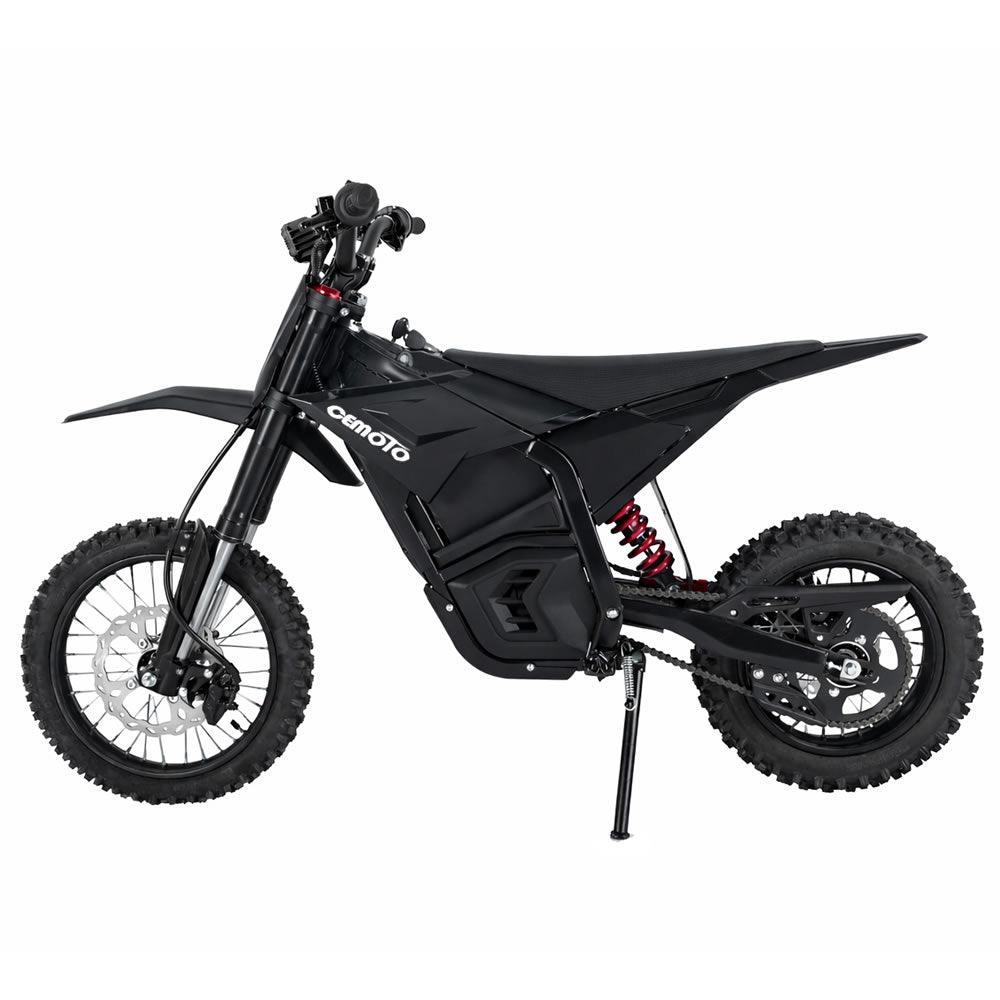
If you are exploring the CEMOTO D-Series with its configurable power options up to 6000W, review the CEMOTO D-Series off-road electric dirt bike and related accessories to see how the platform can be tailored for your needs. For broader context on choosing between gas and electric options, our gas vs electric dirt bike comparison offers additional perspective.
Real-world testing and honest expectations remain the best tools for avoiding disappointment. Ride within your skill level, maintain your equipment, and enjoy the instant torque and low-maintenance benefits that make modern electric dirt bikes compelling alternatives to traditional two-stroke machines.
