
Best 3000W to 6000W Electric Dirt Bikes for Trail Riding


High-power electric dirt bikes in the 3000W to 6000W range can deliver strong acceleration and torque for trail riding, but the best choice depends heavily on your experience level, the terrain you ride, battery capacity, and suspension quality rather than peak wattage alone. For many adult riders, a well-balanced 3000W–4000W model with ample battery watt-hours often provides better real-world usability on trails than chasing the highest power number.

Understanding Power Ratings in Electric Dirt Bikes
The terms 3000W, 4000W, 5000W, and 6000W typically refer to the motor's nominal or peak power output. In practice, peak wattage alone does not tell the full story for trail performance. A 6000W motor can provide explosive acceleration and better hill-climbing capability, but it often comes with trade-offs in weight, heat generation, and battery drain.
As this official federal guidance on electric bikes notes, many high-power dirt-bike-style machines fall outside standard 750W e-bike classifications and are treated primarily as off-road vehicles. Always check local land-management rules, since trail access for motorized equipment varies.
3000W vs 6000W: Real-World Trail Performance Differences
On trails, the differences show up in controllability, range, and rider fatigue more than top speed.
A 3000W bike generally offers smoother power delivery that newer riders find easier to manage, with less risk of sudden wheel spin on loose surfaces. Models in this range often feel lighter and more agile on technical singletrack.
Higher 5000W–6000W setups shine on steep climbs and fast open sections, delivering stronger torque for pulling through deep ruts or sand. However, the extra power can make the bike harder to control for less experienced riders and increases the chance of overheating during prolonged aggressive use.
Independent reviews highlight that ride feel and component quality vary as much as headline power numbers, making direct head-to-head testing important before purchase.
Battery Capacity, Voltage, and Range Explained
Battery capacity measured in watt-hours (Wh) is a far more reliable indicator of range than motor wattage. As this guide to e-cycle batteries explains, battery watt-hours provide a better starting point than watts alone when estimating how far you can ride.
A rough heuristic is to divide battery Wh by a ride-conditions factor (often 15–35 depending on terrain, speed, and throttle use), but real-world trail range can vary dramatically. Published mileage claims should be treated as best-case scenarios, especially off-road where steep climbs, sand, and aggressive throttle use reduce distance significantly.
Higher-voltage systems (typically 48V–72V in this power class) can improve efficiency and torque, but they also add weight. For weekend trail riding, look for at least 40–60Wh per expected mile of mixed terrain to avoid range anxiety.

Suspension, Brakes, and Frame Features That Matter Most
Trail riding punishes poor suspension. Full suspension or high-quality front forks with at least 150–200mm of travel help absorb impacts and reduce rider fatigue on rough terrain. As noted in consumer testing, better damping materially improves comfort on rough trails.
Strong hydraulic disc brakes are essential for controlling speed on descents, while a robust frame (preferably aluminum or chromoly) provides the durability needed for repeated drops and rock strikes. Tire choice also plays a major role—aggressive knobby tires improve traction but increase rolling resistance and reduce range.
Comparison Framework: How to Choose the Right Power Level
The optimal power level depends on rider experience, priorities, and typical terrain. Beginners often benefit from more controllable power delivery, while experienced riders who prioritize acceleration may prefer higher-output models.
Here is an illustrative heuristic chart summarizing scenario-based guidance:
When to Choose 3000W vs 6000W for Trail Riding
Use this as a scenario-based guide, not a factual performance ranking.
View chart data
| Category | Preferred for Range | Preferred for Acceleration | Recommended Power (3000W) | Recommended Power (6000W) |
|---|---|---|---|---|
| Beginner | 5.0 | 2.0 | 5.0 | 2.0 |
| Experienced | 3.0 | 5.0 | 2.0 | 5.0 |
Illustrative heuristic chart based on the article's decision logic: battery Wh is a better proxy for range than watts, suspension affects comfort, and controllable torque tends to suit beginners. Values are relative scores (1-5), not measured performance data; no false precision implied.
This chart uses relative scores (1–5) for illustration only. Range should still be judged mainly by battery watt-hours and system efficiency.
Buying Checklist: What to Evaluate Before Purchasing
Use this practical checklist when comparing models:
- Battery: Prioritize watt-hours over motor watts. Aim for enough capacity for your longest planned ride plus reserve.
- Controller and Throttle Response: Look for smooth, adjustable power delivery rather than raw peak output.
- Suspension Travel and Adjustability: At least 150mm recommended for adult trail use.
- Brakes: Hydraulic discs with large rotors for reliable stopping power.
- Weight: Lighter bikes are easier to maneuver on technical trails but may sacrifice battery size.
- Build Quality: Check frame durability, component brands, and availability of replacement parts.
Compare more than price and wattage. As Consumer Reports guidance on electric mountain bikes emphasizes, component quality and ride feel matter significantly.
Important Note on Trail Access: Electric dirt bikes used on trails may be subject to specific land-use rules. Some areas treat higher-power machines differently from standard bicycles. Refer to official sources such as the BLM e-bike final rule for public land guidance.
Common Myths About High-Power Electric Dirt Bikes
Myth: Higher wattage always equals better trail performance. Reality: Excessive power can reduce controllability and range on technical trails.
Myth: All high-power e-dirt bikes offer similar range. Reality: Battery capacity and riding style create wide variation in real-world distance.
Myth: Peak power numbers are directly comparable across brands. Reality: Different testing methods and controller tuning make cross-brand wattage claims unreliable.
CEMOTO D-Series for Trail Riders
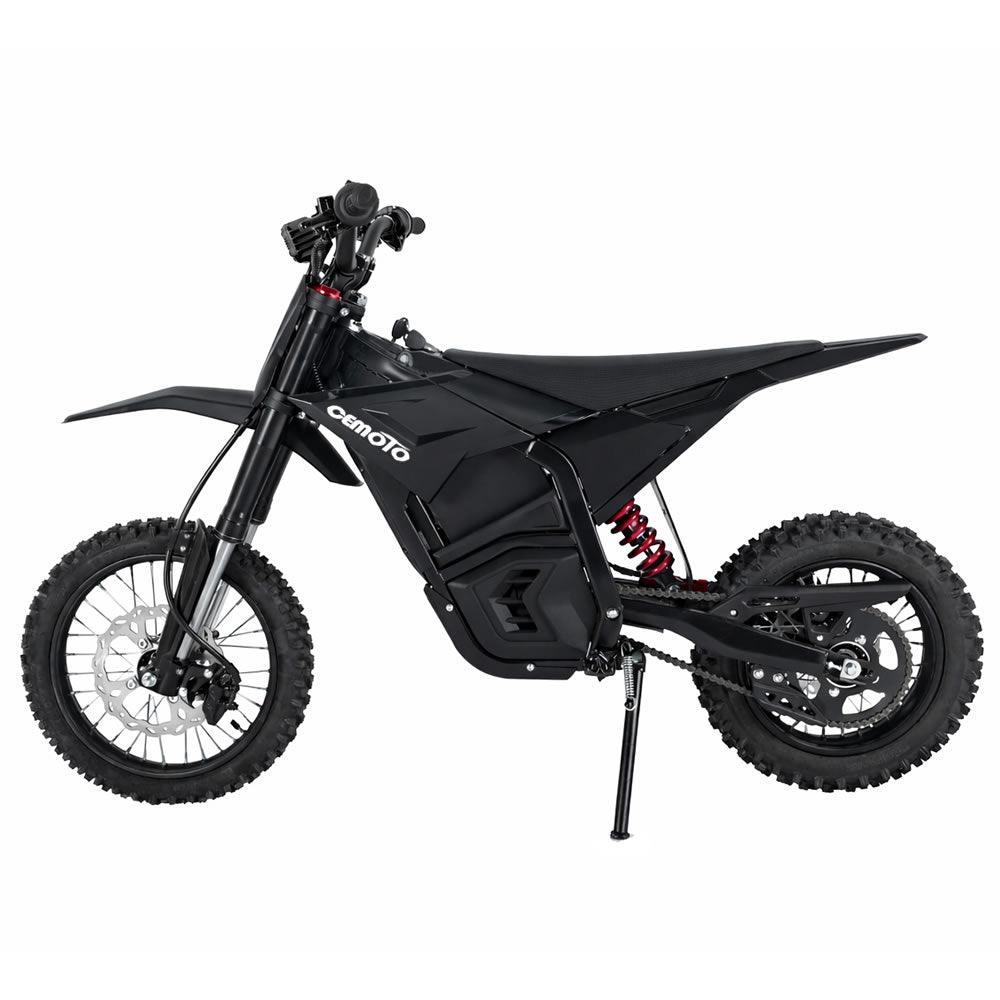
The CEMOTO D-Series 3000W–6000W Off-Road Electric Dirt Bike is designed specifically for adult and teen trail riders seeking a balance of power and usability. Available in multiple configurations, these models emphasize durable suspension, strong torque delivery, and practical range for recreational off-road use.
For those exploring the category, the CEMOTO D02 model offers a strong entry point into higher-performance electric dirt biking.
Riders interested in the full ecosystem can browse the Electric Dirt Bikes collection or check accessory options for protective parts and upgrades.
Additional practical guidance is available in our article on Gas vs Electric Dirt Bike — What You Need to Know and What Is an Electric Dirt Bike and How Does It Work?.
Final Buying Advice
Avoid choosing based solely on the highest wattage rating. Focus on battery capacity, suspension quality, and power delivery that matches your skill level and typical trail conditions. Test ride when possible, calculate expected range conservatively, and verify local trail access rules for motorized vehicles.
Disclaimer: This article discusses comfort, setup, and purchasing considerations for off-road electric dirt bikes. It does not constitute medical advice. If you experience discomfort or have existing health conditions, consult a qualified professional. Range and performance claims are estimates that depend heavily on riding style, terrain, maintenance, and environmental factors.
Choosing thoughtfully helps ensure your high-power electric dirt bike becomes a reliable trail companion rather than a source of frustration.
