

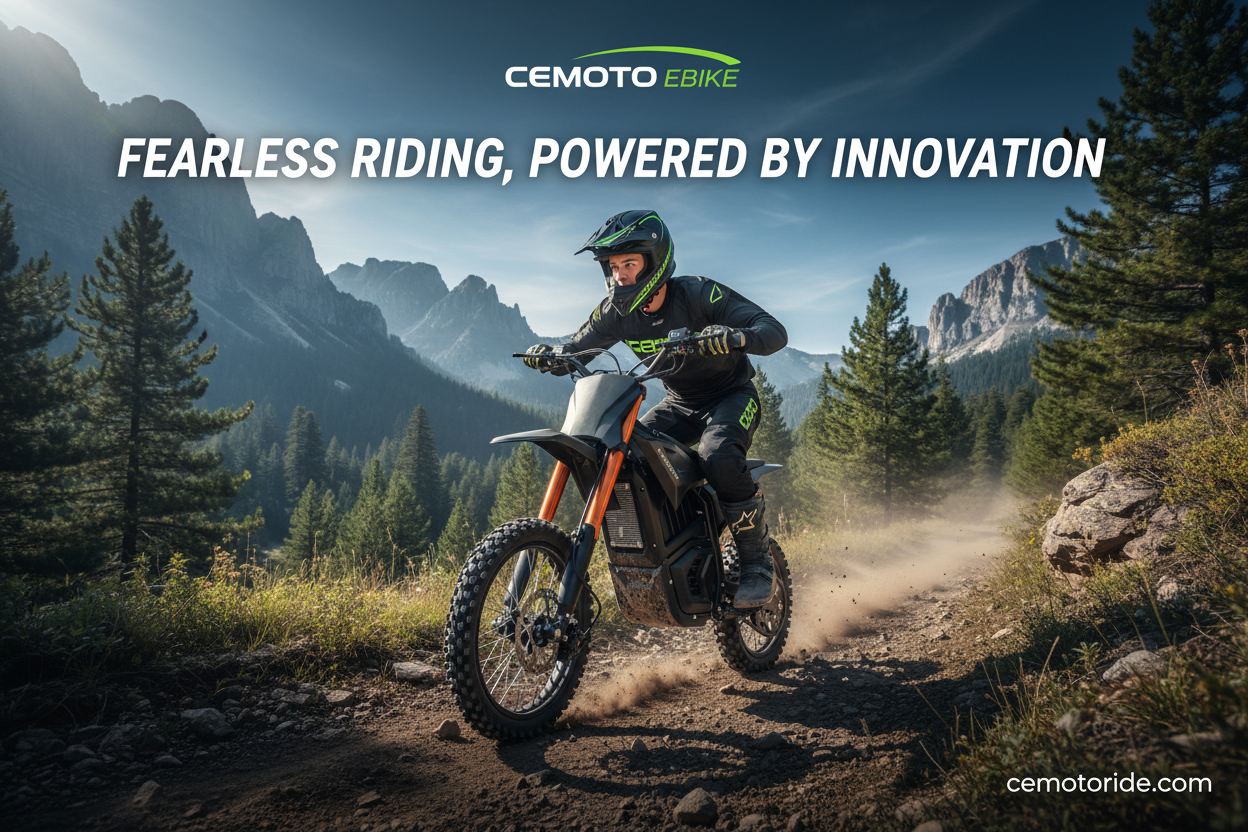
Getting stranded miles from your truck with a dead battery ranks among every rider's worst nightmares. Your electric dirt bike offers incredible torque and whisper-quiet performance, but range anxiety can steal the joy from any adventure. Learning to stretch every electron from your battery pack transforms how far you can explore and how confidently you ride.
What Factors Quickly Drain Battery Power During Off-Road Adventures
Battery management starts with recognizing what consumes power most aggressively on trails. Several elements work against your range simultaneously.

Aggressive Throttle Application
Constant full-throttle acceleration devastates battery reserves faster than any other riding habit. Each twist to maximum power draws peak current from your cells. This generates substantial heat and depletes energy stores at an alarming rate.
Many riders new to electric dirt bike adult models underestimate how dramatically throttle control affects range. Smooth, progressive acceleration preserves battery life far better than abrupt power demands. The difference between aggressive and measured throttle inputs can mean 30% more trail time.
Weight Considerations
Total system weight significantly impacts energy consumption. Your body weight, gear, backpack, and any cargo all demand more power from the motor. A 200-pound rider carrying a heavy pack requires substantially more energy than a 150-pound rider with minimal gear.
Some best electric dirt bike models compensate better for weight variations through efficient motor designs. Still, reducing unnecessary cargo extends range noticeably. Consider what you truly need on each ride.
Elevation Changes and Hill Climbing
Climbing steep grades consumes exponential amounts of battery power compared to flat terrain. Your motor must fight gravity continuously, drawing maximum current to maintain momentum. Long ascents drain batteries with shocking speed.
Descending provides some regenerative charging on models equipped with regen braking, but this rarely offsets the energy spent climbing. Planning routes with elevation awareness helps you estimate realistic range expectations.
Ride Modes Matter: Choosing the Right Power Setting for Trail Conditions
Modern electric dirt bikes feature multiple power modes that dramatically alter battery consumption. Understanding when to use each mode separates experienced riders from beginners.
Eco Mode for Maximum Distance
Eco mode limits peak power output and throttle response to conserve energy. This setting works beautifully for fire roads, connecting trails, and sections where aggressive power isn't necessary. You'll sacrifice acceleration and top-end performance, but gain substantial range extension.
Many low cost dirt bike options include at least two power modes. Using Eco strategically on easier sections can extend your ride by 40-50% compared to staying in Sport mode constantly.
Sport Mode for Technical Sections
Technical terrain demands immediate power response. Rock gardens, steep climbs, and challenging obstacles require Sport or full-power modes. Attempting technical features in Eco mode often proves dangerous, forcing multiple attempts that waste more energy than a single successful pass at higher power.
Reserve your aggressive power modes for sections that genuinely require them. Switch modes frequently throughout your ride based on terrain demands.
Custom Mode Programming
Some models allow custom power curve programming. This enables you to create a balanced setting between Eco and Sport that matches your riding style and typical terrain. Experiment with custom settings during shorter rides to find your optimal balance.

The Art of Coasting: Using Momentum to Save Energy
Momentum Management is perhaps the most untapped technique for battery conservation. Experienced cyclists use speed in their favor rather than relying on power.
Look ahead to the terrain to come and coast when you can. As soon as you see an opportunity to coast through an even or downhill section of road, ease off the throttle and let the momentum move you along. Turning off the throttle switch saves battery life with every second.
Rolling hills are great for managing momentum. Accelerate downhill, then use that momentum to propel yourself up the next hill. This alone will increase your range by 15 to 20%.
Train your eyes to read the trail that follows ahead of you instead of focusing on the ground immediately in front of your wheel. In this way, you will be able to plan your pedaling strategy ahead of time.
The Impact of Tire Pressure and Terrain on Range
Tire setting uses far more battery power than most riders know. Rolling resistance and power needs are greatly affected by both pressure and tread pattern.
Finding the Optimal Pressure Range
| Terrain Type | Pressure Range (PSI) | Range Impact |
| Hardpack | 12-15 | Baseline |
| Mixed Trail | 10-13 | -5 to -10% |
| Soft Sand | 6-8 | -20 to -30% |
| Rocky Technical | 11-14 | -10 to -15% |
Higher pressure reduces rolling resistance on hard surfaces but compromises traction and comfort. Lower pressure improves grip on loose terrain but increases the contact patch and rolling resistance. Finding the sweet spot for your typical trails makes a measurable difference.
Check pressure before every ride. Temperature changes affect tire pressure significantly, and proper inflation optimizes both performance and battery efficiency.
Terrain Selection Strategies
Loose sand, deep mud, and snow demand exponentially more power than hardpack trails. Your motor must overcome constant resistance from sinking tires. If range matters for a particular ride, avoid the most energy-intensive terrain types.
Whenever possible, ride established trails rather than breaking new ground through virgin terrain. Packed surfaces require far less energy to traverse.

Cold Weather Riding: Protecting Your Battery Performance in Winter Conditions
Temperature dramatically affects lithium battery chemistry and performance. Cold weather presents unique challenges that require specific strategies.
Cold Weather Effects
Performance below 40°F causes batteries to lose 20-40% effective capacity. The chemical processes occur slower, and resistance inside the battery increases. Although battery bars may appear full on your display, battery performance is reduced.
Never leave the electric dirt bike in subfreezing temperatures. Store the battery in a heated room for the night and mount the battery right before you go out for a ride.
Pre-Ride Warming Techniques
If riding in cold conditions, warm the battery before hitting technical terrain. Gentle riding in Eco mode for the first 10-15 minutes generates internal heat through discharge activity. Once the pack reaches optimal operating temperature, you'll notice improved power delivery and range.
Some riders use insulated battery covers or wraps to maintain warmth during cold-weather adventures. These accessories help sustain temperature once the pack warms up.
Realistic Range Expectations
Adjust your range estimates downward by 30-40% when temperatures drop below freezing. What might be a 30-mile ride in summer becomes a 20-mile maximum in winter. Plan accordingly and leave substantial safety margin.
What to Do If You're Running Low in the Woods
Even after all your preparations, you might end up in situations where your battery level becomes critical when you are far away from your vehicle. There are a number of techniques that you should employ to make sure you do not have to walk out of your range.
Switch to Eco mode immediately, independent of the terrain difficulties. Make compromises on the pace instead of running the batteries completely dry. Hike technical trails instead of attempting them while powered. The efficiency of your motor varies considerably when your batteries are almost depleted.
Cut as much weight as possible. Get rid of unnecessary equipment, empty water bottles, whatever is heavy. Every ounce saves energy.
Scout the path on foot before attempting difficult areas. It will take two minutes to walk 50 yards, but it could help reserve enough power to ride an extra mile. Always take the easiest route back.
Some models go into a limp-home mode when the battery is at critical levels, restricting the car’s speed to 5-10 mph. This is an ultra-conservative power delivery strategy that will extract mileage from the last 5% of battery life.
Upgrading for Range: Are Extra Batteries Worth It?
Range anxiety leads many riders to consider additional battery capacity. The cost versus benefit calculation requires honest assessment of your riding patterns.
Second Battery Advantages
Carrying a spare battery essentially doubles your potential range. You can explore more distant trail systems, tackle longer loops, and ride with confidence. Swapping batteries takes only minutes and requires minimal tools on most models.
For riders who frequently push their machine's limits or explore remote areas, a second battery provides genuine peace of mind. The investment pays dividends through expanded riding opportunities.
Weight and Cost Considerations
Quality battery packs cost $800-2,000 depending on capacity and voltage. That investment might exceed the price difference between your current low cost dirt bike and a higher-capacity model. Evaluate whether upgrading to a best electric dirt bike with larger stock capacity makes more financial sense.
Additional batteries add 15-30 pounds to your gear. Carrying this weight in a backpack affects your riding and fatigues you more quickly. Consider mounting options that distribute weight on the bike frame rather than your body.
Practical Alternatives
Before investing in extra batteries, maximize your existing capacity through improved riding techniques. Many riders discover they can extend range by 30-40% simply through better throttle management, mode selection, and momentum conservation.
Track your actual range over multiple rides at different power levels. You might find your standard battery meets 90% of your needs, making that expensive second pack unnecessary for most adventures.

Take Control of Your Range
Battery management transforms from anxiety to advantage once you master these techniques. Your electric dirt bike becomes more capable, not less, when you understand how to stretch every mile from available power.
Start implementing these strategies on familiar trails where running low carries minimal consequences. Build your efficiency skills gradually, and you'll soon ride farther with greater confidence than you imagined possible.
Frequently Asked Questions
Q1: How Much Does Terrain Really Affect My Electric Dirt Bike's Battery Life?
It's also important to think about how the type of terrain might cause ranges to change a lot. Hardpack trails are a sign of efficiency, but sandy ground can cut it by up to 30%, and mud and snow can cut it by 40% to 50%. It takes a lot more power to climb steep hills than it does to walk on flat ground.
Q2: Can I Damage My Battery by Running It Completely Empty on the Trail?
Most will have protection circuits to safeguard against true deep discharges, but charging to absolute zero repeatedly will accelerate aging. It’s best to keep lithium batteries between 20% to 80% capacity. It’s a good practice to aim to finish your rides with at least 10-15% capacity left whenever possible.
Q3: Does Riding Style Really Make a 30% Difference in Range?
Absolutely. Aggressive throttle application, constant full-power acceleration, and poor momentum management can reduce range by 30-40% compared to smooth, efficient riding.
Q4: Should I Charge My Battery Immediately After Every Ride?
It is not necessary. If you will ride your bike again in a day or two, it is actually better for battery longevity if you store it with a charge of 40-60%. Charge only up to 100% just before each bike ride. For bike storage of over a week, store it with a charge of 50%. Never store it with a charge of 0% or 100%.
Q5: Will Aftermarket Controllers or Performance Upgrades Ruin My Battery Life?
Range will be impacted with modifications that increase peak power consumption. Upgrades that enhance efficiency could actually extend range slightly, while some could actually decrease it if efficiency outweighs peak power consumption. Research an appropriate modification to determine its implications for both range and battery life before considering an upgrade.
Dejar un comentario
Todos los comentarios se revisan antes de su publicación.
Este sitio está protegido por hCaptcha y se aplican la Política de privacidad de hCaptcha y los Términos del servicio.