

How to Judge E-Bike Serviceability Before Buying


E-bike serviceability means having a verifiable path to diagnosis, correct replacement parts, documentation, local support, and manageable downtime. This buyer-focused checklist shows how to compare those factors, score evidence from 0 to 2, and apply the same checks to a specific Cemoto model before checkout.
E-bike serviceability is more than having replaceable brake pads or an accessories page. Before buying, look for a verifiable way to diagnose problems, obtain the right replacement parts, use the available documentation, get local support, and manage downtime. Evaluate routine bicycle maintenance separately from the battery, motor, display, controller, charger, and wiring system.

The practical test is simple: identify who can repair the bike, how you would order critical parts, what evidence confirms compatibility, and what you would do if the bike were unavailable for a week. Then score each model using evidence you can verify—not the confidence suggested by a product-page label.
What E-Bike Serviceability Means Before You Buy
E-bike serviceability describes how strong the repair path is throughout your planned ownership period. A serviceable model gives you ways to diagnose problems, identify and obtain the right parts, understand the system through documentation, and manage downtime. It does not guarantee durability, future inventory, or access to every repair shop.
Separate the evaluation into two tracks. The first covers ordinary work such as tires, tubes, brakes, wheels, chains, and drivetrain service. The second covers model-specific electrical work involving the battery, charger, display, controller, motor, firmware, connectors, and wiring. An easy-to-maintain e-bike can still be difficult to diagnose when an electrical component fails.

Set your ownership horizon and downtime limit before comparing models. A weekend rider may tolerate shipping a part; a commuter who needs the bike for work may place much more weight on a local shop, a clear battery-replacement path, and a backup transportation plan. The goal is not to find a bike that can never fail. It is to find an e-bike with a repair path that fits your skills, schedule, and budget. A buyer-focused repairability framework can help structure the comparison, but it is not a guarantee of future support.
Check Repair Access and Local Shop Support
Local support is a model-specific compatibility question. A shop may handle tires, brakes, wheels, and drivetrain work while declining to diagnose the exact motor, battery, display, controller, firmware, or warranty issue. Ask about the complete configuration before checkout instead of asking whether the shop “works on e-bikes” in general. General e-bike maintenance guidance also separates routine bicycle maintenance from system-specific service.
Identify the Repairs a Shop Can Actually Handle
Send the shop the exact product page or specification sheet and ask:
- Will you service this exact make, model, motor system, battery, display, and configuration?
- Which mechanical jobs will you accept: tires, tubes, brakes, wheels, headset, chain, cassette, or derailleur work?
- Can you diagnose the electrical system, or do you only install parts supplied by the owner?
- Which batteries, displays, controllers, chargers, motors, or wiring parts will you install?
- What diagnostic information, software, tools, or seller contact would you need?
- Do you handle warranty-related work, or would warranty claims go back to the seller?
- If you cannot complete the repair, would the bike or component need to be shipped?
A bike-shop-friendly electric bike is not defined by a marketing phrase. It is defined by the specific work a real shop agrees to perform on that exact configuration.
Verify Service Support in Your Area
Use this four-step check before placing the order:
- Identify: Record the model, motor, battery voltage, display, controller, and any configuration options.
- Contact: Call or email a nearby shop with those details and ask the questions above.
- Document: Save what the shop accepts, declines, or requires, including appointment, shipping, diagnostic, or seller-contact conditions.
- Compare: Repeat the check for another model or shop so one vague “maybe” does not become your service plan.
Keep the response with your purchase records because shop policies and staffing can change. Complex e-bike work may also require equipment or procedures beyond ordinary bicycle tools, so do not treat home-maintenance skill as proof that a shop can diagnose every electrical fault. E-bike service workflow guidance is useful background, but the shop’s answer for your exact model matters more.
Trace Replacement Parts Beyond the Checkout Date
Confidence in replacement parts comes from an identifiable, compatible ordering path for both wear items and model-specific electrical components. A visible parts page is a useful lead, but it does not prove future stock, universal fit, or a guaranteed delivery time.
Use this worksheet for every model you are considering. For critical electrical parts, ask the seller for the exact reference and compatibility confirmation instead of relying on a product photo or a similar-looking connector.
| Category | What to record | Fit evidence to request | Source and availability question | Failure consequence |
|---|---|---|---|---|
| Tires and tubes | Size and valve type | Wheel and tire dimensions | Can a local shop source the size? | Usually limited to a routine repair delay |
| Brakes | Pad, rotor, lever, or caliper reference | Mounting and pad shape | Is the replacement commonly stocked? | Reduced use until repaired |
| Drivetrain | Chain, cassette, derailleur, and crank details | Speed, tooth count, mounting, and dimensions | Can standard suppliers provide the part? | May affect riding but not always the whole electrical system |
| Wheels | Rim, hub, axle, and tire details | Axle spacing, rotor mount, and rim size | Is a complete replacement or rebuild path clear? | Possible extended downtime |
| Battery | Model-specific battery identifier and voltage | Mount, voltage, connector, capacity, and system match | Can the seller quote the exact current replacement? | High downtime and potentially high replacement exposure |
| Charger | Model, voltage, current, connector, and charging requirements | Exact electrical match | Is the correct charger separately orderable? | Bike may be unusable while charging is unresolved |
| Display | Model and communication reference | Controller protocol, connector, voltage, firmware, and mount | Is there a confirmed replacement route? | Diagnostic or riding functions may be unavailable |
| Controller | Identifier and system association | Voltage, current, connectors, firmware, and motor match | Who supplies and installs it? | May disable the complete drive system |
| Motor | Model and mounting details | Controller, wheel or frame mount, sensors, and wiring | Is the exact replacement identified? | Often a major repair decision |
| Wiring | Harness, connector, and routing references | Connector, pinout, length, and system match | Can the correct harness be ordered? | Intermittent or complete electrical failure |
| Model-specific hardware | Fasteners, brackets, covers, and mounts | Exact model association and dimensions | Can small replacement pieces be obtained? | A minor missing part can block a larger repair |
Prioritize parts whose failure would cause extended downtime or force seller-only support. Ask whether the seller can supply the exact part for the intended model and configuration, whether it is currently available, how fit is confirmed, and what happens if it does not fit. The replacement accessories page can be a starting point for that investigation, not the conclusion.
Compare Standard and Proprietary Components Carefully
Standard components may expand your replacement and shop options, but dimensions, interfaces, electrical specifications, firmware, and documentation still determine whether a part is usable. An e-bike with standard parts is not automatically fully repairable, and a proprietary component is not automatically a bad choice. The key question is whether the hardest-to-replace critical part has a clear repair path.
Separate Common Wear Parts From Closed-System Parts
Score each category on its own so familiar mechanical parts do not hide an uncertain electrical system.
| Component group | Openness question | Evidence that improves confidence | Remaining risk |
|---|---|---|---|
| Brakes, tires, tubes, chains, and some drivetrain parts | Is the size or interface commonly specified? | Exact dimensions, mounting details, and part references | “Common” still does not mean every replacement fits |
| Wheels and hubs | Can the wheel be sourced or rebuilt to the required dimensions? | Axle spacing, rotor mount, rim size, and spoke details | A special hub or frame fit can narrow options |
| Battery and charger | Is there a model-specific replacement route? | Voltage, connector, mounting, system association, and current seller confirmation | A matching voltage or plug alone may not be enough |
| Display and controller | Are the communication and firmware requirements documented? | Exact references, protocol, firmware, and controller pairing information | A different screen may not communicate with the system |
| Motor and wiring | Can the system be diagnosed and matched to replacement parts? | Motor identifier, connectors, sensors, pinout, mounting, and service path | The repair may remain seller-dependent |
Ask What Compatibility Evidence Exists
Before ordering a replacement—or treating a model as an easy-to-maintain e-bike—request:
- The exact part number and the model or configuration it serves.
- Voltage, current, connector, mounting, dimensions, and polarity details where relevant.
- Firmware, communication protocol, pairing, or controller requirements for electronic parts.
- Written fit confirmation tied to your model, not just “universal,” “plug-and-play,” or “replacement.”
- Return or fit-check conditions if the part arrives incompatible.
A matching plug, voltage, or screen size is only one part of the comparison. Use the most difficult critical replacement as a risk check, while recognizing that a difficult component may be acceptable if the seller, documentation, and local support path are clear.
Use Documentation and a Buyer Scorecard
Documentation reduces the friction of identifying a fault and ordering the correct part, but a manual is not proof of a complete service manual or long-term supply. Save the evidence you find before checkout so you can compare models based on what is verifiable.
Review the Documents That Reduce Repair Friction
Look for and save:
- The model-specific owner’s manual and assembly information.
- Maintenance instructions for tires, brakes, chain, drivetrain, and battery care.
- Parts identifiers, diagrams, or model associations for replacement components.
- Support contact details and the process for technical questions.
- Current warranty terms, exclusions, labor limits, shipping responsibilities, and return conditions.
- Any information that distinguishes routine maintenance from electrical diagnosis.
The Cemoto user-manual entry point is an example of the kind of official resource to inspect when comparing a specific model. Its existence can reduce information friction; it does not establish that every model has wiring diagrams, exploded parts views, or complete repair procedures.
Score Each Model Before You Commit
Use these five steps before assigning the total:
- Record the exact model and configuration, including the motor, battery, display, and controller.
- Verify the repair path with a nearby shop or the seller, separating mechanical and electrical work.
- Request critical part references and written compatibility evidence.
- Save the manual, support details, warranty terms, return terms, and any shop response.
- Assign 0, 1, or 2 points to each category, then flag the lowest category separately.
Use a 0-to-2 score for five categories:
| Category | 0: Unknown or Blocked | 1: Partial or Conditional | 2: Clear and Usable | Evidence to record |
|---|---|---|---|---|
| Repair access | No shop or diagnostic path identified | Mechanical work is available, electrical work is uncertain | Exact shop or support route is confirmed for the needed work | Shop response and limits |
| Parts continuity | Critical parts are unidentified or unavailable | Some references or current listings exist | Critical parts have an identifiable, current ordering path | Part numbers and fit confirmation |
| Component openness | Interfaces and replacements are unclear | Common wear parts are open, but key electrical parts are closed or uncertain | Major replacement interfaces and system requirements are documented | Compatibility details |
| Documentation | No useful model-specific material found | Manual or FAQ exists but leaves important gaps | Manuals, identifiers, support, and policy information are usable | Saved documents and links |
| Local support | No nearby support response | Shop support is limited or conditional | Exact configuration and repair boundaries are confirmed | Shop name, date, and accepted work |
Calculate the comparison aid as: total score = repair access + parts continuity + component openness + documentation + local support. Then flag the lowest category separately. A zero in a critical battery or electrical category can be a material ownership risk even when tires and brakes score well. Missing evidence earns no points; the total is not a warranty, certification, reliability rating, or promise of repairability.
Serviceability Evidence Matrix
| Serviceability check | 0 — Unknown or Blocked | 1 — Partial or Conditional | 2 — Clear and Usable |
|---|---|---|---|
| Repair access | No exact shop or diagnostic route | Mechanical support only, or electrical support depends on conditions | Exact repair boundaries confirmed |
| Parts continuity | No identifier or ordering path | Current lead exists but fit or availability needs confirmation | Critical parts and ordering route are documented |
| Component openness | Key interfaces are unclear | Wear parts are familiar but electrical system is closed or uncertain | Fit and system requirements are clearly documented |
| Documentation | No model-specific material | Manual or FAQ exists with gaps | Relevant manual, identifiers, contacts, and policies saved |
| Local support | No shop response | Conditional acceptance or shipping required | Exact shop and configuration accepted |
This matrix measures the strength of the evidence available before checkout. It does not assign an objective repairability score to a brand or model.
Apply the Checks to the Cemoto Catalog
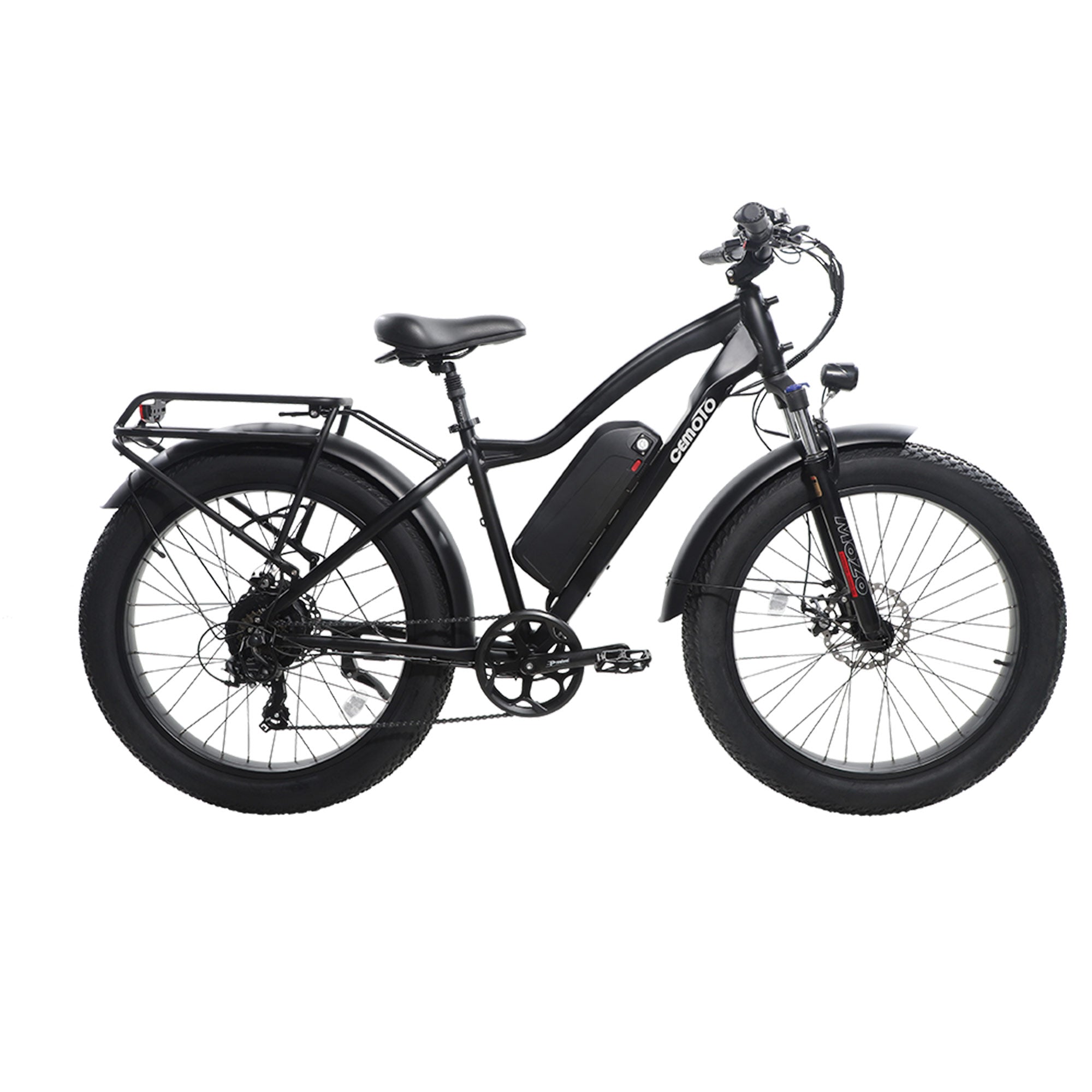
Use the same neutral scorecard on one specific Cemoto model and configuration instead of treating the catalog as a single serviceability result. Cemoto’s current resources provide places to begin: the Cemoto e-bike models collection for model comparison, the Cemoto spare parts collection for parts navigation, the user-manual entry point for documentation, and the Cemoto FAQ for support questions.
Those resources are verification leads. A parts listing does not prove that every item fits every model or that stock will continue. A manual or FAQ does not prove complete service procedures, local shop acceptance, or post-warranty parts continuity. Before checkout, save the exact model information, request references for the battery, charger, display, controller, motor, wiring, and model-specific hardware, and compare the responses with your scorecard.
Then ask a nearby shop about that exact configuration. Review current warranty and return terms separately from the parts path, including who handles labor, shipping, diagnosis, and a failure after coverage ends. If your lowest category is electrical support and you commute daily, that gap may matter more than a strong score for routine mechanical parts.
As a practical next step, compare one specific model in the Cemoto electric bike lineup, fill in the five categories, and contact a local shop before adding it to your cart. The current resource pages can help you start that check, but you should confirm exact compatibility, support, warranty, and local-shop fit for the model you intend to buy.
FAQs
These questions address gaps that a general product page cannot resolve on its own. Use the exact model, current policy, part listing, and shop response when answering them.
How Do I Estimate the Long-Term Cost of Replacing an E-Bike Battery?
Request a current model-specific battery quote, then add shipping, labor, and any charger requirement. Ask whether the exact battery is orderable and what the warranty excludes. A generic battery estimate cannot replace those inputs.
What Should I Ask a Bike Shop Before Buying an E-Bike Online?
Give the shop the exact model, motor, battery, display, and configuration. Ask which mechanical and electrical work it accepts, whether it installs owner-supplied parts, and how it handles seller or warranty cases. Have the shop confirm the answer for your configuration.
Can I Replace a Proprietary E-Bike Display With a Different Brand’s Display?
Only after confirming compatibility with the motor system and controller. Check the communication protocol, voltage, connector, firmware, mounting, and pairing requirements. Ask for a model-specific replacement reference before buying a substitute display.
Does an E-Bike Warranty Cover Wear Items and Future Parts Availability?
Not necessarily. Review the written policy for duration, exclusions, wear-item coverage, labor, shipping, and claim handling. A warranty may define repair responsibilities for a limited period without promising future inventory or continued availability of every replacement part.
Which Serviceability Checks Matter Most for a Daily Commuter?
Prioritize a confirmed battery and charger path, local repair boundaries, access to common wear parts, and realistic turnaround arrangements. If missing work is costly, make a backup plan for electrical failure and give the lowest electrical-support score extra weight.
