
Street Legal vs. Off-Road Only: Understanding the Laws for Electric Dirt Bikes


Protect your ride from impoundment! Uncover the hidden electric dirt bike rules and OHV area restrictions. We reveal exactly how to get street legal fast.
You pull up to a trailhead on your electric dirt bike, helmet strapped, motor humming quietly beneath you, and a ranger waves you down before your tires even hit the dirt. No registration sticker. No street-legal plate. Ride over. The gap between a great ride and a costly fine comes down to one thing: knowing which rules apply to your bike, your location, and your intended use. This article resolves that fast.
Street Legal vs. Off-Road Only: What Separates the Two Categories + the Core Legal Trigger
The root issue is that road traffic laws and off-road access rules were written for very different machines, and an electric dirt bike sits in an unusual middle ground that most legislators did not anticipate.

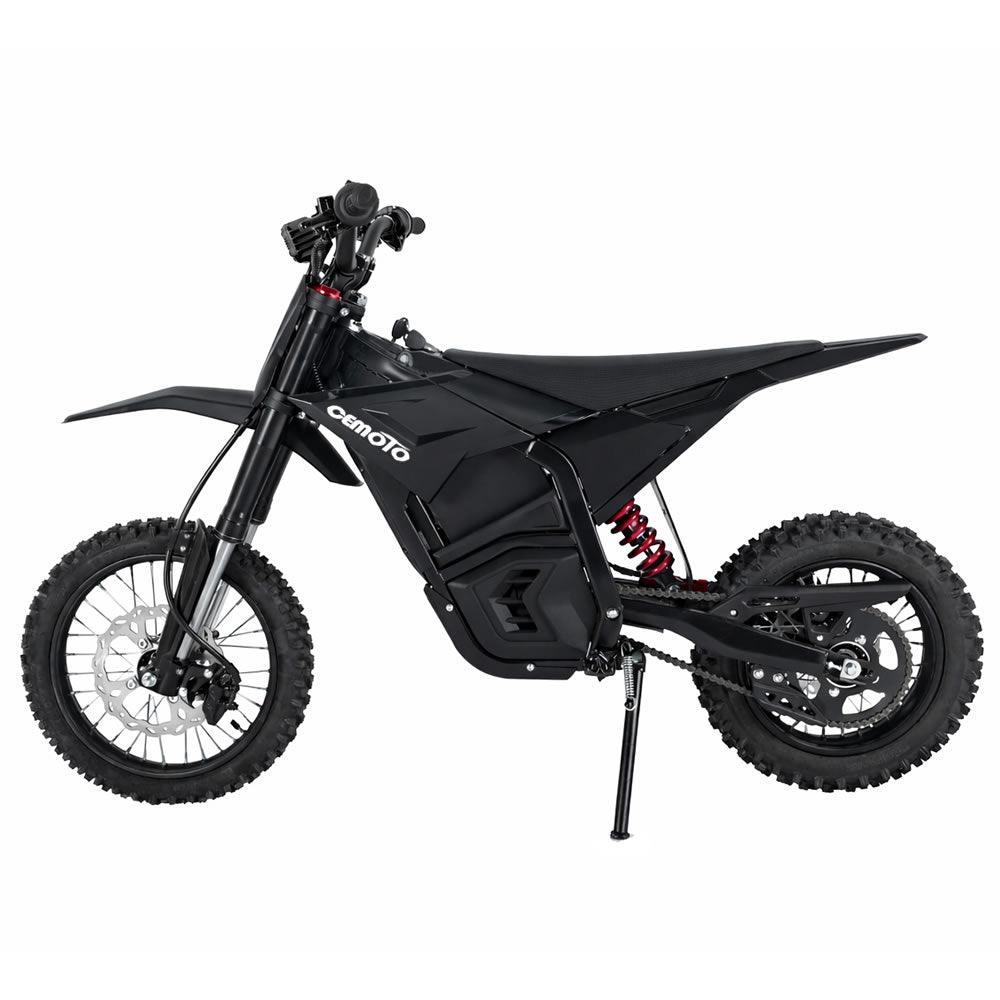
A street-legal vehicle must satisfy a federal and state safety checklist before sharing public roads with cars. For an e dirt bike, that typically includes a headlight, taillight, turn signals, mirrors, a horn, a speedometer, DOT-approved tires, and a VIN. An off-road-only bike skips most of that hardware. It is built lighter, tuned for low-speed torque, and optimized for terrain rather than traffic. Riding one on a public street can result in fines starting at $150, impoundment, and in some cases a misdemeanor charge.
The verdict: if your bike lacks the required safety equipment and a DMV-issued title, it is an off-road-only machine by default, regardless of speed or appearance.
Power Output and Speed: How Wattage Determines Your Legal Class
The single most important technical number on your electric dirt bike is its continuous power output in watts, combined with top speed. These two figures determine which legal class the bike falls into.
|
Class |
Max Speed |
Max Power |
Typical Access |
|
Class 1 / 2 |
20 mph |
750 W |
Bike paths, some trails |
|
Class 3 |
28 mph |
750 W |
Roads, limited trails |
|
Electric Motorcycle |
45+ mph |
1,500 W+ |
Roads (with registration) |
|
Off-Road Only |
No limit |
No limit |
Designated OHV areas only |
A typical adult electric dirt bike produces between 3,000 W and 15,000 W and reaches 40 to 70 mph. That places it firmly in the electric motorcycle or off-road-only category. Most electric dirt bikes also lack pedals, so the three-tier e-bike classification will not apply regardless of power output.
Always check the continuous-duty current rating on your motor controller, not the peak figure manufacturers advertise. Continuous output is the number regulators use.
Federal and State Rules: The Two-Layer System You Must Navigate
Federal law sets the floor. The NHTSA's Federal Motor Vehicle Safety Standards (FMVSS) govern any bike intended for road use, covering lighting, brakes, and mirrors. A bike sold without FMVSS compliance cannot be titled for road use in any state.
States then layer their own requirements on top. California requires OHV registration and decals for off-highway use on many state-managed lands, administered through the state OHV program. How those requirements apply to electric-powered bikes specifically is worth confirming directly with the California DMV or OHV program before riding. Colorado has introduced LSEB classifications that allow some lower-wattage bikes on certain trails without full motorcycle registration. Arizona maintains a strong OHV network with relatively clear electric vehicle access policies.
Look up your state DMV's classification for electric two-wheelers before you buy. That classification determines your registration fee, insurance requirement, and where you can legally ride.

OHV Areas: Where Off-Road Electric Dirt Bikes Can Actually Go
Off-road-only electric dirt bikes are restricted to designated OHV areas, private land with the owner's permission, or closed-course events. The BLM and U.S. Forest Service manage large OHV-accessible land networks, and most require a current OHV registration sticker costing $25 to $50 per year.
Here is where many e dirt bike adult riders get surprised. Some OHV areas still ban electric-powered bikes under legacy rules written for gas machines. Contact the managing agency before your first visit and ask specifically whether electric two-wheelers are permitted. Get that confirmation in writing.
On noise: many OHV areas enforce a maximum sound level, often cited at 96 dB, with measurement methods varying by location and state. Many areas reference procedures similar to SAE J1287 or equivalent local standards. Electric dirt bikes run well below the common 96 dB ceiling under most conditions, which is a real advantage. Confirm the specific standard your target area uses before assuming compliance.
Making Your Electric Dirt Bike Street Legal: The General Path
Conversion from off-road to street-legal is possible in many states and typically takes 4 to 8 weeks. The required equipment list varies by state, so verify the specifics with your DMV before purchasing parts.
- Confirm or obtain a VIN.
- Install required equipment: DOT headlight, taillight, brake light, turn signals, mirrors, horn, and speedometer, subject to your state's specific list.
- Fit DOT-compliant road-rated tires. Standard knobby tires do not qualify in most states.
- Pass a licensed vehicle inspection.
- Submit a title application with proof of purchase and the inspection certificate. Fees typically run $30 to $75.
- Purchase liability insurance. Most states require at least $25,000 in bodily injury coverage per person.
- Attach your plate and registration sticker before riding on public roads.
If you want to reduce costs, check whether your state offers a lower-tier motorized vehicle classification such as moped or motor-driven cycle. These carry lower fees and simpler insurance requirements than a full motorcycle registration, and some electric bikes may qualify depending on speed and power.
Your Next Ride Starts Here: Check Before You Load the Truck
You now have a clear picture of where the lines fall. Pull your bike's continuous watt rating and top speed, cross-reference your state DMV's classification page, and confirm access rules for your target riding area before you go. The law around electric dirt bikes is evolving fast, but one hour of research now protects every ride after it.

FAQs about electric dirt bike laws
Q1: Can I ride my electric dirt bike on public roads without registering it?
No, with a narrow exception. Electric dirt bikes ridden on ordinary public roads without registration are illegal in all states and subject to fines and license points. However, a limited number of states permit OHVs on designated sections of public roads under specific local OHV ordinances. Check if your state offers a lower-tier vehicle registration option, e.g., moped or motor-driven cycle rather than motorcycle, if cost is a concern.
Q2: Does my electric dirt bike need insurance if I only ride off-road?
It depends. Private land with permission from the landowner does not require insurance. However, liability coverage is often required at OHV parks and events for a minimum of $100,000. Off-road recreational vehicle insurance ranges from $100 to $200 annually and protects against risks not covered under standard auto policies.
Q3: What wattage threshold separates an e-bike from a motorcycle under U.S. law?
In most states, this limit is set at 750 watts continuous output. Any electric two-wheeler with more than 750 watts continuous output or more than 28 mph without pedaling will not qualify as an electric bike. Most electric dirt bikes are in the 3,000 to 15,000 watts continuous output range and therefore exceed this limit.
Q4: Can I convert my off-road electric dirt bike to street legal myself?
Yes, in most states, with the correct parts and a passing inspection. It takes more than paperwork to make this change. A set that includes all the parts you will need to make this change on your particular model will give you a cleaner installation and a more successful inspection.
Q5: Are there age restrictions for riding an electric dirt bike in OHV areas?
Yes, in most states. In California, Oregon, Nevada, and Colorado, children under 18 have additional requirements, which include a safety education certificate, a DOT or Snell rating on their helmets, and adult supervision if under 14 years old. By completing the OHV safety course offered by your state parks department, usually at low or no cost, you can use off-limit trail systems regardless of your age.
