




Apartment Ebike Charging and Indoor Storage Rules


Ebike indoor storage may work in an apartment, but storage and charging require separate checks. Evaluate the exact location, battery and charger condition, manufacturer instructions, access routes, and written building rules before bringing the routine indoors.
Indoor ebike storage may be workable in an apartment, but there is no automatic yes-or-no answer. Treat storage and charging as separate decisions: the bike may fit in a private corner while that same corner is unsuitable for charging. Before you plug in, confirm that the location is stable, dry, accessible, clear of combustible clutter and escape routes, permitted by your building, and consistent with the bike and battery manual. If any required answer is unclear or negative, pause rather than improvise.

When Indoor Ebike Storage Works in an Apartment
You can consider storing an ebike indoors when the specific location, equipment condition, manufacturer instructions, and written property rules all support the setup. This is conditional guidance, not a universal safety or legal determination; local requirements and the lease may be stricter.
For ebike indoor storage, use this pass-or-pause framework:
- Location: The bike is in a private, stable, dry place where it will not obstruct a door, stair, hallway, or other access route.
- Clutter and exposure: The battery and charger are protected from impact, moisture, extreme heat or cold, and nearby combustible clutter. Official NYC guidance specifically advises against charging or storing batteries in extreme temperatures and says to follow the device instructions. FDNY's lithium-ion battery guidance is a local safety reference, not a nationwide apartment rule.
- Equipment: The battery, charger, cable, and connectors show no visible damage or abnormal condition, and the charger is the one permitted by the manufacturer.
- Manual: The manual allows the proposed removal, storage position, charging arrangement, and electrical setup.
- Property rules: The lease and written building policy do not prohibit the bike or the proposed charging location.
A hallway, stairwell, landing, or other shared route is not a convenient substitute for a suitable private location. If no location passes, store the bike without charging only if that arrangement is permitted and appropriate under the manual, then ask management and the manufacturer about an approved alternative. For readers comparing ways to reduce floor-space pressure, these apartment storage ideas may help with layout planning, but the article is not a substitute for safety or property guidance.
Choose a Charging Spot That Protects Exits and Airflow
The best apartment charging location is the best available private location that keeps access routes usable and meets the bike's instructions. Do not assume that a bedroom, closet, entryway, balcony, or shared outlet is suitable simply because it is convenient. These checks support ebike charging safety in an apartment, but they do not create a universal room ban or clearance distance.
Before charging, check that the proposed spot:
- keeps exits, doors, stairs, and walking paths usable;
- stays away from combustible clutter, moisture, impact, and damaging heat or cold; and
- provides stable placement while following the manual's battery, charger, ventilation, and connection instructions.
The Location Checks That Matter Most
Work through the location before connecting the charger:
- Start with escape access: Keep doors, stairs, exits, and normal walking paths usable. Do not place the bike where moving it would be difficult or where it could interfere with an emergency route.
- Check the surroundings: Remove combustible clutter and avoid locations exposed to impact, water, steam, or damaging heat and cold.
- Check the surface: Use a stable placement that will not allow the bike, battery, or charger to fall, be crushed, or be covered by fabrics or stored items.
- Check the equipment position: Follow the manual's instructions for battery orientation, charger placement, ventilation, and electrical connection. Do not invent a universal distance from walls or furniture.
- Check the property policy: A building may set conditions that go beyond general household precautions.
Official local guidance from New York City advises against charging or storing a battery in extreme hot or cold temperatures. It also says not to leave a battery or device charging overnight or unattended and warns against charging in a bedroom or near entrances or exits. NYC 311 guidance on overnight and exit-area charging is jurisdiction-specific rather than a rule that applies identically to every U.S. apartment.
Small-Space Charging Habits
Use a repeatable sequence instead of relying on a familiar corner:
- Inspect: Look over the battery, charger housing, cable, plug, and connectors. Do not charge equipment that is cracked, swollen, leaking, unusually hot, wet, or behaving abnormally.
- Place: Set up the bike or battery exactly as the manual directs, on a stable surface and away from access routes and combustible clutter.
- Connect: Use the approved charger and follow the manufacturer's connection sequence. CPSC testing on e-bike battery and charger protection shows why compatibility deserves a careful check rather than an assumption.
- Monitor as directed: Follow the manual and applicable building policy about supervision, charging duration, and disconnecting. Do not create an overnight routine merely because the outlet is nearby.
- Stop when conditions change: If the bike is moved, furniture is rearranged, the charger is replaced, or the property policy changes, reassess the setup before charging again.
For general maintenance follow-up, our battery maintenance basics resource can be a useful navigation point. It does not replace the manual for your specific battery.
Why Shared Areas Are Usually a Poor Workaround
A hallway or stairwell may be convenient, but it is also a shared access route that must remain usable for residents and emergency movement. Building policies may restrict storage or charging there even when an outlet is available. Ask management whether a designated location exists and request the answer in writing; do not move a charger into a common route without approval and suitable conditions.
Battery Removal and Storage: Follow the Bike's Manual
Whether you should remove the battery for storage or charging is a model-specific compatibility decision. A removable battery can simplify carrying and ebike battery storage at home, but removal does not automatically make an apartment setup suitable. A non-removable battery should remain on the bike unless the manufacturer provides an approved procedure.
Removable Batteries and Apartment Storage
If the manual permits removal, check these points before changing the setup:
- Follow the specified unlocking, carrying, placement, connector-protection, and reinstallation sequence.
- Keep the battery protected from impact, moisture, damaging temperatures, metal objects, and accidental contact as the instructions require.
- Before riding, confirm that the battery is correctly seated and latched.
- If the manual does not clearly explain removal or separate storage, contact the manufacturer or a qualified service provider first.
Do not infer that a battery can be charged off the bike just because it has a release mechanism.
Charging on the Bike or Off the Bike
The manual must determine whether charging is permitted on the bike, off the bike, or in only one of those arrangements. Use this qualitative matrix as a decision aid, not as a safety rating:
| Arrangement | What the manual must confirm | Apartment-space implication | Stop condition |
|---|---|---|---|
| Removable battery, stored separately | Removal method, placement, connector protection, and storage conditions | May reduce bike footprint, but the battery still needs its own suitable private location | Instructions are missing, unclear, or conflict with the proposed setup |
| On-bike charging | Approved charger, bike position, connection sequence, and any monitoring requirements | Requires a stable bike location that does not block access | The location or charger does not meet the manual or property policy |
| Off-bike charging | Permission to remove and charge separately, battery position, and charger compatibility | Adds a second location decision rather than eliminating one | The battery has damage, abnormal heat, or incompatible equipment |
| Non-removable battery | Approved on-bike procedure or service instructions | The bike and battery must be assessed together | The reader is considering opening, modifying, or removing the battery without an approved procedure |
The CPSC material provides context that OEM and aftermarket protection can differ; it does not establish that every aftermarket part is unsafe or create a universal replacement rule. Use the exact battery and charger instructions. The available charging station details should be treated only as navigation until compatibility is verified for the specific bike and battery.
Building Rules, Shared Areas, and No-Safe-Space Options
When the apartment layout or property policy rules out a suitable charging location, pause and obtain an approved alternative. Lease, building, local, and insurance requirements vary, and management approval does not override the manufacturer's instructions or applicable law.
Questions to Ask Property Management
Send a short written request that asks:
- Does the lease or building policy address ebikes, lithium-ion batteries, indoor storage, or charging?
- Is charging allowed inside the private unit, and are there restrictions on rooms or times?
- Are hallways, stairwells, balconies, garages, bike rooms, or other common areas allowed for storage or charging?
- Is there a designated charging location, and what equipment or supervision conditions apply?
- Can management confirm the approved location and conditions in writing?
Keep the response with the lease and the bike's manual. A verbal suggestion to use a convenient outlet may not answer the separate questions of access, equipment compatibility, and manufacturer approval.
A Safer Fallback When No Location Fits
Use this escalation path when your apartment has no clear, approved space:
- Stop using the location that blocks access, conflicts with written rules, or fails the manual's requirements.
- Do not relocate charging to a hallway, stairwell, balcony, landing, or improvised outdoor area simply to keep the battery charging.
- Ask management for a designated or approved alternative and request written instructions.
- Contact the bike or battery manufacturer when the manual does not resolve removal, placement, or charging questions.
- Use qualified service support for equipment questions that cannot be answered from the manual.
If the battery is smoking, burning, or rapidly heating, move away and contact emergency services rather than attempting improvised handling. General CPSC battery hazard guidance identifies overheating, fire, electrical shock, and thermal burns as potential hazards, but it is not a substitute for emergency direction.
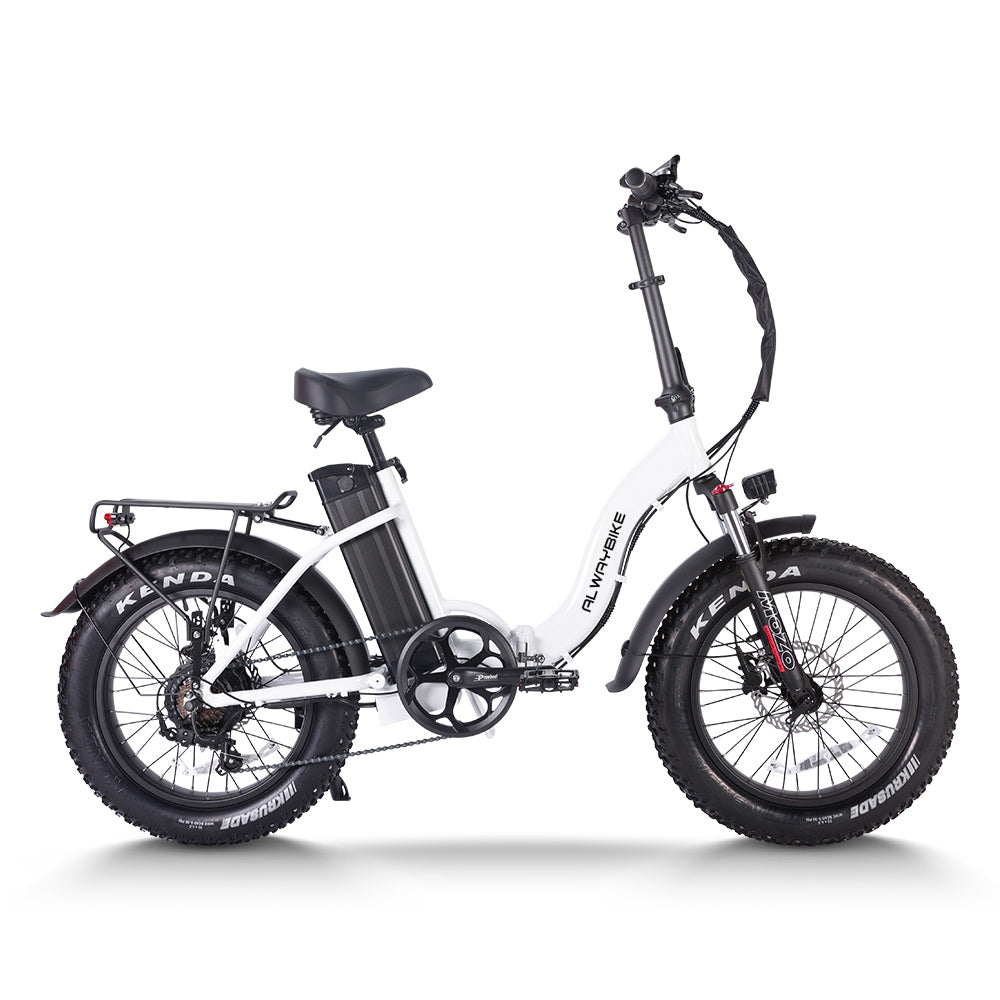
For readers still comparing space-saving form factors, our compact ebike options collection is a navigation link only. Check each model's current specifications, battery design, manual, and building fit before buying.
Run This Apartment Setup Check Before Charging
Charge or store the ebike indoors only when every required check passes. This checklist is a planning aid, not a replacement for the manual, written building rules, local requirements, or qualified guidance.
- Permission: The lease or written property policy allows the bike and proposed charging arrangement, or management has identified an approved alternative.
- Location: The space is private, stable, dry, accessible, and clear of doors, stairs, exits, walking paths, and combustible clutter.
- Environment: The battery and charger are protected from damaging heat, cold, moisture, impact, and covering materials. The manual's environmental instructions are available.
- Equipment: The charger matches the bike and battery requirements. The battery, cable, plug, and connectors have no visible damage.
- Battery condition: Stop if the battery is swollen, cracked, leaking, unusually hot, smoking, or otherwise abnormal. Do not continue charging in a more convenient location.
- Manual compliance: The proposed on-bike or off-bike arrangement, battery position, connection sequence, monitoring, and disconnecting steps match the instructions.
- Change check: Repeat the review after moving the bike, changing the room or charger, rearranging furniture, or receiving a new building policy.
One failed or unclear check means pause and seek model-specific or qualified guidance before charging again.
FAQs
These edge cases need a separate decision because the answer may turn on the manual, written property policy, local guidance, the battery's condition, or an insurance contract.
Can I Leave My Ebike Battery Charging Overnight?
Check the manual and building policy before using an overnight routine. NYC guidance advises against overnight or unattended charging, but that is local guidance rather than a nationwide rule. If the required supervision or timing is unclear, ask the manufacturer and management for an approved alternative.
Can I Charge an Ebike Battery in a Hallway or Stairwell?
Ask management in writing whether common-area charging is approved, where it may occur, and under what conditions. If no approved location exists, pause charging and ask the manufacturer or property for an alternative.
What Should I Do With a Swollen or Damaged Ebike Battery?
Stop charging and using visibly abnormal equipment. Do not open, modify, repair, or force the battery into place. Contact the manufacturer or qualified service support. If it is smoking, burning, or rapidly heating, move away and contact emergency services.
Does Renters Insurance Cover Ebike Battery Damage or Fire?
Do not assume coverage. Ask your insurer for written answers about the ebike, battery, charging location, theft, fire damage, exclusions, limits, and required documentation. The policy and insurer determine coverage for your situation.
How Can I Reduce Ebike Theft Risk in an Apartment?
Use permitted private storage and ask management about approved bike-room or building security measures. Protect the bike, removable battery, and accessories separately only when the manufacturer and property rules allow it. A folding design may reduce storage footprint, but no lock or storage method guarantees theft prevention.
