

How does rider weight affect electric dirt bike range and handling?


Heavier rider weight usually shortens electric dirt bike range and changes handling feel, especially on hills, soft terrain, and aggressive riding. This guide explains what to check before buying.
Rider weight usually lowers electric dirt bike rider weight range and can change handling feel, but the size of the effect depends on payload headroom, suspension setup, terrain, and throttle use. If you ride heavier than the test rider used for brochure numbers, treat published range as a baseline, not a promise.

How Rider Weight Changes Range
Extra weight asks the motor and battery to do more work. In simple terms, the bike has to move more total mass every time you start, climb, accelerate again, or push through soft ground. That is why heavier riders often notice faster battery drain on real trails than they expected from the spec sheet. The SAE electric motorcycle range test procedure is useful here because it shows why published range figures come from standardized conditions, not every real trail setup.
Why Extra Weight Uses More Battery
Heavier load raises energy demand most clearly when the bike is pulling away from a stop or climbing. You can feel it as more current draw, which usually means less range margin by the end of the ride. The weight and range relationship is not a mystery; it is basic load and efficiency math.
For riders, the practical takeaway is simple: if the route has repeated accelerations, loose dirt, or steady elevation changes, expect the battery to work harder than it would on a smoother, flatter loop. That is the first reason heavier riders should compare range numbers cautiously.

Which Riding Conditions Make Range Drop Faster
Range tends to shrink fastest when weight stacks with other efficiency losses. Hills, sand, mud, soft soil, higher cruising speeds, and hard throttle inputs all make the battery work harder. A heavier rider on a mixed trail will usually see more of that effect than a lighter rider on the same bike.
That matters because electric dirt bike range is usually advertised in a way that hides those real-world variables. If you ride in stop-and-go bursts, climb often, or spend time on loose terrain, the difference between brochure range and trail range can feel large. If your use is mostly steady, smoother riding, the gap is usually smaller.
How Much Range Difference Buyers Should Expect
There is no safe universal percentage to apply to every model. Battery size, motor tuning, tire pressure, terrain, and throttle style all change the result. A bigger battery can preserve more margin, while a smaller pack will show weight effects sooner.
The best buying habit is to compare the published range, then ask what happens when rider plus gear weight increases and the route gets rougher. If your planned ride already sits close to the model's stated range, a heavier setup should push you toward a bike with more buffer rather than a bare-minimum spec.
How Far Can an Electric Dirt Bike Go on One Charge is a useful next read if you want to compare range planning against terrain and throttle use.
Acceleration and Power Feel
Heavier rider weight can make an electric dirt bike feel less eager off the line. The change usually shows up first in launch feel, hill starts, and the first few seconds after a corner. The bike may still be strong, but the response can feel less sharp because it is moving more mass.
Think of it as a difference in snap, not just top speed. A bike that feels quick with a lighter rider may feel a little more deliberate with a larger rider, especially on climbs or when you need to recover speed after braking. That does not automatically mean the bike is weak; it means the loaded feel is different.
For buying decisions, the question is not only "How fast does it go?" It is "How does it pull with my weight on the kind of trail I ride?" If you care about quick exits from corners or steep-hill response, loaded ride feel matters more than a headline speed number.
Handling, Balance, and Suspension Feel
Rider weight changes how the bike settles into its suspension, which affects steering feel, comfort, and control. A setup that feels balanced for one rider can feel too soft, too firm, or too deep in the stroke for another. That is why rider weight is not just a range issue; it is a handling issue too.
For off-road use, the difference usually shows up in corners, ruts, braking bumps, and landings. If the bike sits too deep, the front can feel vague and the rear can squat more than expected. If it is too stiff for the rider, small bumps can feel harsh and the bike may skip instead of tracking the ground.
What Suspension Feel Tells You on a Test Ride
A good starting point is sag, which is the amount the suspension compresses under rider weight. As a motorcycle suspension sag guide explains, a common target is roughly 30% of total travel. That number is a practical check, not a magic solution, but it gives you a clear way to judge fit.
A second clue is whether the bike feels controlled after a bump. If it bottoms out often, feels loose on landings, or wanders in rough turns, the setup may be too soft for your weight and riding style. If it feels harsh and loses grip on smaller chop, the suspension may be set too stiff or too far from your weight range.
Factory suspension is often centered around a midweight rider, so heavier riders may need preload or damping changes to keep the bike balanced. That background context matters because a bike can be perfectly usable once it is set up correctly, but still feel wrong straight out of the box.
Signs the Bike Is Too Small or Too Soft
The most useful warning signs are practical, not technical. Watch for frequent bottoming, excessive squat under throttle, vague steering in corners, and unstable landings after bumps. Those signs usually mean the bike is either outside its comfort zone or not adjusted for your weight.
If the bike still feels wrong after reasonable setup changes, it may be a poor fit for your payload and terrain. That is the point where "close enough" stops being a good buying strategy.
Payload Limits and Fit Checks
Payload is not just a dry spec number. It is a purchase filter. You should count rider weight plus regular gear, then compare that total with the bike's published limit before you decide it is a fit. Exceeding payload limits can compromise structural integrity, braking performance, and suspension safety, so the limit is not something to shrug off.
The table below shows how to use that check without overcomplicating it.
| What to Check | Why It Matters for Heavier Riders | What to Do If the Spec Is Close |
|---|---|---|
| Published payload limit | Shows the basic structural and safety boundary | Leave a margin for gear, trail conditions, and real riding position |
| Suspension adjustability | Helps the bike sit and move correctly under your weight | Prefer models with preload or damping adjustment if you are near the limit |
| Range expectation | Heavier load can reduce trail range faster than brochure numbers suggest | Compare your planned ride length with a real buffer, not the claimed maximum |
| Test-ride feel | Reveals squat, harshness, bottoming, or vague steering | If it feels unstable, do not assume it will improve on its own |
For buyers who are already close to the line, a small margin is better than a perfect-looking spec. If the bike is right on the edge, the better question is whether you still have enough headroom for hills, gear, and repeated trail use. That is also where electric dirt bike options become worth comparing side by side.
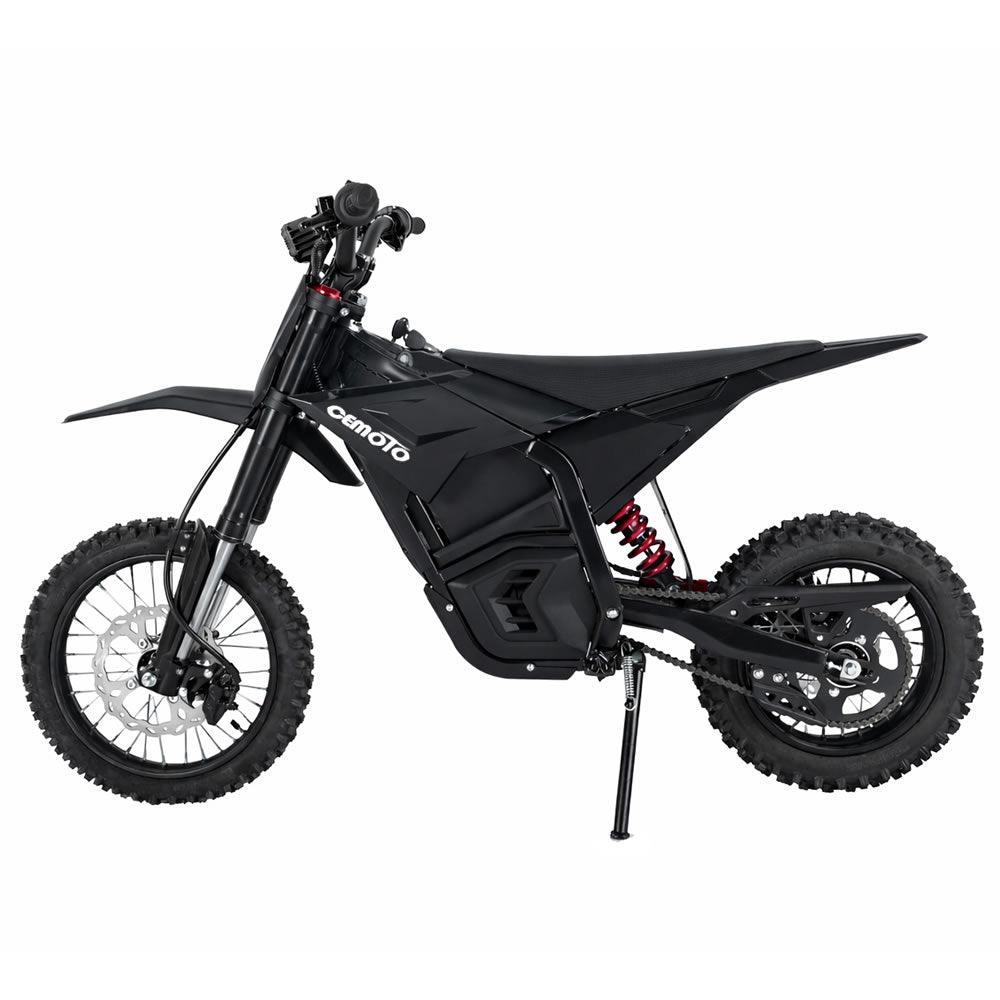
Some shoppers also want to check a specific model before narrowing down the category. If you are looking at the CEMOTO D-Series, use the spec sheet as a navigation point first and verify the current payload and fit details against your body weight, gear, and terrain.
A Practical Buyer Checklist
Use this before you add a bike to cart or commit to a test ride:
- Compare published payload with your rider weight plus regular gear.
- Ask whether your trail use includes hills, sand, mud, or repeated stop-and-go riding.
- Treat published range as a baseline, then decide how much buffer you need.
- Check whether the suspension has enough adjustment for your weight.
- Look for signs of bottoming, squat, harshness, or vague steering on a test ride.
- Confirm that seat height and standing position still feel natural when the bike is loaded.
- If you are near the limit, keep shopping instead of forcing a close fit.
If you want a different setup to compare, browse electric dirt bike accessories or review the D03 Pro only after you have checked whether its current specs match your weight and riding plan.
FAQs
How Does Rider Weight Affect Electric Dirt Bike Range?
Heavier rider weight usually shortens range because the battery has to move more total mass, especially during starts, climbs, and repeated acceleration. The practical check is your route: if it includes hills, loose terrain, or hard throttle use, build in more range margin than the brochure number suggests.
Does Heavier Rider Weight Reduce Electric Dirt Bike Performance?
It can make the bike feel less punchy, especially off the line and on climbs. The effect is usually about loaded ride feel, not a total loss of power. If you care most about quick response, test the bike with your actual weight and the kind of terrain you ride.
What Payload Limits Should Buyers Consider for Electric Dirt Bikes?
Count rider weight plus your regular gear, then compare that total with the published payload limit. If you are close to the limit, focus on headroom, not just compliance. A bike that technically clears the number can still feel too soft or unstable for your use case.
How Can Heavier Riders Tell If a Dirt Bike Suspension Fits Them?
Look for sag, bottoming, squat, and steering stability. A common setup check is around 30% sag, but the real test is whether the bike stays controlled over bumps and landings. If it feels harsh or vague after reasonable adjustment, the fit is probably off.
Can Suspension Adjustments Make an Electric Dirt Bike Work for a Heavier Rider?
Yes, sometimes. Preload and damping changes can improve support and comfort if the bike still has enough adjustment range. But adjustments only help within the bike's design limits, so if you are near or over payload, the better move is to compare another model with more headroom.
