

Taming the 3000W Beast: Single-Speed vs. Multi-Speed Drivetrain Dilemmas for Dirt Bike Bicycles


Single-speed drivetrains simplify shifting and routine hardware checks, while multi-speed systems provide more ratio choices for changing terrain. The right choice depends on route variation, hill starts, maintenance tolerance, and verified model compatibility—not motor wattage alone.
For a single-speed vs multi-speed drivetrain for dirt bike bicycles decision, start with your route—not the motor's wattage label. A single-speed setup can work well on predictable pavement when you prefer fewer shifting decisions. A multi-speed setup can be more useful for changing grades, frequent starts, and varied surfaces. Neither is automatically tougher, safer, or better for steep terrain. Before buying or changing parts, check the bike's actual gearing, motor system, chainline, guards, and manufacturer limits.

Start With Terrain, Starts, and Maintenance Tolerance
The best drivetrain matches both your route and how much adjustment work you’re willing to take on. Use this matrix as a screening tool, then verify the specific bike’s equipment before treating it as a recommendation.
| Riding situation | Single-speed may fit when… | Multi-speed may fit when… | What to verify before deciding |
|---|---|---|---|
| Mostly paved, predictable routes | You want fixed-ratio operation and few shifting decisions, and the installed ratio feels appropriate for repeated starts and steady riding. | You face frequent stops, headwinds, mild grades, or want more control over cadence. | Installed ratio, wheel size, start conditions, and whether the bike is intended for your route. |
| Repeated hill starts | You’re comfortable with the fixed-ratio compromise and the complete system is documented for the intended use. | You want access to a lower available ratio for starts and climbs. | Available low ratio, traction, brakes, motor architecture, controller behavior, and manufacturer guidance. |
| Mixed pavement and trails | Your surfaces and speeds remain fairly predictable and simplicity matters most. | You need to change ratios as pavement, grades, loose surfaces, and cadence demands change. | Derailleur or other shifting hardware, protection, chainline, clearance, and service support. |
| Loose or rough trails | You accept that gearing alone cannot establish trail capability and are prepared to inspect the fixed drivetrain. | You value ratio choice and can protect, inspect, and service the additional hardware. | Tires, traction, suspension, brakes, guards, impact exposure, and local riding conditions. |
| Low maintenance tolerance | Fewer shifting components appeal to you, but chain care is still required. | Only if you’re prepared for shifting, cable, derailleur, and alignment checks where fitted. | Manual, replacement-part availability, and access to qualified service. |
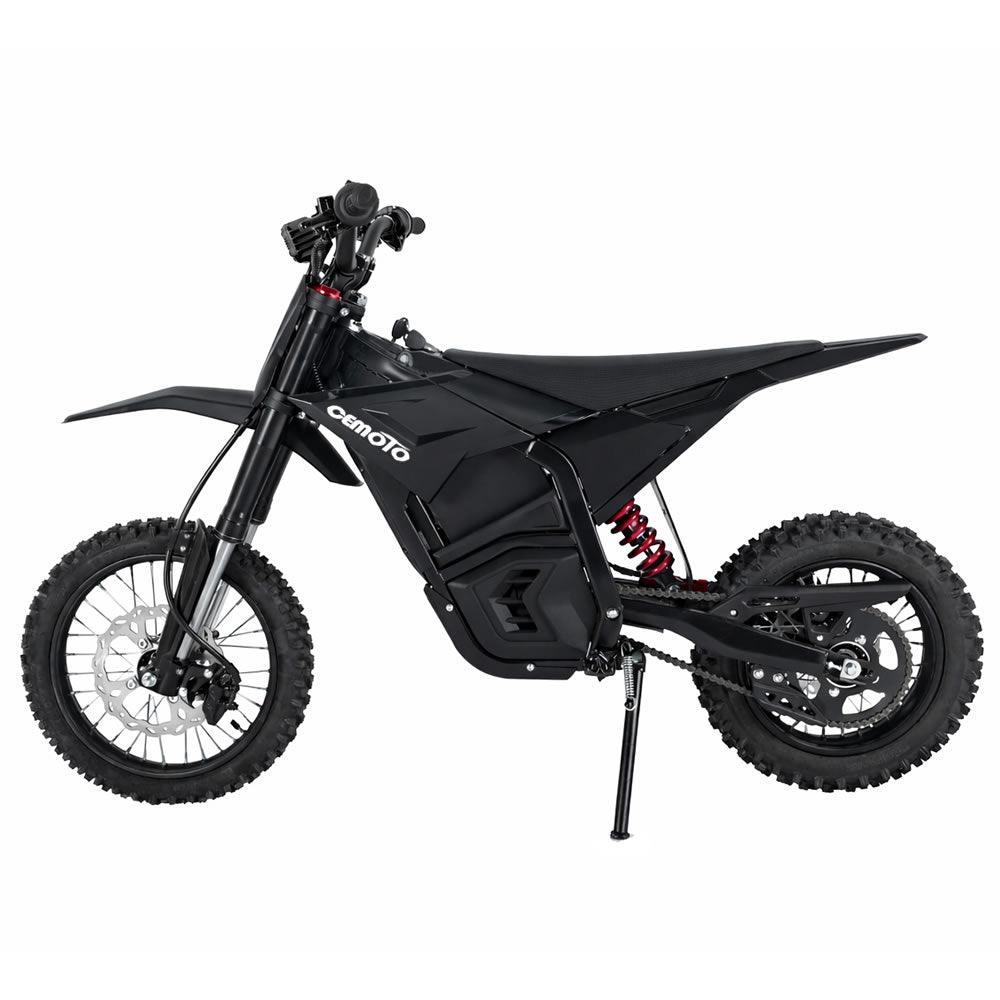
A single-speed dirt bike bicycle drivetrain is therefore a route-predictability choice, not a universal durability upgrade. A multi-speed electric dirt bike bicycle is a terrain-variation choice, not proof of better climbing. If you’re still comparing models, you can browse electric dirt bike options, but the collection does not establish the drivetrain configuration of any individual bike.

Single-Speed vs Multi-Speed Drivetrain for Dirt Bike Bicycles
The central tradeoff in a single-speed vs multi-speed drivetrain for dirt bike bicycles comparison is straightforward: single-speed reduces shifting complexity with one fixed mechanical ratio, while multi-speed adds ratio choice along with more hardware and adjustment points. That makes the comparison useful for planning ownership, but it does not establish which layout is more durable or capable on a particular high-torque bike. Background coverage likewise describes single-speed as a reasonable fit for simpler routes, not a universal choice; see this single-speed drivetrain overview for context.
Where Single-Speed Simplifies Ownership
A single-speed system gives you one mechanical ratio and fewer routine shifting decisions. Operation can feel more predictable when starts, grades, and your preferred cruising cadence don’t change much. It also removes some shifting hardware from the inspection list.
The tradeoff is flexibility. You can’t select a different ratio for a hill start, a faster paved section, or a change in cadence. The installed ratio is always a compromise, so a route that seems simple in one season may feel less suitable once it includes more climbs, cargo, headwinds, or trail riding.
Think of a single-speed setup for a dirt bike-style bicycle as offering “fewer shifting decisions,” not “maintenance-free” operation or automatic durability. Chain condition, alignment, sprocket or cog condition, fasteners, and abnormal noise still matter.
Where Multi-Speed Adds Useful Control
A multi-speed system lets you choose among available ratios as terrain, starts, and preferred cadence change. That can help on mixed pavement, hills, and occasional trails because you aren’t limited to one fixed mechanical compromise.
The tradeoff is additional hardware. Depending on the design, that may include a shifter, cable or control, derailleur, hanger, and adjustment points. These parts don’t mean every multi-speed system is fragile; they do mean you should account for contamination, impact exposure, alignment, and service access when choosing a bike.
The best drivetrain for high-torque dirt bikes is therefore a conditional choice. Choose flexibility when the complete system provides the ratios you need and the hardware can be protected and maintained. Choose simplicity when the fixed ratio matches the route you ride most.
Match Gearing to Hill Starts and Mixed Terrain
Gearing changes the mechanical compromise between controlled starts and faster or steadier sections. A lower available ratio generally favors easier control during starts and climbs, while a higher ratio can suit sections where you want a steadier cadence. Gearing alone cannot prove a bike’s grade, speed, traction, or safety capability.
Flat Roads and Commuting
On steady pavement, a fixed ratio can work well when its installed gearing matches your normal starts and cruising cadence. It eliminates routine shifting, but that same ratio remains in use during headwinds, mild grades, and stop-and-go riding.
| Pavement condition | Fixed-ratio behavior | Multi-ratio behavior | Decision point |
|---|---|---|---|
| Steady, level riding | Consistent operation with no ratio selection. | More choice than may be necessary if conditions rarely change. | Compare the installed ratio with your natural cadence and route. |
| Frequent stops | Every restart uses the same mechanical compromise. | You may select a more suitable available ratio before a start. | Consider hill-start frequency and your tolerance for shifting. |
| Headwinds or mild grades | The motor and rider must work through the fixed ratio. | Alternate ratios may help manage cadence, subject to the installed system. | Don’t infer results from wattage alone. |
| Mixed commuting | Simple when route conditions stay predictable. | More adaptable when pavement, grades, and speeds vary. | Confirm the actual ratios and complete-system design. |
This is how gearing affects hill climbing on dirt bikes at the drivetrain level: it changes leverage and cadence options, but it doesn’t replace suitable tires, traction, brakes, suspension, controller behavior, or rider technique.
Loose Trails and Repeated Climbs
Loose or steep terrain calls for controlled inputs and appropriate traction. A lower available ratio may help manage a start or climb, but the bike’s complete motor, wheel, controller, tires, brakes, suspension, and intended-use guidance still determine whether the route is appropriate. Don’t treat a multi-speed label as a capability guarantee.
Before continuing demanding riding, check:
- Available low gearing: Confirm that the actual drivetrain has a lower ratio suited to the intended start or climb; don’t assume a generic multi-speed system does.
- Shifting and load technique: Avoid forcing a shift while the drivetrain is behaving abnormally or applying inputs that make the chain skip. If shifting feels wrong, reduce demand and diagnose the cause.
- Post-ride condition: Inspect after unusual noise, chain derailment, visible damage, or repeated skipping before returning to high-load terrain.
Plan Maintenance Around Chain and Shifting Hardware
Both layouts need drivetrain care. Single-speed reduces shifting hardware, but it doesn’t eliminate chain cleaning, lubrication, wear inspection, alignment checks, or noise diagnosis. Multi-speed systems add checks for shifting hardware where those parts are fitted, especially after mud, grit, water, or an impact.
Checks Shared by Both Setups
After riding in wet, muddy, or dusty conditions, clean and dry the chain before applying the appropriate lubricant. Then inspect the drivetrain instead of relying on a fixed mileage promise. Park Tool’s chain-cleaning and lubrication guidance supports cleaning as part of general drivetrain maintenance.
Use this shared check:
- Look for contamination, visible wear, stiff or damaged links, and signs of rust or unusual dryness.
- Check chainline, sprocket or cog condition, fasteners, and obvious movement or damage.
- Listen for new clicking, grinding, rubbing, or other abnormal noise under light inspection conditions.
- Treat skipping or visible wear as a signal to diagnose the problem. Follow the model and component guidance instead of applying a universal service interval or lifespan.
A single-speed system can have fewer adjustment points, but dirt bike bicycle chain and derailleur wear isn’t limited to multi-speed bikes. Chain wear and drivetrain condition still affect either layout. If a component is damaged or the chain repeatedly skips, don’t compensate by increasing motor assistance.
Extra Checks for Multi-Speed Hardware
For a derailleur-based system, inspect shifting function, cable or control condition, derailleur position, contamination, and hanger alignment. Dirt and grit can increase cable friction and slow shifting, while an impact can misalign the hanger or derailleur. Use derailleur contamination and shifting checks when diagnosing poor shifting, and review derailleur alignment after an impact after a crash, fall, transport strike, or rough handling.
Persistent skipping, poor shifting, unusual noise, or visible impact damage means you should stop and diagnose the problem. Don’t force the shifter, keep adding motor assistance, or assume the issue will correct itself on a demanding trail. Exact inspection intervals and replacement limits remain model- and component-specific.
For maintenance planning, our electric dirt bike maintenance guide is a useful follow-up. Parts such as a D03 replacement chain or D03 tensioner pulley should be treated as fitment questions, not automatic matches for every bike.
Choose the Setup Before You Buy or Change Parts
For a single-speed vs multi-speed drivetrain for dirt bike bicycles choice, start with the route you ride most and your maintenance preference. Then verify the installed system before ordering parts.
- Define the route. Note hill starts, loose surfaces, headwinds, loads, and pavement-to-trail changes.
- Identify the installed drivetrain. Confirm fixed-ratio or multi-speed operation, available ratios, and shifting architecture from the manual or seller.
- Check compatibility as a system. Verify the motor and controller arrangement, wheel and hub, chainline, sprockets or cogs, chain width, mounting points, axle and frame clearance, guards, and service space. Don’t order a generic conversion based on wattage or chain size alone.
- Confirm official support. Ask the seller or manufacturer for model documentation, approved modification limits, replacement-part availability, and service guidance.
- Test any change conservatively. In a controlled, low-demand area, check shifting, chain retention, noise, clearance, braking response, and fasteners. Recheck after the first rides before using rough or high-load terrain.
If model-level drivetrain facts aren’t available, pause and contact the seller or manufacturer before choosing a model or ordering a conversion.
FAQs
Can a Single-Speed Dirt Bike Bicycle Be Used for Hilly Routes?
Possibly, but the answer depends on the installed ratio, frequency of hill starts, traction, complete motor system, rider input, and manufacturer guidance. Compare the fixed ratio with your actual route. If starts feel forced or the chain skips, stop and reassess rather than treating the bike’s wattage as proof of suitability.
Can You Convert a Single-Speed Dirt Bike Bicycle to Multi-Speed?
Sometimes, but you shouldn’t assume a universal kit will fit. Before buying parts, verify frame and axle clearance, hub layout, chainline, chain width, mounting points, guards, derailleur or other hardware space, and complete-system compatibility with the seller or manufacturer.
Does a Higher-Wattage Motor Require a Multi-Speed Drivetrain?
No. Wattage alone doesn’t determine drivetrain choice. Route variation, available gearing, wheel size, controller behavior, motor architecture, traction, rider inputs, and the manufacturer’s design all matter. Compare the complete specification set instead of matching a power label to a gear count.
How Often Should I Inspect the Drivetrain After Muddy or Wet Trail Rides?
Clean and inspect it after the ride, especially before the next demanding outing, then follow the model manual and component guidance for ongoing service. Look for contamination, wear, poor shifting, skipping, abnormal noise, and impact damage. Don’t substitute a universal mileage interval when the bike’s documentation is unavailable.
