

Maximizing Payload and Efficiency with Heavy-Duty Delivery Cargo Bikes


When selecting a heavy-duty delivery cargo bike for last-mile operations, fleet managers must look beyond maximum payload ratings to evaluate how real-world cargo volume, handling under load, and route characteristics affect daily efficiency. Matching the bike's design and capacity to specific parcel sizes, stop frequency, and urban constraints can reduce delivery times, improve rider safety, and lower operating costs compared to vans or scooters in dense areas.

Why Cargo E-Bikes Matter for Urban Logistics Fleets
Cargo e-bikes can improve last-mile delivery efficiency in dense urban routes with frequent stops. Research shows they reduce vehicle miles traveled and tailpipe emissions when used in the right operating context. For courier and parcel fleets, this often means pairing bikes with micro-hubs or consolidation points to optimize routes rather than attempting to replace every van trip.
Municipal freight-planning guidance increasingly includes cargo bikes as a delivery mode for urban logistics. However, success depends on treating the e-bike as part of a broader system rather than a universal substitute. Fleet operators report the best results when route density and stop patterns align with the bike's strengths.
Understanding Payload Capacity vs Usable Cargo Volume
Payload capacity numbers alone can mislead buyers. A bike rated for 150 kg may not translate to practical volume for mixed parcel deliveries if the cargo area is awkwardly shaped or hard to access quickly. Commercial cargo bike payload capacity must be evaluated alongside volume suitability for typical box sizes and stacking needs.
As guidance from C40 emphasizes, cargo-bike systems should provide adequate and suitable capacity for the intended delivery use case. This means assessing both weight limits and how easily parcels of varying dimensions fit without compromising stability or requiring excessive strapping time at each stop.
For example, standardized delivery crates may favor designs with larger, box-like cargo areas, while loose or irregularly shaped packages benefit from flexible securing options. Fleet managers should test sample loads during evaluation rides to confirm real-world usability rather than relying solely on manufacturer specifications.
Front-Load vs Long-Tail Designs: Key Trade-Offs
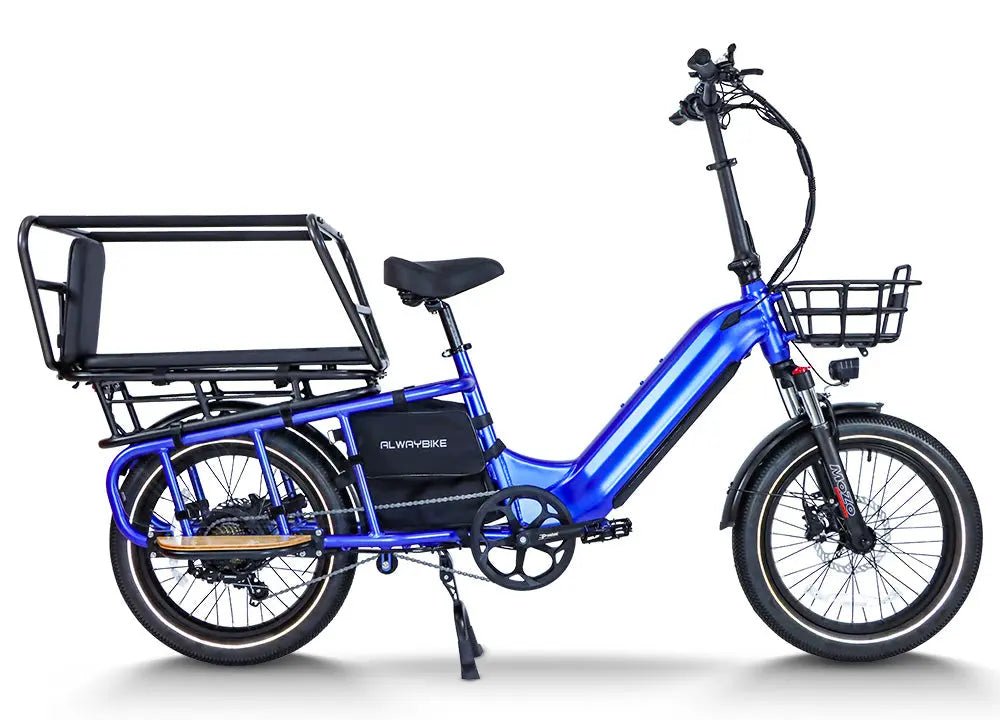
Front-load and long-tail cargo bikes handle commercial loads differently, affecting turning radius, stability, and suitability for city routes. Front-load models place cargo ahead of the rider, often improving visibility and load monitoring but potentially increasing the bike's effective width and turning effort in tight spaces. Long-tail designs extend the rear wheelbase, keeping the center of gravity more familiar to regular bike riders while offering easier maneuvering in crowded streets.
Practitioner experience and design characteristics suggest the choice often flips based on route type. Front-load bikes typically excel with bulky or awkward loads where constant visual checks and secure mounting matter. Long-tail bikes generally perform better for high-frequency courier work with smaller parcels and many quick stops.
Here is a heuristic comparison of the two configurations across common urban delivery factors. Scores are relative on a 1-5 scale and serve only as illustrative guidance based on typical design traits.
Heuristic Comparison of Front-Load vs Long-Tail Heavy-Duty Cargo Bikes
Heuristic Comparison of Front-Load vs Long-Tail Heavy-Duty Cargo Bikes chart.
View chart data
| Series | Payload Capacity | Cargo Volume Suitability | Turning / Dense-Area Handling | Load Stability | Frequent Stops | Urban Route Efficiency |
|---|---|---|---|---|---|---|
| Front-Load | 4.0 | 5.0 | 2.0 | 5.0 | 2.0 | 3.0 |
| Long-Tail | 5.0 | 3.0 | 5.0 | 3.0 | 5.0 | 5.0 |
Illustrative heuristic comparison based on common cargo-bike design traits and the provided scenario_matrix / decision_snapshot. Scores are relative (1-5), not measured benchmarks or official test results.
Scenario-Based Selection Guide
Use these route scenarios to determine the better fit:
-
Dense downtown courier routes with many stops and small-to-medium parcels: Long-tail designs often provide quicker handling and easier navigation at curbs and doorways. Their compact footprint reduces hassle in stop-and-go traffic.
-
Multi-drop deliveries involving bulky boxes or awkward loads: Front-load configurations typically offer superior visibility and easier securing of unstable cargo. Riders can monitor the load continuously without turning around.
-
Narrow paths or routes requiring frequent tight turns: Long-tail bikes generally maintain more familiar handling characteristics, making them less fatiguing over long shifts.
-
Routes with larger parcels and fewer but heavier stops: Front-load models may improve load stability and reduce shifting during acceleration and braking.
These guidelines are heuristic and should be validated with test rides on representative routes. Local infrastructure, parking constraints, and rider preferences can shift the preferred choice.

Frame Geometry, Motor Support, and Braking Under Load
E-cargo bikes are typically larger and heavier than regular bicycles, so infrastructure and loading conditions matter. Strong motors with sufficient torque are essential for maintaining speed and range when carrying 100-150 kg or more. Look for mid-drive or high-output hub motors paired with robust battery packs that sustain performance on hilly or fully loaded routes.
Braking systems must be uprated for commercial use. Hydraulic disc brakes with large rotors provide the necessary stopping power, especially when carrying heavy payloads at urban speeds. Regenerative braking can extend range but should not be relied upon as the primary system.
Frame geometry influences stability under load. Longer wheelbases in long-tail models can improve straight-line tracking, while careful weight distribution in front-load designs helps prevent tipping. Fleet buyers should prioritize models with reinforced frames and components rated for repeated heavy-duty cycles.
Estimating Fit for Your Delivery Operations
Fleet performance depends on matching cargo-bike capacity and geometry to parcel size, route density, and delivery frequency. Begin by auditing a typical day's manifests: note average and maximum parcel dimensions, total weight per route, number of stops, and terrain.
Create a simple checklist:
- What percentage of parcels exceed 60 cm in any dimension?
- How many stops per hour does the average rider complete?
- Are there frequent hills or curb ramps that affect loaded range?
- Does the route include narrow alleys or pedestrian zones?
If more than 30% of stops involve oversized or irregular items, front-load capacity may prove more practical. For high-volume small-parcel work in tight urban cores, long-tail maneuverability usually delivers faster cycle times.
Regulatory limits on dimensions and operating conditions also apply in some cities. Verify jurisdiction-specific requirements before standardizing a fleet.
Balancing Cost, Durability, Range, and Maintenance in 2026
Upfront purchase price is only one factor. Consider total cost of ownership including battery replacement cycles, tire and brake wear under heavy loads, and serviceability. Models with modular components and accessible parts simplify fleet maintenance and support right-to-repair compliance.
Battery range under full commercial load is typically 40-70 km depending on motor efficiency, terrain, and assist level. Plan for conservative daily distances and include charging infrastructure at micro-hubs. Higher-capacity batteries add weight and cost but reduce downtime.
Durability for daily fleet use favors aluminum or steel frames with heavy-gauge tubing and sealed bearings. Expect more frequent component replacement than with personal e-bikes; select suppliers offering commercial warranties and spare parts availability.
How to Choose the Right Heavy-Duty Cargo Bike for Your Fleet
Follow this practical evaluation process:
- Map your primary routes and quantify parcel profiles.
- Test both front-load and long-tail demonstrators with representative loads.
- Measure actual cycle times, rider fatigue, and handling feedback.
- Calculate projected annual operating costs including maintenance and energy.
- Confirm compliance with local regulations and infrastructure access.
Avoid choosing based on payload alone, as this can lead to overloaded bikes, reduced stability, shorter battery range, and higher maintenance costs. Prioritize configurations that improve overall delivery performance rather than maximizing a single specification.
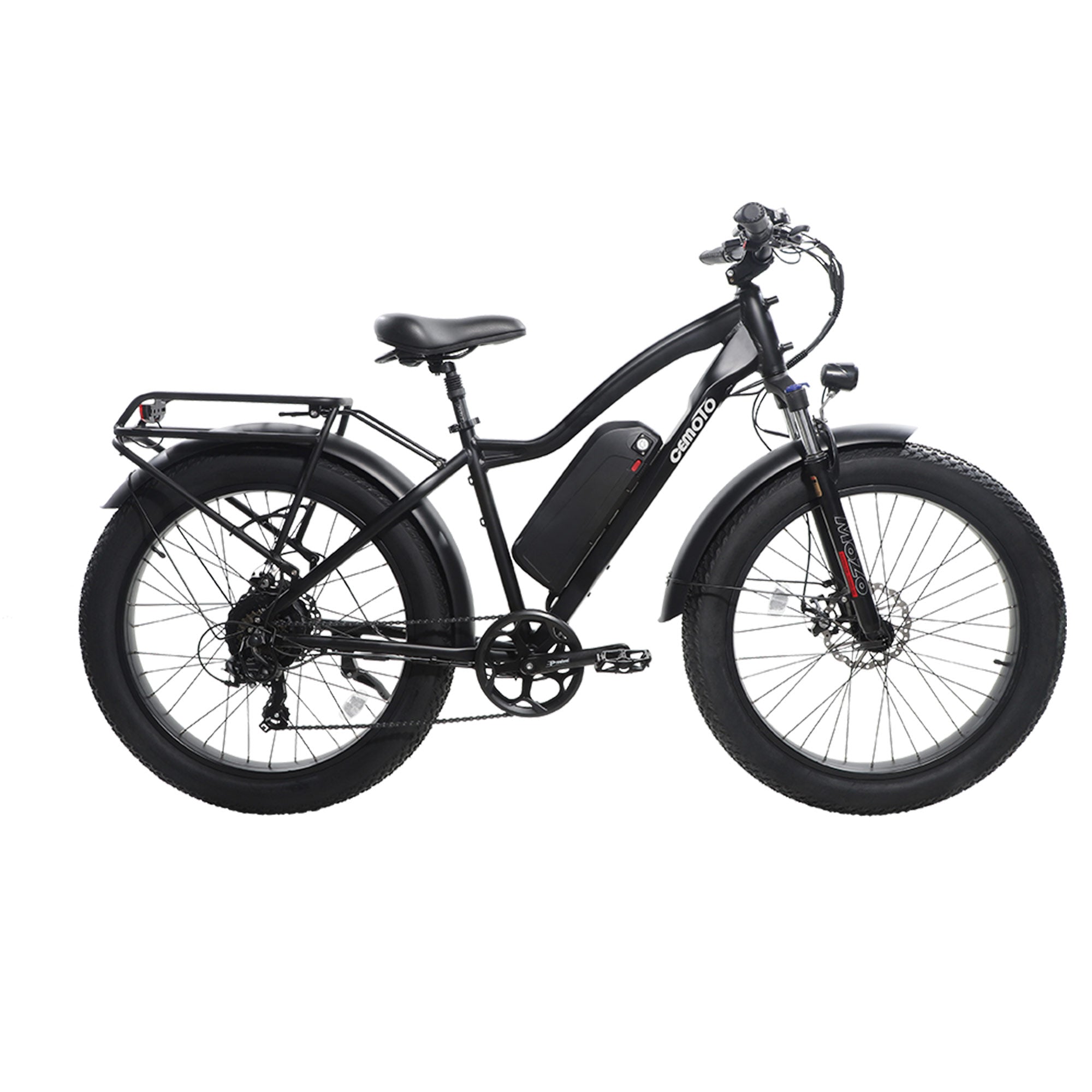
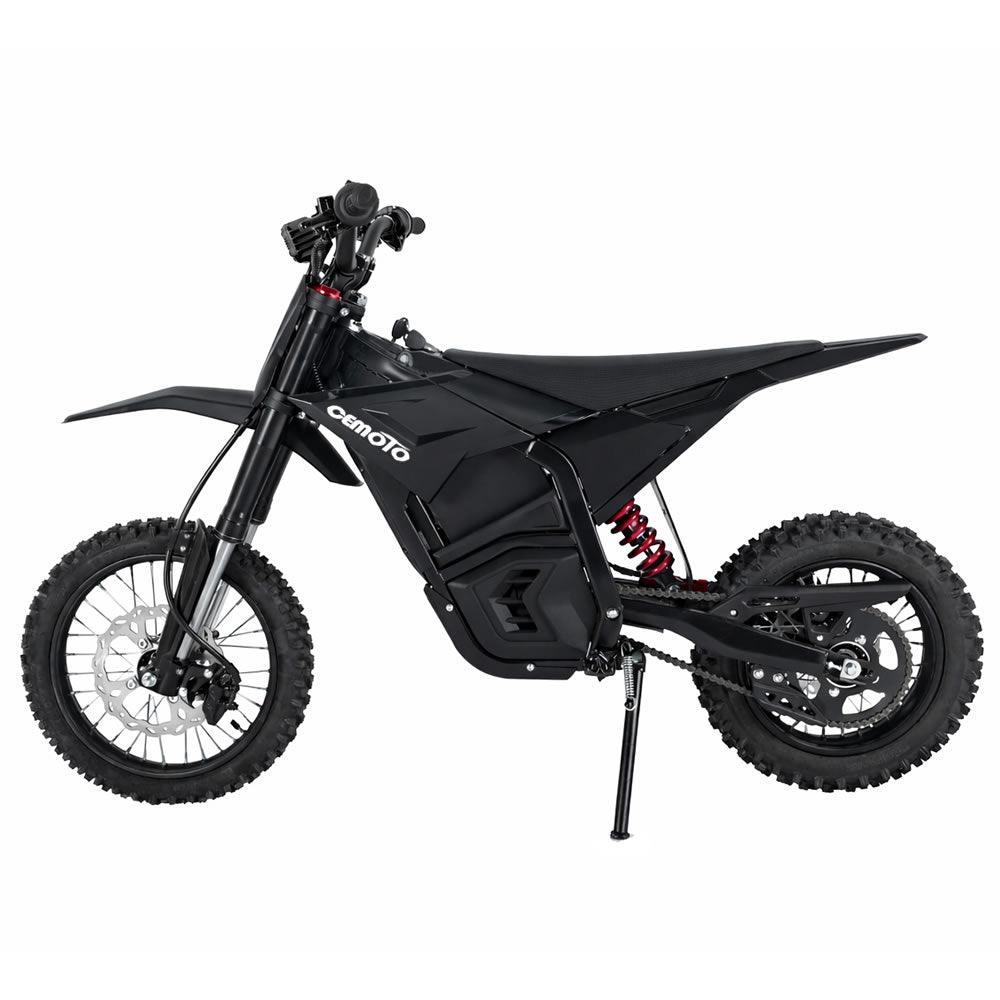
The CEMOTO B69 750W Heavy Duty E-Bike offers 150 kg load capacity with a powerful motor suitable for urban deliveries. Review its specifications against your route data to determine fit.
For broader context on cargo bike features and use cases, see our Ultimate Guide to Cargo Electric Bikes in 2025 and the general guide to cargo electric bikes.
Conclusion
Selecting the optimal heavy-duty delivery cargo bike requires balancing payload, volume, handling characteristics, and route-specific needs. Front-load and long-tail designs each have scenarios where they can enhance efficiency, but the best results come from careful matching rather than assuming one style fits all operations. By evaluating real-world performance on your routes and considering total ownership costs, fleet managers can deploy cargo e-bikes that deliver measurable improvements in urban logistics while maintaining safety and reliability.
Important Note on Comfort and Safety: This article discusses setup and operational considerations for commercial cargo e-bikes. It does not constitute medical advice, diagnosis, or treatment. Cargo bikes are larger and heavier than standard bicycles, so proper training, load securing, and route assessment are essential. Riders experiencing discomfort or operating in challenging conditions should consult qualified professionals. Local regulations may impose additional requirements on commercial bike use.
