


Cargo E-Bike Fleet Pilot: Choose the Route Before the Bike


Plan a cargo e-bike fleet pilot with route baselines, reload tests, format checks, scorecard formulas, and clear scale, mixed-fleet, or redesign decisions.
Start a cargo e-bike fleet pilot with one repeatable route cluster, not a bike shortlist. Document its stops, workload, access, reload process, and current-route baseline, then run a controlled pilot with predefined measures. The result should be a route-specific choice: scale the tested cargo e-bike operation, keep a mixed fleet for named exceptions, redesign the route, or stop before buying multiple vehicles.

Choose One Route Cluster and Build Its Baseline
Start with one repeatable cluster, not an entire service territory. A dense delivery area can support many stops within a small footprint, but density alone does not prove that a cargo e-bike fits your workload or operating rules. The FHWA case study on dense delivery areas supports using density and repeated delivery patterns as route-selection inputs, not as a universal threshold.
Create the pilot brief in five steps:

- Isolate the cluster. Name the stops, delivery windows, service frequency, route owner, and decision question. For example: "Can this downtown cluster complete its planned work with a cargo e-bike while the van covers exceptions?"
- Map the work pattern. Record planned and completed stops, delivery frequency, stop spacing, packages per stop, and the number of items carried between reloads.
- Capture the current baseline. Log route miles, total elapsed time, driving or riding time, loading, waiting, delays, failed stops, handoffs, and available cost inputs from representative operating days.
- Describe the delivery job. Record package dimensions and weight ranges, customer access, parking or curb conditions, equipment, and any stop that needs unusual handling.
- Set ownership and timing. Define the pilot period, data owner, exception log, and review date before selecting a vehicle.
Use ordinary operating days rather than a best-case estimate. Include loading, waiting, failed stops, weather-related delays, and other friction the vehicle would face in normal service.
Qualify the Cluster by Stops, Workload, and Travel Pattern
Classify the route as a candidate, candidate with exceptions, or poor fit before choosing a format. Base the classification on observed workload, access, timing, and travel conditions—not on a citywide map or an invented stop-count cutoff. Boston pilot guidance also points to neighborhood density, difficulty for larger vehicles, and local cycling context as useful screening factors when evaluating delivery geography.
| Route dimension | Evidence to record | Route-fit signal |
|---|---|---|
| Stop pattern and frequency | Repeated stops, spacing, delivery windows, and completed work | Candidate: a coherent cluster. Exception: a workable core with isolated stops. Poor fit: scattered work with no practical sequence. |
| Workload and travel | Package shape, weight range, parcels per stop, reload quantity, daily miles, terrain, and road surface | Candidate: the planned load and travel pattern can be tested as one workflow. Exception: oversized loads or difficult terrain need another vehicle. Poor fit: material workload or travel requirements remain uncovered. |
| Access and operating pressure | Parking, loading, customer access, curb friction, weather exposure, and time-sensitive stops | Candidate: access and timing are workable. Exception: named stops need handoff or van coverage. Poor fit: reliable service cannot be planned under ordinary conditions. |
A dense core with oversized, remote, time-critical, weather-exposed, or access-limited stops is usually a mixed-fleet question, not an automatic rejection. Move those stops to a fallback route or retain another vehicle when they prevent a reliable planned run. Do not average their failures into the core route's result.
Prove the Reload or Staging Point in the Real Workflow
Treat reload time as route time. A staging point is workable only after a real handoff test records access, package handling, turnaround, staffing, security, charging or battery handling, and exception recovery. A Seattle cargo e-bike pilot used preloaded containers, a staging location, and charging infrastructure; use that case as context while testing your complete staging and loading workflow.
- Place the point in the sequence. Map when the vehicle arrives, which packages are exchanged, and how the reload affects delivery windows.
- Document the handoff. Record the loading surface, package organization, access permissions, staffing, security, container or package handling, and charging or battery process your operation actually proposes.
- Time arrival to departure. Include unloading, package retrieval, reloading, securing, waiting, interruptions, and departure. Do not measure only the distance from the route to the location.
- Assign exceptions. Name who handles a late, damaged, missing, inaccessible, or misrouted package and how the route continues.
- Test the fallback. Run the handoff during the planned delivery window, then document what happens if the point is unavailable, delayed, or unable to support the planned load.
A nearby location that works on a map but fails during the delivery window is not a proven reload point. Keep the measured handoff friction in the pilot scorecard.
Clear Local Operating, Weather, Terrain, and Service Checks
Complete the route-specific operating gate before the first run. Verify the selected jurisdiction's vehicle, riding, parking, loading, staging, dimension, speed, weight-rating, and equipment requirements with the relevant authority or property operator. For example, NYC local rules can set vehicle and loading conditions, but those rules apply to New York City and are not national US requirements.
- Local rules and access: Confirm the permitted vehicle class, dimensions, loading zones, parking or curb permissions, manufacturer weight-rating requirements, and any training or equipment obligations.
- Weather and terrain: Document how heat, cold, wind, snow, rain, hills, rough surfaces, temporary closures, and seasonal conditions change the route. Assign a resequencing plan, fallback vehicle, route change, or pause condition to each material exception.
- Charging and secure parking: Confirm where the vehicle is stored, how charging or battery handling works, who checks it, and what happens if charging is unavailable.
- Service response: Assign ownership for inspections, mechanical interruptions, battery issues, recovery, and customer communication. Record the response expected during the delivery window.
Do not start the pilot until local riding, parking, loading, and cargo-vehicle requirements are confirmed and a weather or terrain fallback is documented. Pause or redesign the trial if charging, secure parking, service response, or route conditions cannot support the operating plan. A fleet maintenance checklist can support routine preparation, but it does not replace local verification or a route-specific service plan.
Match the Vehicle Format to the Qualified Route
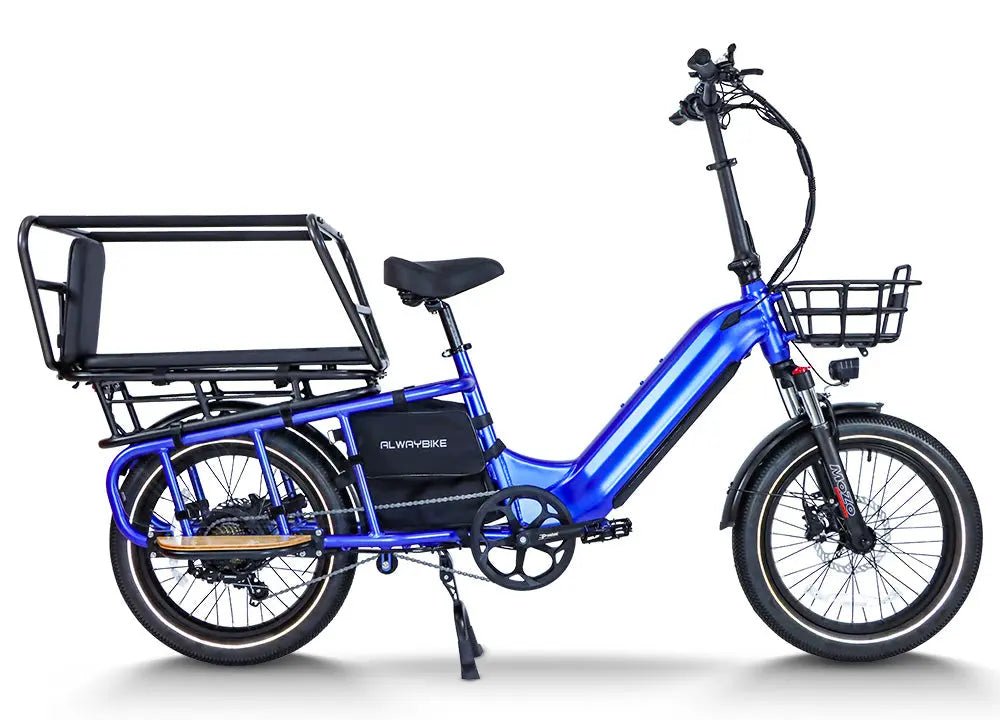
Choose the format that matches the documented cargo, access, reload, and service workflow. Compare front-load and long-tail designs on the actual route, while a mixed fleet makes sense when the qualified core works but named exceptions need another vehicle. Research on route distance, stop spacing, and per-stop volume supports this route-specific comparison, not a universal ranking or van-replacement claim.
| Route requirement | Format to investigate | Route-specific fit test |
|---|---|---|
| Packages need forward visibility, a particular loading method, or a defined cargo shape | Front-load format | Load representative packages, check sightlines and customer handoff, then test turning, parking, and reload access on the route. |
| Cargo must remain accessible behind the rider, with a different balance of capacity and maneuvering | Long-tail format | Test the actual package mix, securing method, rider access, turning space, customer handoff, and stability through the route sequence. |
| A dense core is workable but some stops are oversized, remote, time-critical, weather-exposed, or access-limited | Mixed fleet | Assign each exception to another vehicle or handoff process and compare completed work, interruptions, and cost assumptions without averaging exceptions away. |
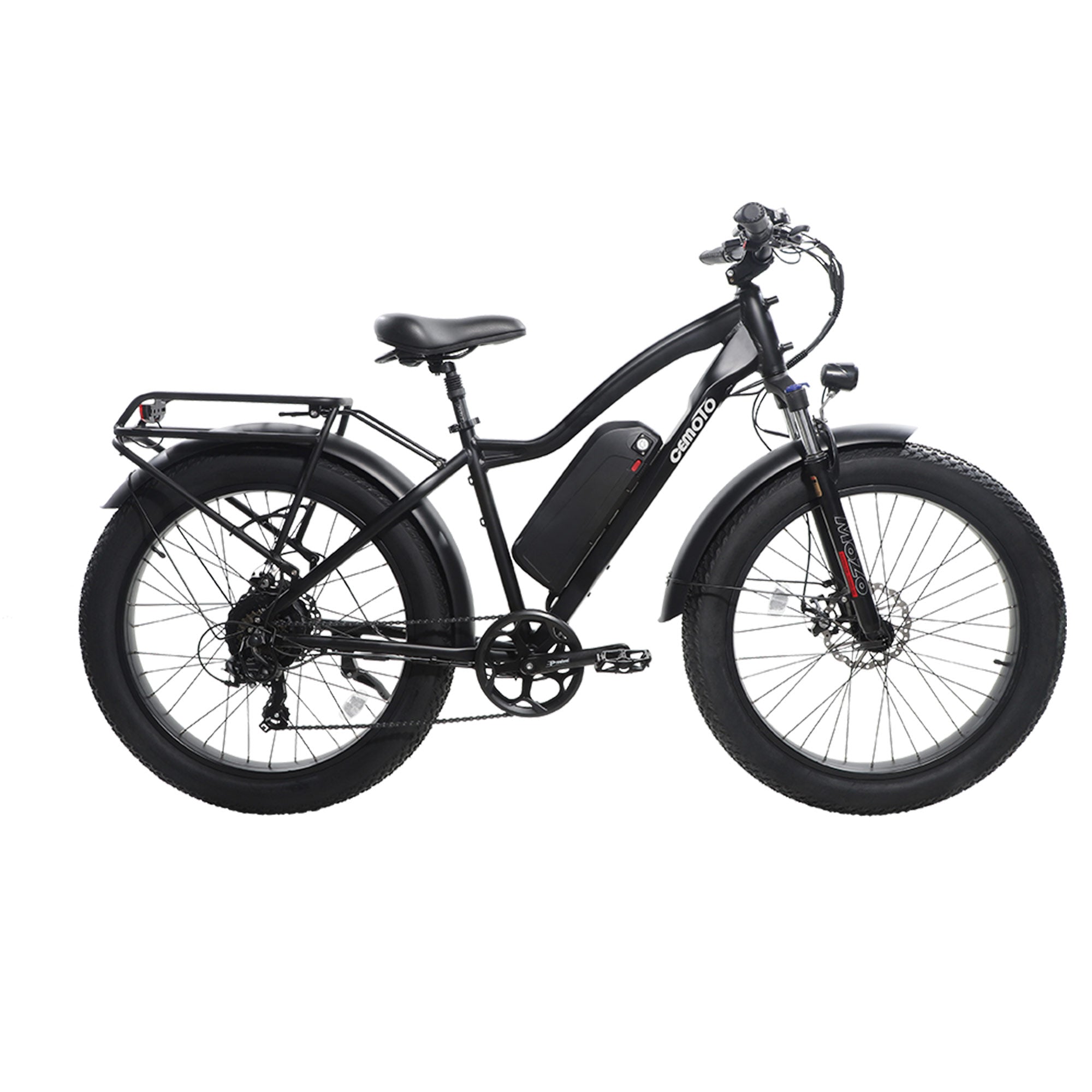
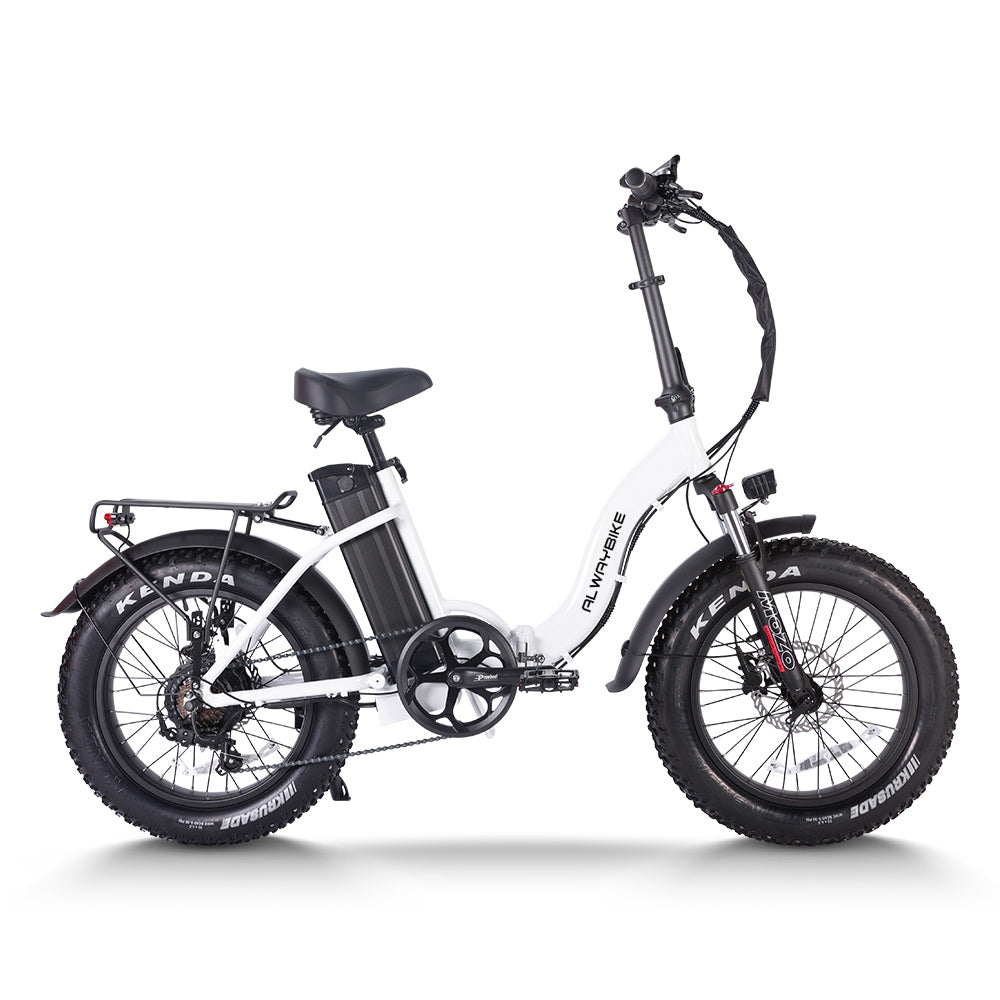
Once the route requirements are written, review a candidate such as the CEMOTO B69 cargo e-bike against them. Supplied product specifications include a 750W motor, 48V 20Ah battery, stated 150 kg load capacity, 20 × 3.0 tires, and hydraulic disc brakes. Those specifications support a product comparison only. They do not establish route suitability, uptime, service response, or cost per drop, and conflicting product-page values should be confirmed before they influence the pilot.
Do not select a format when its documented capacity, dimensions, access, or service requirements fail to cover the route workload and fallback plan.
Run the Cargo E-Bike Fleet Pilot and Calculate a Comparable Scorecard
Run the selected cluster with the documented load, staffing, reload process, and delivery window. Compare the same route definitions with the current baseline, and write the formulas, cost assumptions, missing-data treatment, and exception rules before the first test. Official pilot research supports logging miles, packages, stops, battery use, parking, and site activity, rather than recording completed drops alone.
Run Each Test Day the Same Way
- Start with the same cluster, planned load, staffing, reload process, and delivery-window definition.
- Log planned, completed, late, failed, handed-off, and rerouted stops; start and finish time; miles; loading and waiting; charging; weather; terrain; parking; interruptions; handoffs; and unavailable vehicle time.
- Repeat the process across representative operating days, then compare the results with the current route baseline. Retain cancellations and exceptions instead of removing them from the result.
Use These Metric Definitions
| Metric | Calculation or recorded field | Decision use |
|---|---|---|
| Drops per hour | Completed deliveries ÷ defined active route hours. State whether loading, reloads, waiting, and exceptions are included. | Compare completed work on the same route definition. |
| Uptime | Time available for scheduled service ÷ scheduled service time. Record every unavailable period and its cause. | Identify whether interruptions prevent dependable coverage. |
| Route completion and daily miles | Completed planned stops ÷ planned stops; record actual route miles for each day. | Show how much planned work was completed and what travel the route required. |
| Reload friction | Define and record reload duration plus interruptions, or another stated business measure. | Show whether staging adds material route time or recovery work. |
| Service interruptions | Count and duration by cause, including charging, mechanical, access, and handoff events. | Separate isolated exceptions from recurring operating problems. |
| Cost per drop | Included pilot cost ÷ completed deliveries. State labor, energy, maintenance, downtime, vehicle allocation, purchase, overhead, and excluded-cost assumptions. | Compare the tested route with its baseline without presenting a full TCO or universal benchmark. |
These are cargo bike fleet pilot metrics, not industry targets. A pilot scorecard can compare this route with its own baseline, but it cannot establish a universal drops-per-hour, uptime, mileage, or cost-per-drop threshold. For a deeper cost review after the route data is complete, compare route-level cost assumptions.
Make the Scale, Mixed-Fleet, or Reject Decision
Before scaling a cargo e-bike fleet, use repeated route results to choose one next action. Do not scale from one favorable run; require a documented response for exceptions the pilot did not cover. Research comparing cargo bikes and trucks likewise treats reload distance, stop spacing, delivery volume, and route distance as variables, not as proof that one mode replaces the other everywhere.
| Outcome | Evidence pattern | Next action |
|---|---|---|
| Scale the tested cargo e-bike route | Repeated representative runs complete planned work, loading and reloads are workable, interruptions are controlled, and the route compares favorably with its baseline under stated assumptions. | Expand only the tested cluster first, record the owner and review date, and keep the exception log active. |
| Retain a mixed fleet | The dense core performs, but named stops or conditions require another vehicle, handoff, or fallback. | Assign those exceptions explicitly and continue comparing completed work and route-level costs by operating model. |
| Redesign, run another trial, or reject | Completion, uptime, loading, safety, serviceability, or cost remain unacceptable after reasonable route or reload adjustments. | Change the cluster or workflow, run a targeted second trial, or stop the purchase plan. Record the evidence and unresolved owner. |
The final decision should name the tested route, evidence period, assumptions, exceptions, owner, and next review point. If the route brief, operating gate, and scorecard support a vehicle test, review the CEMOTO B69 against those documented requirements or request clarification from our team. We do not present the product listing as proof of route fit.
Frequently Asked Questions
Can cargo bikes replace delivery vans?
Sometimes, but only for a route that demonstrates repeatable completed work under its own operating conditions. A dense core may support a cargo-bike pilot while larger loads, remote stops, difficult access, weather exposure, or tight delivery windows remain with a van. Compare both modes using the same route definitions and assumptions before changing fleet coverage.
What routes are best for cargo e-bike delivery?
The strongest starting point is a repeatable cluster with frequent stops, manageable spacing, workable loading and parking, a tested reload point, and a documented fallback. There is no universal mileage or stop-count cutoff. Classify the route from its recorded workload, access, delivery windows, terrain, weather, and service conditions.
What should a cargo-bike pilot measure?
Measure drops per hour, uptime, route completion, daily miles, reload friction, service interruptions, and cost per drop. Define each formula and the included costs before the first run, then retain failed stops, handoffs, downtime, weather cancellations, and other exceptions in the comparison.
How should a small business choose a reload point for a cargo-bike route?
Test the proposed point during the actual delivery window. Record access, package organization, staffing, security, arrival-to-departure time, charging or battery handling, and recovery when the point is unavailable. A nearby location is not operationally useful until that complete workflow works.
