

Folding E-Bike or Full-Size Commuter? Decide by the Daily Carry


Choose an electric bike for commuting by comparing daily carry, storage, transit rules, ride comfort, range reserve, and exact-model checks before checkout.
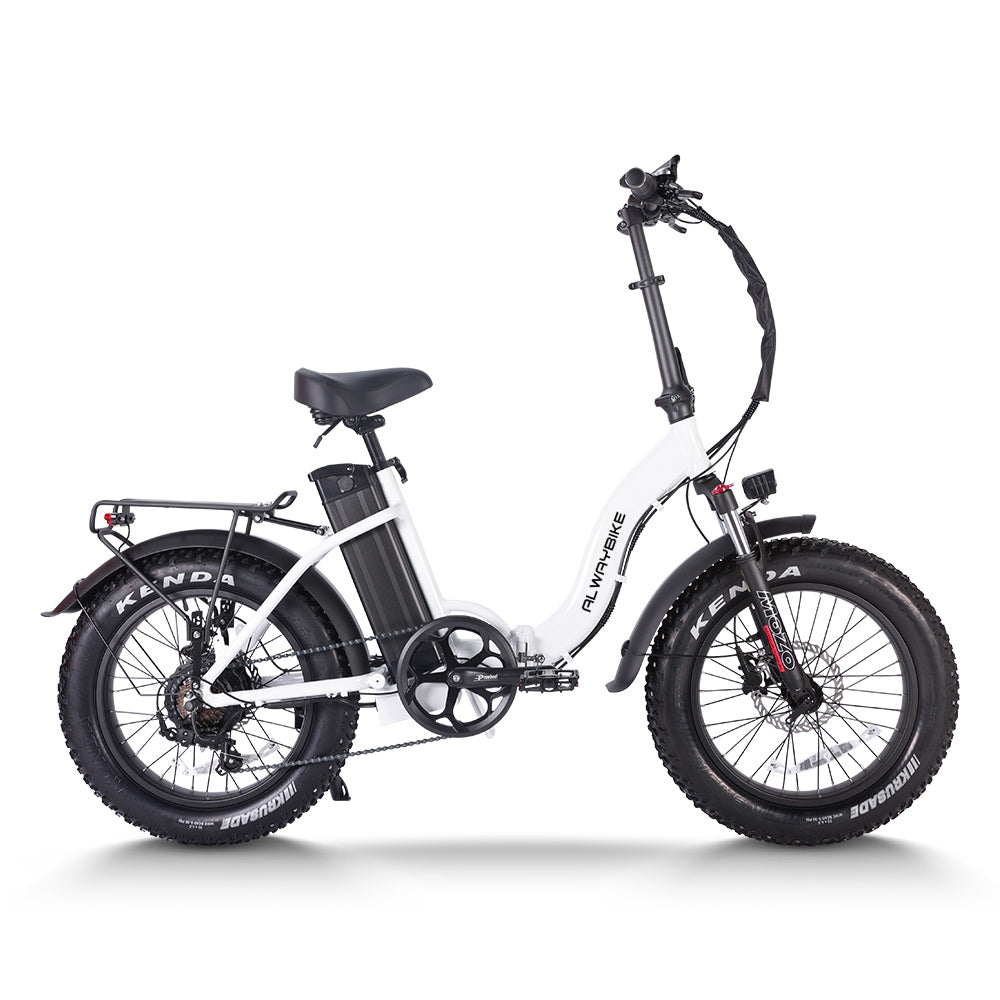
A folding e-bike is usually the better electric bike for commuting when you regularly need to lift, fold, transfer, or store the bike indoors. Choose a full-size commuter when the route is mostly uninterrupted riding, the bike can stay assembled, and comfort, stability, range reserve, or service access matter more. The deciding factor is how often you carry the bike—not simply how often you ride.

Choose the Right Electric Bike for Commuting by Daily Carry
Choose a folding bike when stairs, elevators, transit transfers, or office and apartment storage create a recurring obstacle, as long as the bike's total weight and folded dimensions fit the route. Choose a full-size model when you can ride continuously and leave the bike assembled, making ride quality and range reserve more important than compact storage.
A folding frame reduces storage volume, but it does not automatically make the bike easier to carry. One tested folding commuter with small 20-inch wheels accelerated quickly in stop-and-go traffic and took some getting used to at higher support settings. That example shows why you should assess wheel size and handling on the actual model. This tested commuter example is model-specific, not a universal comfort or stability claim. Check the exact bike's total weight separately.
Separate riding frequency from carrying frequency. You might ride to work every day but still need a folding format if you carry the bike up stairs at home, take it through a station, fold it into an office, and move it into indoor storage each evening. Conversely, a longer bike-only trip may favor a full-size model if the bike stays assembled and the main priority is comfortable, stable riding.
Use the format that removes the most frequent or restrictive failure point. Before weighing comfort or range, treat a building, workplace, or transit rule that blocks the required folded or assembled format as a hard fit boundary.
Score Your Actual Weekly Route and Storage Points
For an electric bike for commuting, walk through one complete workday from home to work and back, recording every lift, tight maneuver, storage point, transit segment, and uninterrupted riding segment. This matrix is a reader-input framework, not a validated universal score; use the most frequent or restrictive condition as a provisional format signal, then compare it with the exact model and current local rules.
| Route condition | What to record on your weekly commute | Format signal |
|---|---|---|
| Stairs and lifts | Flights, carrying frequency, landings, and whether you can handle the complete bike comfortably | Folding if repeated carrying blocks the trip, but only if the exact weight and carrying points work; otherwise, neither format passes yet |
| Elevators and tight maneuvering | Doorway, hallway, elevator, and turn measurements; note whether folding is required | Folding if the folded package clears the path; full-size if the assembled bike clears it without repeated handling |
| Transit boarding and storage | Operator, transfers, boarding process, bike condition, storage location, and current size or weight limits | Folding only after the operator permits the exact bike; full-size if the system accepts an assembled bike under the route's conditions |
| Office or apartment storage | Tightest entrance, storage space, daily handling, and whether the bike can remain assembled | Folding if indoor volume is the hard constraint; full-size if secure assembled storage is available |
| Uninterrupted riding | Longest continuous segment, pavement, starts and stops, cargo, and ride length | Full-size when continuous riding is the dominant task and carrying friction is low |
| Comfort and stability priority | Posture, tires, handling, pavement, cargo, and how long you ride each day | Whichever exact model better matches those conditions; frame format alone is not enough |
| Range reserve | Longest normal day, route variation, weather, cargo, charging locations, and return-trip buffer | Full-size only if its exact battery and charging plan provide the needed reserve; folding if portability prevents a practical failure |
| Service access | Local repair options, replacement parts, assembly needs, warranty, and returns | Whichever exact model has the clearer support path for your location |
Transit permission is operator-specific. For example, Amtrak's current folded-bike dimensions and storage rules allow qualifying true-folding bicycles under 34 by 15 by 48 inches on its trains instead of a piece of carry-on luggage, subject to folding and storage requirements. BART, by contrast, states that folded bikes are allowed in all cars at all times. Neither example establishes permission on your train or transit system.
Measure the tightest doorway, hallway, elevator, and storage point before shopping. If apartment or office storage is the main constraint, use these folding and indoor storage checks as a follow-up, but do not substitute a storage description for your own measurements.

After completing the matrix, identify one dominant condition: the repeated event that creates the most friction or the single restriction that can stop the commute. A folding signal means carrying, folding, transit handling, or indoor storage is the main problem. A full-size signal means the bike can remain assembled and uninterrupted riding is the main task. The matrix does not grant permission to board a train or bring a bike into a building.
Break a Close Decision With Ride Quality, Range, and Service Priorities
When both formats pass the route test, choose folding if portability prevents a recurring commute failure. Choose full-size if the bike can stay assembled and comfort, stability, range reserve, or service access are more likely to determine whether the commute works day to day.
Comfort and stability depend on the model and route, not automatically on whether the bike folds. Compare posture, pavement, tire setup, wheelbase and handling, cargo, repeated starts and stops, and ride length on the exact bike. A tested non-folding commuter weighed roughly 40 pounds and was easy to carry, while its 360-Wh battery could require more frequent charging at higher speeds than a heavier bike with a larger battery. That example shows that weight, ride feel, and battery capacity can trade off independently; it does not mean every full-size bike is lighter or every folding bike has less range.
For range, write down the longest normal riding day rather than relying on a headline mileage figure. Include route variation, weather, cargo, riding speed, charging access, and a return-trip buffer. Stated range is not guaranteed mileage. If the route is long but storage and transit are already solved, range reserve may move the decision toward a full-size model. If the commute fails because you cannot bring the bike indoors or through a transfer, portability remains the stronger priority.
Service access is a separate exact-model check. Ask who can work on the bike, how replacement parts are obtained, whether assembly is required, and what the warranty and return terms cover. Do not assume either frame format is universally easier to service. You can estimate your commute range needs after recording your longest normal day and charging plan, but use the result as a planning input rather than a guarantee.
The best tie-breaker is the more likely daily failure. If the bike cannot be carried, stored, or taken through a required transfer, a comfortable ride does not solve the commute. If carrying is occasional and the bike's posture, handling, or range reserve does not suit the main ride, compactness may not justify the tradeoff. Write down the route conditions and model details before treating either choice as settled.
Verify the Exact Model Before You Put It in the Cart
Before checkout, compare the exact product page with your measurements and current transit, building, warranty, shipping, and return policies. For a folding candidate, verify the total folded and assembled dimensions, total weight, carrying points, folding steps, and clearance through every access point. For either format, verify charging and battery-removal details, the basis for stated range, included equipment, and assembly needs.
If Amtrak is part of the route, check its current e-bike requirements for weight, tire width, motor output, speed, battery certification, and storage in addition to folded dimensions. Its current e-bike limits are operator-specific. Also confirm that the bike is a true folding bicycle and that the complete folded package meets the applicable requirements, rather than relying on a wheel-size or “folding” label. Amtrak explains those true-folding and complete-package requirements separately.
Use this exact-model checklist before putting a bike in your cart:
- Compare the product page's folded and assembled measurements with the tightest measured path.
- Confirm the complete bike weight and carrying points, not just the folded dimensions.
- Record battery removal, charging location, included equipment, and the basis for any range statement.
- Confirm assembly requirements and identify local repair or support options.
- Read current replacement-part, warranty, shipping, and return terms.
- Recheck the actual transit operator's rules, building policy, workplace storage policy, and boarding process.
The EB40 page lists a Shimano 7-speed drivetrain, 20 mph maximum speed, Class 2 status, rack and fender equipment, a two-year warranty, and a 15-day return policy. The current EB40 product page contains conflicting motor, battery, and brake specifications, so do not treat those numerical values as settled. View the EB40 specifications and reconcile the current listing before relying on any unresolved detail.
After your route score favors portability, you can shop foldable e-bikes. If the bike will stay assembled and the ride is the priority, shop full-size commuter e-bikes. These collections are shopping destinations, not proof that every listed bike meets a particular transit, storage, comfort, range, or service requirement.
The practical answer is simple: choose folding when repeated carrying, transit handling, or indoor storage is the constraint that could break the commute, and choose full-size when continuous riding and ride-quality or range-reserve priorities dominate. Measure the route, verify the exact model and current policies, then shop the collection that matches the constraint you actually need to solve.
Frequently Asked Questions
These answers apply the same daily-carry test to common commuting situations.
Are folding e-bikes good for commuting?
Yes, when repeated carrying, transit handling, or indoor storage is what makes the commute difficult. A folding e-bike is not automatically the better choice for a longer bike-only route, especially when the bike can stay assembled and comfort or range reserve matters more. Start by recording where the bike must be lifted or stored each day.
Is a folding e-bike less comfortable than a full-size bike?
Not automatically. Comfort depends on the exact bike and route, including posture, tires, pavement, cargo, handling, starts and stops, and ride length. Compare those conditions on the model you are considering instead of treating the folding label as a comfort verdict.
Can a folding e-bike go on a train?
Sometimes, but the operator decides. Check current folded dimensions, complete weight, true-folding status, storage, boarding conditions, and e-bike limits for the specific system. Amtrak and BART illustrate why one agency's policy cannot answer the question for every US train.
How do I choose between a folding e-bike and a full-size commuter for apartment storage?
Measure the tightest doorway, hallway, elevator, and storage point, then note how often you must move the bike indoors. Favor folding when repeated indoor handling is the dominant obstacle and the exact folded package fits. Keep full-size in consideration when the bike can remain assembled in secure storage and the main ride is continuous.
