
Electric Dirt Bike Title and Registration: What to Verify Before Buying


A street-legal electric dirt bike is not established by a product label alone. Before paying, verify the exact VIN and ownership documents, determine how your state classifies the bike, check equipment and certification requirements, ask the DMV about the specific vehicle, and obtain an insurer's answer. If any fundamental proof remains unresolved, pause or walk away.
A street legal electric dirt bike has a realistic path to public-road use only when four separate gates align: you can identify and transfer the exact vehicle, its classification and equipment fit the state's process, the DMV accepts the VIN and documents, and an insurer will cover the intended use. A seller's "street legal" wording does not prove any of those outcomes. Verify each gate before paying, then decide whether to buy, verify further, or walk away based on documented answers.

Verify the VIN and MSO Before Treating an Electric Dirt Bike as Street Legal
Start with the bike's identity and ownership paperwork—not accessories or marketing language. A vehicle-specific VIN and acceptable ownership documents can support a title review, but an MSO/MCO or title does not automatically establish public-road eligibility.
Check That the VIN Identifies the Exact Vehicle
Compare the VIN stamped or displayed on the bike with the ownership document, invoice, and application paperwork. The characters should match exactly. A missing, altered, unreadable, or inconsistent identifier is a reason to pause before payment. New York DMV VIN guidance, for example, tells buyers to compare the VIN on the title with the actual vehicle before buying.
Ask the seller for a clear VIN photo and, if you cannot inspect the bike in person, the state-specific VIN format or location. These are useful VIN requirements for electric dirt bikes to resolve early, but your state's DMV—not the seller—decides whether the identifier is acceptable. Do not assume a motor serial number or partial frame number substitutes for a state-required VIN.

Confirm What the MSO Actually Supports
Ask whether the new bike comes with a vehicle-specific Manufacturer's Certificate of Origin (MCO), also called an MSO, and whether it will be transferred to you with a bill of sale. For example, New York's MV-82.1 instructions list a bill of sale and transferred MCO together for a new vehicle; that is a state example, not a nationwide document rule.
When asking does an electric dirt bike come with an MSO, ask a second question: What classification does the document or manufacturer assign to the exact model? An MSO can help establish original ownership, while the DMV may still require a title application, inspection, classification review, or other paperwork. Treat ownership proof, title eligibility, registration, and insurance as separate checks.
Match the Manufacturer Classification to the Road-Use Goal
Classification comes before equipment. First determine whether the manufacturer and your state treat the exact bike as a road vehicle, off-highway vehicle, motorcycle, moped, or another category. Then use an equipment list as a screening check. Adding parts does not necessarily change the original classification or create a registration route.
Separate Off-Road Classification from Road-Vehicle Eligibility
An off-road designation can remain a barrier even when a bike has lights, mirrors, street tires, or other road-style components. California DMV's eMoto classification provides a state-specific example: the DMV describes certain electric motorcycles or eMotos as off-highway vehicles subject to OHV registration. Do not generalize that treatment to every state, but use it as a reminder to check the product category and state category together before assuming a street legal electric dirt bike is eligible for public roads.
California DMV conversion guidance also states that an off-highway vehicle cannot be converted for on-highway use unless it was manufactured for dual purposes. Treat that as a California boundary, not a national rule. As a separate state example, Virginia's converted off-road motorcycle form asks for certification that the vehicle conforms to applicable federal motor vehicle safety standards. This illustrates why certification or inspection may matter beyond adding parts.
Use the State's Equipment List as a Screening Check
After classification is clear, compare the bike's standard configuration with the requirements published for the relevant vehicle category. Use this table to identify questions—not to conclude that an accessory package makes an off-road bike eligible.
| Item To Verify | Why It Matters |
|---|---|
| Headlight, brake light, and required signals | The state may specify which lighting functions or approvals apply. |
| Mirrors, horn, and reflectors | These may be part of the category's equipment or inspection checklist. |
| Tires and brakes | The state may require equipment suitable for the intended road category, not merely a product labeled "street." |
| Plate mounting and certification | A plate location, inspection, or conformity document may be separate from the parts installed. |
If you are comparing street tire options, treat them as an equipment question only; the linked street tire options do not establish classification, title eligibility, DMV acceptance, or insurance coverage. Ask the DMV whether the exact model needs certification, inspection, or manufacturer documentation beyond the equipment itself.
Ask the State DMV About This Exact Bike Before Paying
The safest way to learn how to register an electric dirt bike in your state is to give the DMV the exact VIN, model, manufacturer classification, ownership documents, and intended use. Ask about title and registration separately: proof of ownership does not automatically authorize public-road operation.
Before contacting the DMV, prepare:
- The exact VIN and a photo of the identifier.
- The manufacturer, model, model year, and written classification.
- The MSO/MCO, bill of sale, invoice, and any existing title.
- Standard equipment and any proposed modifications.
- Intended use, such as public roads, private land, or both.
Resolve the Vehicle Category and Application First
Contact the agency that handles the intended vehicle category and ask which application applies to the exact VIN. Use specific terms without assuming any one is correct: motorcycle, moped, OHV, off-road vehicle, converted motorcycle, or another category.
A title generally addresses ownership, while registration addresses authorization to operate under the state's process. Virginia DMV's title explanation describes a title as proof of ownership and registration as permission to drive, but apply that terminology cautiously because exact categories and procedures vary by state.
Confirm Every Document and Inspection Requirement
Use this copy-ready sequence when contacting the DMV:
- "Which vehicle category and application apply to this exact VIN and intended use?"
- "Will you accept this MSO/MCO, bill of sale, and VIN as ownership proof?"
- "Is a VIN inspection, equipment inspection, safety certification, affidavit, or additional form required?"
- "What title, registration, plate, fee, tax, and deadline requirements apply?"
- "Does the state require proof of insurance before registration, and what vehicle category must the policy identify?"
- "Can you send the current document checklist or confirm the answer in writing?"
The answer may change if you use the bike only off-road instead of on public roads. Save the agency's reply and the documents you supplied. A generic answer about electric bikes is less useful than a response tied to the exact VIN and classification.
Get an Insurer's Yes Before Assuming Registration Solves the Problem
Insurance is a separate practical gate. Before buying for public-road use, ask a licensed insurer or agent whether it will cover the exact make, model, VIN, classification, and intended use. DMV willingness to process paperwork does not guarantee a policy.
Give the insurer the same information you provided to the DMV and ask what policy type, documents, exclusions, and binding conditions apply. Ask whether coverage can begin only after title or registration, whether public-road use is excluded, and whether modifications affect underwriting. Some state registration processes require proof that a vehicle is insured; New York DMV's vehicle ownership guidance provides one state example. That does not establish that an insurer will accept every electric dirt bike.
If the insurer cannot quote the vehicle, excludes the intended use, or declines the exact classification, treat that as unresolved rather than assuming another policy will work. You may seek another qualified insurer, but obtain confirmation for the same VIN and use before placing the order.
Use the Evidence to Choose Buy, Verify, or Walk Away
Make the purchase decision from the evidence available before checkout. A missing document may be fixable; a fundamental identity or classification conflict may not.
Use these outcomes as a final check:
- Buy: VIN and ownership documents match; classification fits; the DMV path is confirmed; equipment and insurance checks align.
- Verify first: The seller or agency can provide a specific missing document, inspection, classification answer, or insurer response before payment.
- Walk away: The seller cannot provide vehicle-specific identity or ownership proof, or the stated use conflicts with the documented classification.
| Outcome | Evidence Required | Unresolved Condition |
|---|---|---|
| Buy | VIN and ownership documents match; classification fits; DMV path is confirmed; equipment and insurance checks align. | No material gate remains unanswered for the intended use. |
| Verify First | The seller or agency can provide a specific missing document, inspection, classification answer, or insurer response before payment. | The next answer is concrete and obtainable, with no known fundamental conflict. |
| Walk Away | The seller cannot provide vehicle-specific identity or ownership proof, or the stated use conflicts with the documented classification. | DMV or insurer rejects the path, or the seller relies on accessories instead of resolving the classification. |
If the seller cannot provide acceptable ownership proof, pause and contact the DMV before buying. New York DMV ownership guidance illustrates why unresolved ownership proof can prevent a title or registration in that state; other states may use different rules.
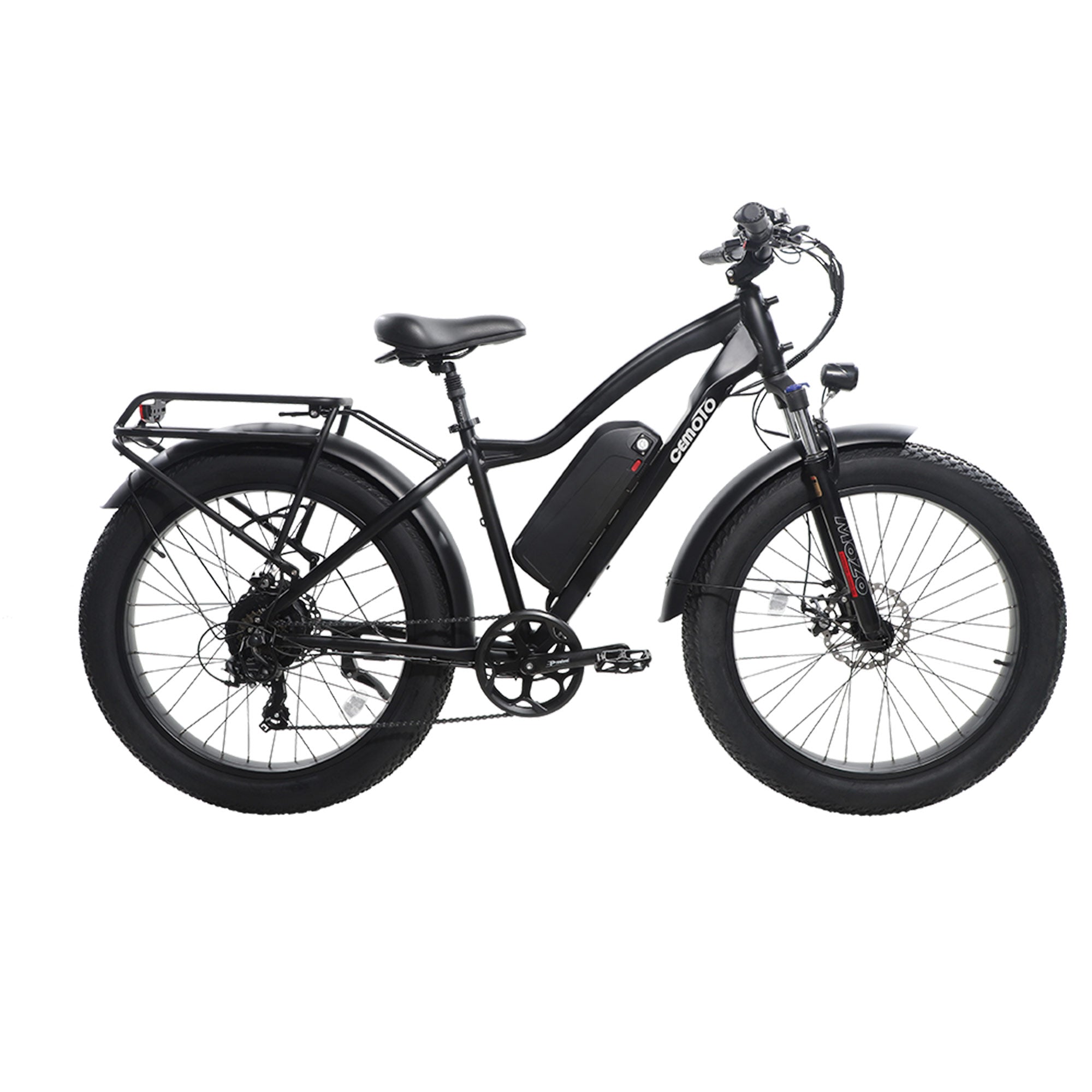
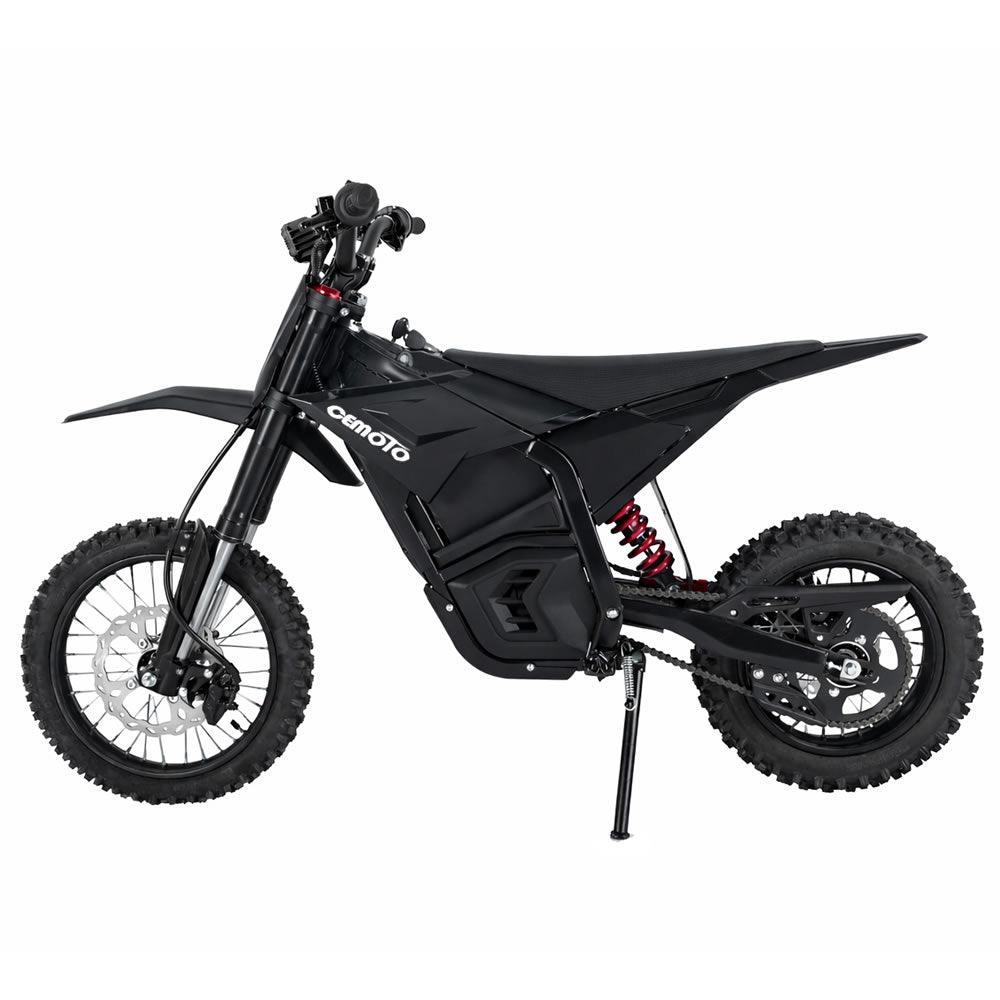
For an off-road purchase, be honest about the use case rather than assuming a later conversion will be available. If the paperwork, classification, agency response, and insurance answer all support public-road use, save the confirmations with your purchase records. If they do not, choose an off-road use case or a different vehicle instead of relying on a promise that registration will be handled later. You can review CEMOTO D-Series models or the broader electric dirt bike selection for navigation, but those pages are not proof of street eligibility.
Before paying, send the exact VIN and document list to your DMV and ask an insurer about that same vehicle. Do not place the order until both answers support the intended use.
FAQs
Use the questions below to pressure-test the paperwork, vehicle category, equipment, and insurance before you commit.
Can I Register an Electric Dirt Bike If the Seller Calls It Street Legal?
Possibly, but the answer depends on the exact VIN, vehicle category, and documents your state accepts. Ask the DMV whether its application route applies before checkout; the seller's label is not controlling.
What If an Electric Dirt Bike Arrives Without an MSO?
Ask the seller for the vehicle-specific MSO/MCO and bill of sale. If the MSO is unavailable, ask the DMV whether it accepts substitute ownership proof and get that answer in writing before proceeding.
Can a VIN-Less Electric Dirt Bike Be Titled or Registered?
Treat a missing or unacceptable VIN as unresolved. Ask the DMV whether an official correction or inspection process exists before buying, and do not rely on a motor serial number as a substitute without agency confirmation.
Do Street Tires Make an Off-Road Electric Dirt Bike Street Legal?
No. Tires address only one possible equipment question. They do not establish the vehicle's classification, title eligibility, DMV acceptance, or insurance coverage.
What If the DMV Says Registration May Be Possible but No Insurer Will Cover It?
Treat insurance as a stop condition for public-road use. Ask another qualified insurer if appropriate, but obtain a clear answer for the same VIN and classification before paying.
