

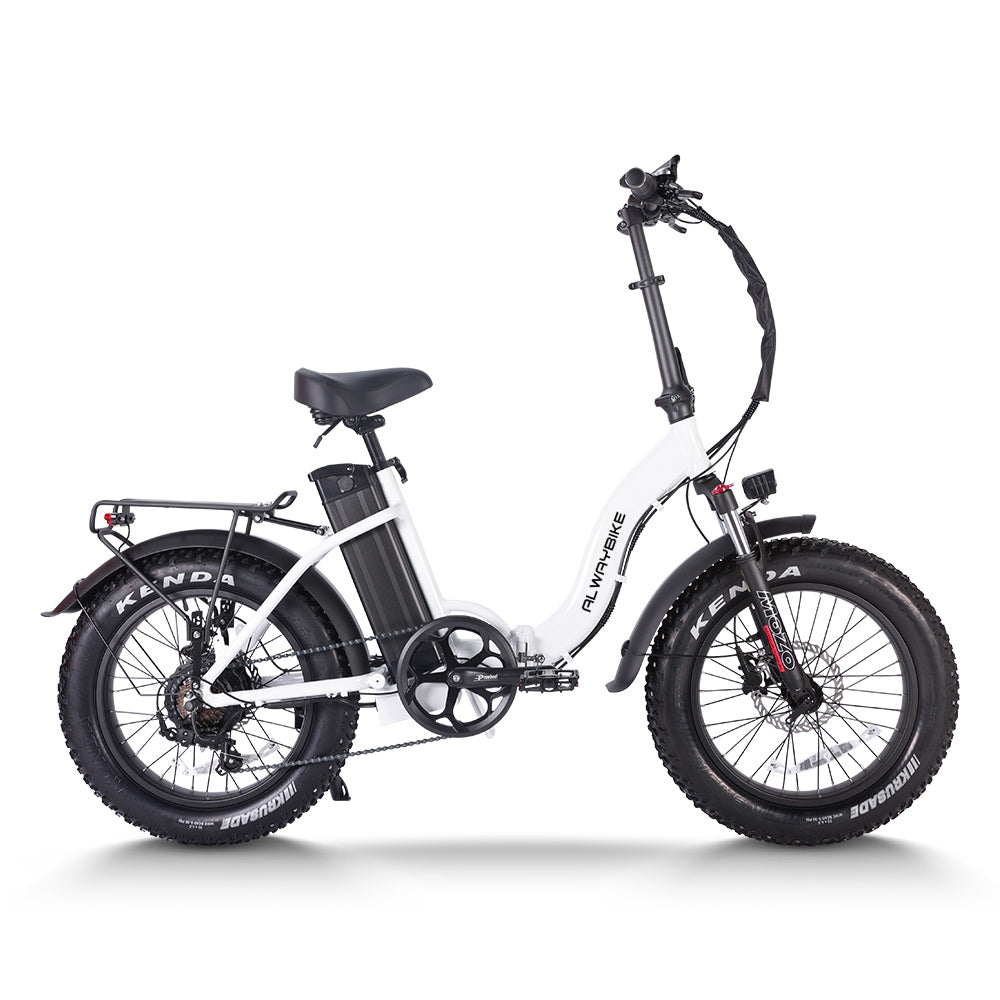

Can a Folding E-Bike Handle a Multimodal Commute?

An electric folding bike for commuting works only when carrying, operator access, workplace approval, and the full return route all fit your routine.
A folding e-bike can handle a multimodal commute when every required stage works on a normal day and on a likely disrupted day. An electric folding bike for commuting is not automatically a good fit just because it folds. You still need a workable plan for stairs, carrying, transit rules, workplace storage, charging, and the full trip home.
Start by mapping your home-to-transit-to-work route before comparing models. If one essential stage is unresolved, treat the commute as unresolved rather than assuming the bike will work.
Map the Full Commute Into Pass-or-Fail Requirements
The first failed stage controls the decision. Record the route in travel order, then mark each stage Pass, Fail, or Unresolved using actual measurements, operator rules, and workplace permissions.
| Route stage | Inputs to record | Pass condition | Fail trigger | Status |
|---|---|---|---|---|
| Home and transfers | Tightest doorway, stairs, elevator, platform access, vehicle entrance, every lift, carry distance, folded dimensions, total weight, and folded-bike handling | The folded package fits through every physical bottleneck, and repeated carrying is manageable on normal and disrupted trips | A passage is too tight, a lift is impractical, or the plan depends on an unreliable elevator | Pass / Fail / Unresolved |
| Train or bus | Operator, vehicle, transfer, travel window, folded-size and weight rules, battery conditions, boarding, and onboard storage | The specific service permits the bike and provides a dependable way to board, stow it, and remove it | Permission, dimensions, weight, battery handling, crowding, or timing conditions do not work reliably | Pass / Fail / Unresolved |
| Final bike leg and return | Station-to-work and work-to-home distance, detours, hills, surface, weather, rider and cargo load, stops, assist use, and charging or backup plan | The full bike portion matches the selected model's battery and range conditions under realistic assumptions | The return trip depends on an unsupported maximum-range claim, unavailable charging, or a harder condition you have not accounted for | Pass / Fail / Unresolved |
| Workplace storage and charging | Approved location, folded dimensions, clear routes, indoor-storage permission, outlet access, charging permission, and no-charge backup | The bike and battery have an approved destination that fits and supports a dependable return trip | Permission, space, access clearance, or charging remains unknown or unsuitable | Pass / Fail / Unresolved |
| Overall verdict | The four stage results from a normal and likely disrupted commute | Every required stage is Pass | Any essential stage is Fail; Unresolved means more facts are required before purchase | Pass / Fail / Unresolved |
Use the tightest doorway, most demanding lift, strictest transit condition, least flexible workplace rule, or hardest return-trip condition as the controlling requirement. Once you have recorded those requirements, you can use the foldable e-bike collection to identify candidate models. Collection membership does not prove that any model meets your route.
Test the Folded Bike on Stairs, Doorways, and Transfers
A folding electric bike is physically suitable only when its folded dimensions and total weight match the tightest passage and you can repeat every lift without making the trip impractical. The word “folding” describes the format, not the carrying experience.
Measure the narrowest doorway, stair turn, elevator entrance, platform access point, vehicle entrance, and workplace path. Then count every time the bike must be lifted, carried, placed, or repositioned on both the normal trip and the likely disrupted trip. Include a no-elevator scenario if an elevator is part of your usual plan.
Compare the candidate's official folded length, width, height, and total weight with those measurements. Also look for instructions covering folded retention, carrying points, rolling the folded bike, and removing or carrying the battery. If those specifications or handling instructions are unavailable, physical portability remains Unresolved. Do not infer easy carrying from a compact frame or a collection description.
The practical test is repeatability. A bike may fit through a doorway once but still create daily friction if it must be lifted several times, held awkwardly on stairs, or placed where it could fall open. Confirm that the folded package can be secured during each movement and that its home storage location does not block an exit or conflict with shared building space. For additional apartment-focused planning, see this folding e-bike storage guidance, but use the chosen model's specifications and your own measurements to make the purchase decision.
Verify the Specific Train or Bus Before You Buy
Transit access depends on the operator. Check every train, bus, transfer, vehicle type, and travel window before buying, because permission may depend on folded dimensions, weight, battery handling, boarding, storage, or peak-time conditions.
Use official agency pages as route-specific evidence, not as national rules. For example, the official Metro-North folding-bike width rule says folding bicycles designed to collapse to an assembly no more than 32 inches wide may be brought on all trains. That is a Metro-North example. Compare your candidate's folded width with the actual operator's rule instead of applying 32 inches to every US train.
NJ TRANSIT provides a different example. Its page lists personal electric vehicle limits that include a wheel diameter no greater than 27 inches, a maximum length of 80 inches, and a maximum height of 48 inches. Review the NJ TRANSIT personal electric vehicle size limits for the classification and service you intend to use. Do not treat those measurements as nationwide thresholds or assume another agency classifies a folding e-bike the same way.
Bus rules can also address weight and battery handling. Community Transit describes possible acceptance of an e-bike with the battery removed when the bike weighs less than 55 pounds, with a removable battery brought inside. Read the current Community Transit e-bike weight and battery condition and compare it with your model's total weight and battery instructions. This is a Community Transit example, not a general US bus rule.
Rehearse the complete boarding sequence: fold the bike before the entrance, carry it through the vehicle doorway, place it without blocking an aisle or designated area, and retrieve it at the exit. A plan that works only with an empty vehicle, an available elevator, or an off-peak exception is not dependable for daily use. Record the exact rule and condition for each operator in your route matrix, then mark the transit stage Unresolved until the relevant facts match.
Match an Electric Folding Bike for Commuting to Verified Specs
The selected folding e-bike must cover the actual bike legs in both directions under realistic route conditions. There is no universal mileage threshold that can establish this fit without the chosen model's battery and range information.
Measure the station-to-work leg and the work-to-home leg, including likely detours. Record hills, surface, stops, weather exposure, rider and cargo load, and the assist level you are likely to use. Then compare those inputs with the model's range conditions. Treat a maximum-range figure as one stated condition, not a guarantee for every route.
Charging at work can support the return trip only if workplace permission and the model's battery instructions allow it. If charging may be unavailable, create a backup plan before calling the route a Pass. The backup might be a transit-only return, another ride option, or a route that does not depend on a full workplace charge. If the model information is missing, leave the range stage Unresolved rather than drawing a mileage conclusion.
You can use an e-bike range simulator to organize route assumptions, but it cannot replace model information or establish real-world range for a specific bike.
Secure Workplace Storage and Charging Before the First Ride
Workplace storage and charging are permission questions, not automatic benefits of a folding format. Before purchasing, get clear approval from your employer, property manager, or building authority for the proposed location and charging arrangement.
Measure the approved location against the candidate's folded dimensions. Confirm that the bike and battery can remain there without obstructing exits, accessible routes, shared paths, or work areas. Do not assume under-desk storage is allowed simply because the folded package appears compact.
Follow the selected model's battery storage and charging instructions, and confirm whether an outlet is available for that purpose. If charging is not permitted or may be unavailable, keep a return-trip plan that does not depend on charging at work. If approval, space, or charging access is unclear, mark the workplace stage Unresolved and do not treat the commute as ready for purchase.
Choose the Commute Format That Creates the Least Daily Friction
Choose an electric folding commuter bike when repeated carrying is manageable, the specific train or bus route accepts and accommodates it, the workplace plan is approved, and the full round trip matches the selected model's range information. Folding e-bikes are a poor fit when one of those recurring requirements fails and the format does not remove the underlying problem.
A full-size or conventional bike may create less friction when most of the commute is ridden and compact carrying does not solve a real space or transit constraint. For a broader category comparison, see commuter e-bikes, but do not treat collection membership as proof that a model is full-size or fits your route. A conventional bike may also be the simpler choice when charging and battery handling add more work than electric assist removes.
A transit-only plan may be more practical when stairs, operator restrictions, workplace permission, or return-trip planning repeatedly fails. Another compact format, such as foldable electric scooters, still needs its own transit, storage, charging or fueling, and route checks. Do not assume that a smaller package automatically solves the same failure point.
Before adding a candidate to your cart, map one complete normal commute and one likely disrupted commute. Write down the controlling requirement at each stage, then compare candidates against those requirements. If one essential stage is still Unresolved, resolve that fact or choose the format that removes the recurring constraint.
Frequently Asked Questions
Use these quick answers for exceptions that can change a route decision.
Can You Take a Folding E-Bike on Public Transportation?
Only when the actual operator permits that bike under the conditions of your trip. A folding hinge does not by itself change the bike's transit category, and a transfer operated by another agency may have a different rule. Treat the transfer as a separate access decision.
Are Folding E-Bikes Good for Commuting?
They are most useful when compact carrying solves a real space or transit problem. If you ride nearly the entire commute and do not need to carry or store the bike repeatedly, a conventional or full-size option may create less daily work.
Where Do You Store a Folding E-Bike at Work?
Use the approved location, not simply the most convenient one. If storage is permitted but charging is not, the commute can work only with a return plan that does not depend on a workplace charge.
How Do You Check Whether a Folding E-Bike Has Enough Range for a Multimodal Commute?
Compare the more demanding bike leg, including its hills, weather, load, and likely assist use, with the model's stated range conditions. Keep a backup for the return trip when those conditions or workplace charging could change.
