

Electric Scooter Range for Heavy Riders and Cargo: What to Verify


Check payload, route, riding conditions, and test details before trusting an electric scooter range claim for a heavy rider or cargo-loaded round trip.
Payload fit and electric scooter range are separate decisions. Add your body weight, clothing, backpack, work gear, groceries, locks, and other cargo, then compare the combined load with the manufacturer's stated total payload limit. Only after the load fits should you compare your complete round trip with a range claim and the conditions behind it.

Calculate Your Loaded Weight and Round-Trip Distance First
Start with the trip you actually plan to ride—not the lighter, easier scenario suggested by a product-page headline. That trip profile becomes the benchmark for every electric scooter range claim.
Add your body weight to normal clothing, a backpack, work gear, groceries, locks, and anything else carried on the scooter. Compare the total with the manufacturer's stated payload limit, and confirm whether the limit covers the rider and cargo together. Do not plan or attempt a trip above that stated total payload limit. If the boundary or its definition is missing, pause the purchase until the seller confirms it.

Map the complete out-and-back distance, including detours, hills, surface changes, and any usable charging point. Note the expected speed, number of stops, throttle use, wind, temperature, tire condition, battery condition, and ride mode when known. These details describe your trip and give you specific questions to ask about a range test, but they do not support a guessed percentage reduction.
If the listing does not disclose enough information to compare with your trip, label the estimate uncertain rather than applying an adjustment. Ask the seller for the missing details, or plan around the uncertainty with a shorter route or usable charging point.
Separate Payload Fit From Electric Scooter Range
Payload is the manufacturer's stated boundary for whether the combined rider-and-cargo load fits the scooter, when the listing provides that definition. Electric scooter range is a distance claim made under stated conditions. Passing the payload test does not show that the range claim covers your route.
That distinction matters for an adult scooter used for commuting or errands. A scooter can be within its listed load limit while its usable electric scooter range remains uncertain because the route, speed, terrain, temperature, ride mode, or test load differs from the listing. Reject a candidate that fails the payload test first, then compare the route with the conditions behind the range claims of the remaining candidates.
Motor wattage, top speed, battery voltage, amp-hours, and a maximum-range headline are specifications to compare, not substitutes for a range test that resembles your trip. When voltage, amp-hours, or watt-hours are published, record them as battery details, but do not turn them into a personal distance promise.
Identify the Conditions That Can Reduce Usable Range
Classify your trip by how closely it matches the stated range test. A flat, steady commute with a light load is a different comparison from a hilly, stop-and-go round trip carrying cargo, and no universal heavy-rider or cargo adjustment applies to both.
Match the Route and Weather to the Test
Terrain, riding style, rider weight, and temperature are general conditions that can change real-world electric-vehicle range. The range conditions guide provides that background for electric dirt bikes, not scooter-specific test results.
Compare your hills, surface, expected speed, temperature, and wind with the published test. If those details are absent, use the maximum figure only as a reference point. Do not turn it into a personal estimate by subtracting an invented percentage. Starts and stops, throttle use, and stop patterns should also be treated as conditions to ask about when comparing a demanding cargo trip with a steady commute.
Check Riding and Scooter Variables
For riding and scooter variables, ask whether the test used the same ride mode, speed pattern, acceleration style, tire condition, and battery state that your trip is likely to use. These are comparison questions, not a basis for assigning a fixed range loss when the listing does not provide a matching result.
If the listing omits a material condition, mark the comparison uncertain rather than supplying a technical assumption. When your route is more demanding than the test, use the published number as a reference and make the trip decision with a shorter route or usable charging point.
Verify the Range Claim Before You Trust It
Treat a range number as usable for a loaded trip only when the payload definition and test conditions are clear enough to compare. One independent example shows why a headline estimate and a measured result are not interchangeable.
In one example, Car and Driver's range comparison reports a manufacturer's 25–43-mile estimate versus a 16-mile Sport-mode test with varying rider sizes. That is one bounded example, not a heavy-rider benchmark or a correction factor.
One Example: Estimated Versus Tested Scooter Range
Single Segway example reported by Car and Driver: the manufacturer estimated 25–43 miles depending on mode and rider; testing recorded 16 miles in Sport mode with varying rider sizes. This is not a universal heavy-rider adjustment.
View chart data
| Category | Range (miles) |
|---|---|
| Manufacturer estimate: low | 25.0 |
| Manufacturer estimate: high | 43.0 |
| Independent Sport-mode test | 16.0 |
Use a focused product-page and seller check. Confirm the combined rider-and-cargo payload limit and its definition. When published, note the battery voltage and amp-hours or watt-hours without treating them as a range guarantee. Ask what test load, rider size, speed, terrain, ride mode, temperature, wind, stops, and tire assumptions produced the figure, and whether a documented loaded real-world result exists.
| Verify | Why it changes the decision | What to ask when missing |
|---|---|---|
| Combined rider-and-cargo payload limit | Establishes structural fit before range comparison | Does the limit include the rider, clothing, cargo, and accessories together? |
| Battery voltage and amp-hours or watt-hours, when published | Identifies the stated energy specification without promising distance | Which battery specification applies to the listed range? |
| Test load and battery state | Shows whether the claim resembles your loaded trip | What rider or cargo load was used, and was the battery fully charged? |
| Speed, terrain, ride mode, temperature, wind, stops, and tire assumptions | Shows whether the test scenario matches your route | Which speed, surface, mode, weather, stop pattern, and tire conditions were used? |
| Documented loaded real-world testing | Gives more useful evidence when the load and route are identified | Is there a measured result for a comparable rider-and-cargo load and route? |
Before comparing listings, write down the seller's answers for the same trip profile. If key details remain unavailable, do not turn the maximum figure into a personal range estimate. Ask for clarification or use a shorter route or usable charging point.
Choose More Payload Headroom, More Range Confidence, or a Different Trip Plan
Choose based on the condition that prevents a reliable decision: load, range evidence, or the route itself. You can compare electric scooters against the same trip profile, but the collection is a shopping starting point rather than proof of loaded performance.
Choose more payload headroom when the combined load is close to or above a candidate's stated limit. J01 and H14 are each listed with a 150 kg maximum load, while ES35 is listed with a 200 kg/440 lb maximum load. These are manufacturer-stated boundaries, not proof of loaded range or hill performance. Review the J01 commuter scooter, H14 adult scooter, or ES35 off-road scooter only after confirming that the listed payload fits your complete load.
Choose more range confidence when the route is demanding and comparable loaded testing is the limiting factor. J01 is listed with a 48V/15Ah battery and a 50–55 km stated range. The H14 listing shows 48V/18Ah and contains a range discrepancy: its title or features state 35 miles, while a separate field states 45–50 km maximum mileage. Treat that difference as a question for the seller through the H14 listing, not as settled loaded performance.
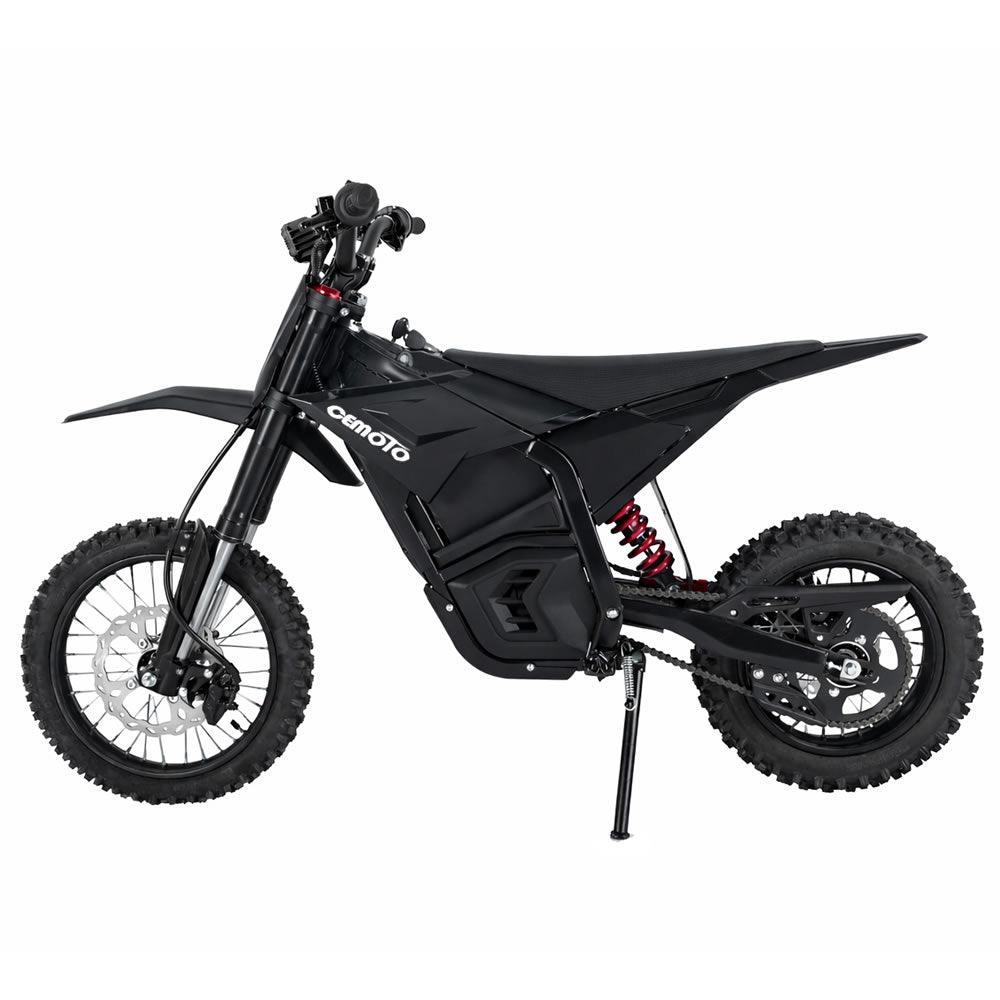
The linked product record also has a naming conflict: its page title says CEMOTO S11, while the page content and handle use S11MAX. That S11/S11MAX listing contains both a 35 km range field and a separate 45–50 km theoretical-endurance field, so confirm the model and specification before using either figure.
Choose a shorter route or usable charging point when the scooter fits structurally but the listing cannot establish comparable test conditions. If no candidate has both a clear payload fit and range evidence that matches the trip, revise the route or continue shopping rather than treating the largest advertised number as the answer.
Frequently Asked Questions
These questions address the parts of a loaded-trip decision that are easiest to misread.
How much does rider weight affect electric scooter range?
Rider weight is part of the total moving load, and its effect depends on the scooter and the conditions used for comparison. No universal percentage is supported. Match your complete loaded route with the closest available test conditions.
Does carrying cargo reduce electric scooter range?
Cargo becomes part of the combined rider-and-cargo load. Count a backpack, work gear, groceries, and other carried items, stay within the manufacturer's stated payload limit, and compare the route with the test load and conditions rather than assuming a fixed reduction.
Why can loaded range be lower than advertised?
A maximum claim may describe a different load, route, speed, terrain, temperature, or ride mode from your trip. When those conditions are missing or mismatched, the figure is an uncertain reference rather than a guarantee for a loaded route.
What should I do if a scooter listing does not show loaded-range test conditions?
Ask for the payload definition, battery information, test load, speed, terrain, weather, ride mode, and any documented loaded result. If the seller cannot provide a useful comparison, use a shorter route or usable charging point, or choose another candidate.
