

Store a Folding E-Bike Without Damaging the Hinge or Cables


For folding e-bike storage, use a stable, supported position, protect hinge and cables, follow the model manual for battery care, and inspect before riding.
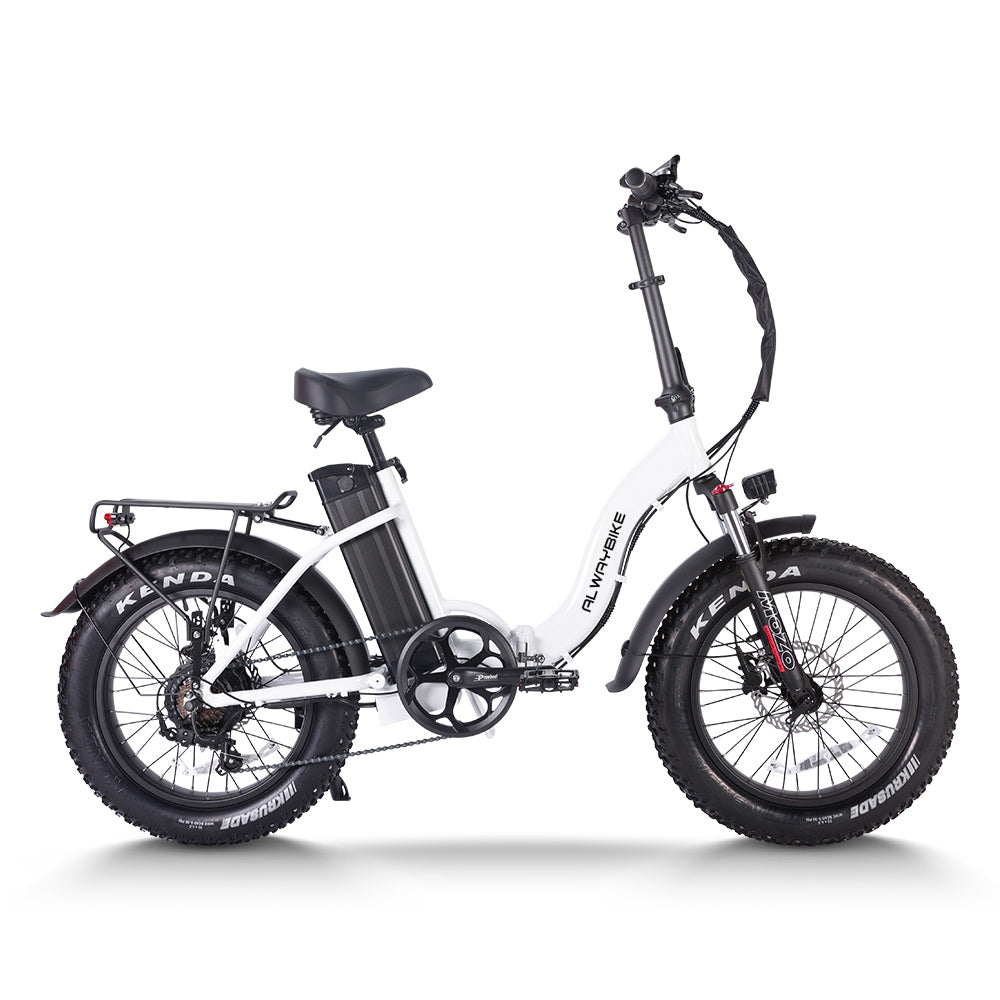
The right starting point for folding e-bike storage is a dry, stable, supported position with clearance around the hinge, latch, cables, controls, and battery. Choose a folded or unfolded setup based on which position stays steady without putting pressure on those parts. Vertical storage is conditional: use it only when the specific bike’s design and support points keep it stable and leave the folding interface unloaded. Use the model manual for exact folding, latch, battery, charging, and restart procedures.

Choose the Stable Storage Position That Fits Your Space
Choose stability and clearance before compactness. A folded position works when the bike rests securely on intended frame or tire contact points and vulnerable parts are not pressed against a wall, floor, furniture, or other equipment. An unfolded position is better when folding creates an awkward bend, uneven support, or an unstable footprint.
Vertical storage may work in a small apartment, office, garage, or vehicle, but it is not automatically suitable for every foldable electric bike. Use it only when the specific design and support points prevent tipping and keep the hinge, latch, cables, controls, and battery free from pressure. Do not assume that a hook, rack, stand, or wall position is approved for your model.

| Storage position | Choose it when | Main condition |
|---|---|---|
| Folded | The bike remains steady on intended contact points | Keep the hinge, latch, controls, cables, and battery clear |
| Unfolded | Folding would create uneven support or awkward cable bends | Leave enough room for the frame, controls, and wheels |
| Vertical | The model’s design and support points keep it stable | Use only when tipping and interface pressure are controlled; follow the manual |
For everyday folding e-bike storage, use a position you can repeat without wedging the bike into a narrow gap. If no folded, unfolded, or vertical arrangement remains stable and clear, choose another location. Readers comparing compact-storage options can browse foldable e-bikes, but the collection does not establish storage compatibility for a particular model.
Fold and Set Down the Bike Without Pinching Cables
Before folding, clear the bike’s path and make sure no cable, control, loose accessory, or other part can get caught between the frame sections. Use the folding path shown for your model and apply only steady pressure along that intended movement. Resistance is a stop signal, not a reason to force the frame or latch.
As the frame sections move together, guide cable loops and controls so they remain naturally routed. Avoid sharp bends, twists, pinches, rubbing, or sections pulled tight against the frame. Engage the latch only as the model manual directs. Never use the latch to pull misaligned sections together, and do not leave a partly folded bike leaning on the folding interface.
Set the bike down on stable frame or tire contact points, with the hinge, latch, controls, and wiring visible and free from pressure. Leave clearance from walls and furniture so the bike cannot be pushed sideways into the folding hardware. Exact folding and latch behavior is model-specific, so check the CEMOTO User Manual rather than copying a routine from another bike.
Keep the Storage Area Dry and Temperature-Aware
Store the bike in a dry, ventilated location away from standing water, persistent condensation, and direct heat. The area should also leave enough clearance so stacked objects, furniture, or vehicle fixtures cannot press against the folded frame, hinge, latch, controls, or cable runs.
After rain, washing, or a damp vehicle trip, wipe away accessible moisture and let the bike dry before folding it tightly or placing it in a confined area. Pay particular attention to visible moisture near electrical connections. If moisture remains there, do not charge or ride until the model’s instructions address the condition.
Unusual heat or cold also changes what you should do next. Do not rely on a universal temperature limit or drying time. After storage in a very hot or cold location, use the model manual to determine the conditions for charging or riding. These precautions make storing a folding e-bike a repeatable care routine rather than a rushed compact-storage step.
Folding E-Bike Storage: Handle the Battery Based on the Model Manual and Storage Duration
There is no universal rule to remove the battery when storing a folding e-bike. The model manual determines whether the battery stays installed, how it is secured, and what changes between brief and extended storage. Folding the bike does not, by itself, make battery removal necessary or safer.
If removal is permitted or required, support the battery during removal, keep it dry, protect it from impact, and store it only as the manufacturer directs. Do not improvise a charge level, temperature range, charging schedule, or storage duration based on another e-bike model.
Before charging or reinstalling the battery, inspect the battery and connector area for moisture, damage, and debris. Confirm that the battery is seated and secured according to the model instructions. If the manual does not resolve the situation, check battery support guidance rather than guessing. Do not charge or reinstall a battery or connector that is wet or damaged until the model instructions or qualified service determine the next step.
Lift and Move the Bike From Supported Frame Areas
Before lifting, secure the folding latch as directed and stabilize loose sections. Clear the route through doorways, stairs, and the vehicle, then choose a grip on supported frame areas. Do not use the hinge, latch, handlebars, display, brake levers, or cable housing as carrying points.
Keep folded sections together while moving so the bike does not swing and load the folding joint. If the bike is awkward to control or the route is difficult to navigate, use a second person or suitable support instead of twisting, dragging the bike by its controls, or carrying it by a cable loop.
Move slowly and set the bike down on stable frame or tire contact points. Confirm that it cannot roll or tip before releasing your grip. If you cannot handle the bike securely on the available route, change the route or get assistance. The grip and route should keep the hinge, latch, controls, and cables from becoming carrying points.
Run One Pre-Ride Storage-Reset Check
After storage or transport, use this conservative general sequence before riding. The model manual controls any additional model-specific inspection or service requirements.
- Inspect the folding interface. Look at the frame, hinge area, latch, and visible fasteners. Stop if you see damage, unusual movement, or anything that prevents normal unfolding.
- Unfold as directed. Confirm that the hinge and latch are fully engaged according to the model instructions. Do not ride with incomplete engagement.
- Check cable routing. Look for pinches, sharp bends, rubbing, or pulled-tight sections around the folding interface and controls.
- Check the wheels and tires. Look for obvious damage or loss of pressure, then confirm that the wheels are secure.
- Check the controls. Confirm that the handlebars, seat, pedals, brakes, and other controls are secure and work normally.
- Confirm battery security. If the battery was removed, reinstall it as directed and check that the connection is dry, undamaged, and secure.
- Make the ride-or-no-ride decision. Power on only after the mechanical and electrical checks pass. Do not ride with a damaged or incompletely engaged hinge or latch, a pinched or taut cable, a loose control, a wet or damaged battery connection, or another failed mechanical or functional check. Correct the issue according to the manual or have it assessed by qualified service first.
Frequently Asked Questions
These answers cover common storage choices while leaving model-specific procedures to the manufacturer’s instructions.
How should I store a folding e-bike?
Use a dry, stable, supported position with clearance around the folding interface, controls, cables, and battery. Fold it only along the model’s intended path, and choose an unfolded position when folding would make the bike unstable or create pressure.
Can I store a folding e-bike vertically?
Only when the specific bike’s design and support points keep it stable and clear of pressure. If the bike can tip or the position loads the hinge, latch, cables, or controls, use a supported folded or unfolded arrangement instead.
Should I remove the battery when storing a folding e-bike?
Not automatically. Battery removal depends on the model manual and the storage situation, including whether the storage period or exposure conditions require a different procedure. Do not apply another e-bike’s rule.
How do I check a folding e-bike after storage?
Do not ride if the hinge or latch is incomplete, a cable is pinched or taut, a control is loose, or the battery connection is wet or damaged. Correct the issue according to the manual or have it assessed by qualified service before riding.
