

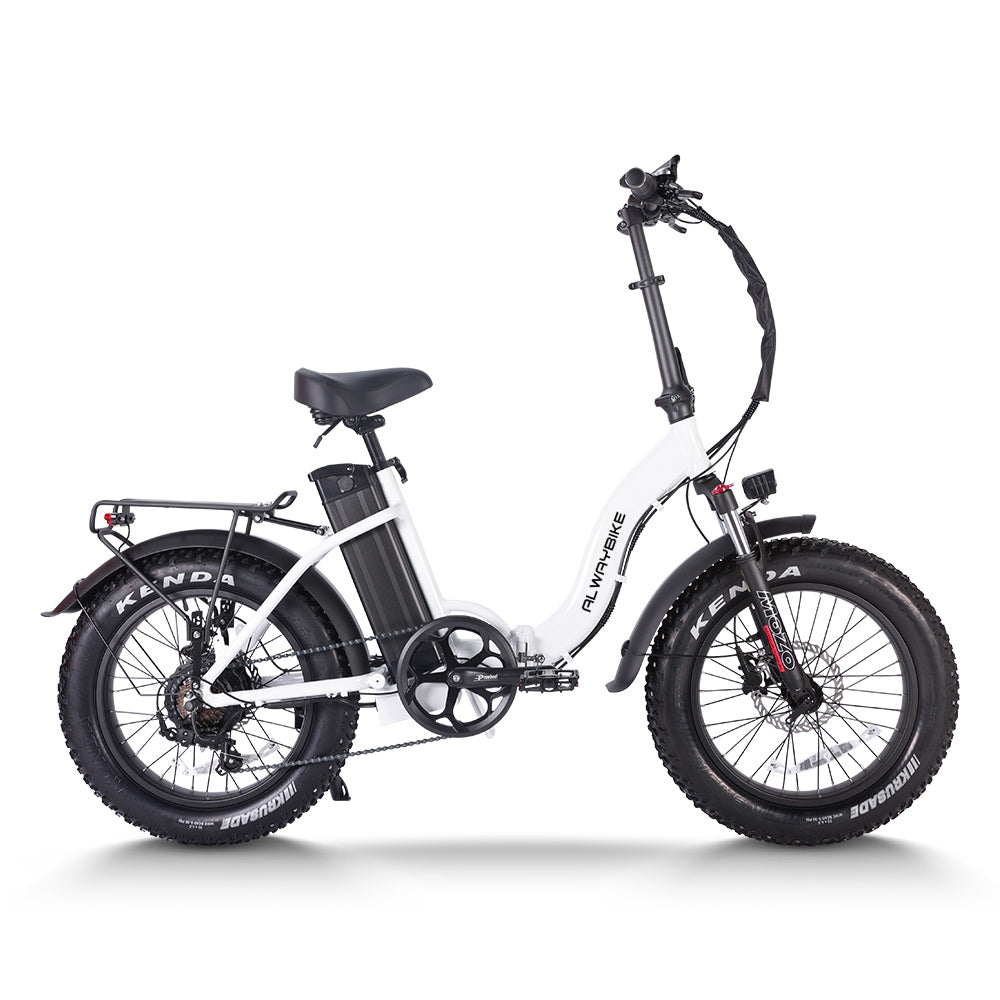
Folding E-Bike Weight: Separate Carrying, Riding, and Storage

A practical buying guide to payload, lifting, folded dimensions, car-trunk clearance, and storage checks for choosing a folding e-bike that fits your routine.
The folding electric bike weight is only one part of choosing the right bike. Before you buy, check four things: the rider-and-cargo payload for riding, the complete weight you will lift, the folded dimensions for vehicle loading, and the space needed for storage. The right choice is the format that handles your hardest recurring task—not simply the model with the lowest listed weight.
Measure the Four Weight-and-Fit Questions Before You Buy
Start with one worksheet for the exact candidate configuration, the spaces it must fit, and the tasks it must handle. Mark each row Pass, Borderline, Fail, or Unresolved. An unknown specification is not a pass.
| Check | Your measurement or task | Exact candidate specification | Result |
|---|---|---|---|
| Rider-and-cargo payload | Rider weight plus every planned load, including cargo equipment when applicable | Manufacturer's stated rider-and-cargo payload or gross vehicle limit | Pass, Borderline, Fail, or Unresolved |
| Complete handling configuration | Battery, pedals, rack, fenders, bags, and other equipment you will lift | Complete ready-to-use weight, with included and excluded equipment confirmed | Pass, Borderline, Fail, or Unresolved |
| Vehicle clearance | Narrowest trunk, hatch, or door opening; loading height; usable depth; turning room | Folded length, width, and height for the exact configuration | Pass, Borderline, Fail, or Unresolved |
| Storage clearance | Doorway, floor or shelf footprint, ceiling clearance, and room to move or secure the bike | Folded dimensions plus any storage hardware dimensions and load requirements | Pass, Borderline, Fail, or Unresolved |
Use the exact configuration you will handle. A manufacturer may list the battery, pedals, rack, fenders, or other equipment separately, so confirm what the published weight and dimensions include. Record the narrowest opening and hardest obstacle instead of relying on a large room or a vehicle's cargo-volume figure.
This worksheet keeps folding electric bike weight separate from payload and folded fit. It also shows which unresolved detail you need to confirm before comparing models.
Confirm Rider-and-Cargo Payload Before Riding
For riding, compare your intended rider-and-cargo total with the exact manufacturer's stated payload or applicable gross vehicle limit. Add the rider and every load you will carry, including a rack, basket, bag, or other cargo equipment when the manufacturer counts it toward the limit.
Payload is not the same as bike weight. Bike weight is the mass you may need to lift and carry. Payload is the riding-load limit. A lighter bike does not mean you can carry an unsupported load.
Check the exact model's definition before relying on a number. Product titles and general adult-use wording do not establish a supported payload, and an accessory may change the load assessment. If your rider-and-cargo total exceeds the published limit, stop comparing that setup. Choose a model or configuration that supports the load instead of assuming a lower bike weight makes up for the excess.
Test Lifting and Carrying on the Actual Route
A practical folding e-bike weight is one you can manage repeatedly on your real route while still meeting payload and clearance requirements. Judge the complete configuration you will handle—not a battery-removed or accessory-free figure unless that is genuinely how you will move the bike.
Map the route from parking, transit, or the trailhead to the final storage point. Identify the highest lift, longest uninterrupted carry, and hardest transition. This could be a floor lift, a high trunk lip, stairs, a curb, a narrow doorway, or the move from the vehicle to storage. Include grip points, balance, loading height, and how often you will repeat the task.
Assign a routine verdict:
- Manageable: You can lift, carry, and place the complete configuration along the route at the expected frequency, and no single difficult step makes the trip impractical.
- Borderline: One step, such as a high lift or repeated stairs, may make regular use impractical. Resolve the missing configuration detail and test that step before buying.
- Not practical: The recurring lift, carry, or loading task does not work for your routine. Compare a lighter folding design or a format that reduces repeated lifting.
A compact folding design is not automatically easy to carry. If the real route fails, do not choose based on the folded label alone.
Verify Folded Fit for Vehicle Loading and Storage
Folded dimensions answer a different question from weight: whether the bike can pass through an opening and fit in its final space. Check the vehicle path and storage path separately, because a bike can pass one and fail the other.
Check Vehicle Opening and Loading Clearance
Measure the narrowest trunk, hatch, or door opening—not just the vehicle's advertised cargo volume. Compare that opening with the folded length, width, and height for the exact configuration. Also check loading height, usable cargo depth, the angle needed to pass through, and room to turn or place the bike after it enters.
A folded package may fit the cargo area on paper but still fail at the opening or during the final rotation. Confirm the path before buying. For more ideas about handling a folded bike in limited living spaces, see these folded e-bike storage ideas, but treat any storage setup as a separate measurement task.
Check Storage Footprint and Handling Room
Measure the storage doorway, floor or shelf footprint, ceiling clearance, and room to fold, unfold, move, and secure the bike. Include the space around the bike so the final placement is usable, not merely dimensionally possible.
If you plan to use a hook, rack, shelf, or other storage hardware, confirm its dimensions and load requirements separately. Do not assume the hardware fits or supports the setup without those details. If the folded dimensions pass but lifting or maneuvering fails, the result is not practical for that storage location.
Choose the Bike Format by the Hardest Recurring Task
Choose the format that removes the first recurring constraint in your completed worksheet:
- Choose a lighter folding e-bike when the intended rider-and-cargo load is within the exact published limit and the complete configuration passes the handling, vehicle-opening, and storage checks. Verify every row against the candidate's current specifications before adding it to your cart.
- Choose another folding model when folding is essential for transport or storage but the candidate fails a payload, lifting, folded-dimension, or clearance requirement. Compare the missing specification and repeat the same worksheet rather than accepting a partial fit.
- Choose a full-size e-bike when your routine does not require folding and repeated lifting or folded-storage compromises are the limiting task. The goal is to remove the handling constraint, not to chase a universal lightweight number.
If folding remains important, you can compare foldable e-bikes after recording the exact payload, handling weight, folded dimensions, and available clearances. The collection is a navigation option, not proof that every model passes your worksheet.
FAQs
How Much Does a Folding E-Bike Weigh?
There is no universal weight or supported range established here for every folding e-bike. For a specific candidate, record the manufacturer's complete ready-to-handle weight and confirm whether the battery, pedals, rack, fenders, and other planned equipment are included. If the listing separates those items, add only the equipment you will actually handle after confirming what the listed bike weight already includes. Do not use rider-and-cargo weight as a substitute for bike weight. If you cannot confirm the complete configuration, mark the handling-weight row Unresolved and request the exact specification before comparing models.
What Is a Practical Folding E-Bike Weight for My Routine?
A practical weight is one you can repeatedly lift, carry, and load on your hardest real route while also meeting the payload and folded-fit requirements. There is no universal ideal weight. Test the highest lift, longest carry, and most frequent handling step before choosing.
Can a Folding E-Bike Fit in a Car Trunk?
Only a measurement comparison can answer that. Check the folded length, width, and height against the narrowest trunk or hatch opening, loading height, usable cargo space, and room to maneuver. Bike weight and the fact that the model folds do not establish trunk fit.
Is a Folding E-Bike's Weight Capacity the Same as Its Bike Weight?
No. Bike weight is the mass you may need to lift, while weight capacity is the manufacturer's rider-and-cargo limit for riding. Record both figures separately, add your intended cargo to the rider load, and reject any setup above the stated payload.
