

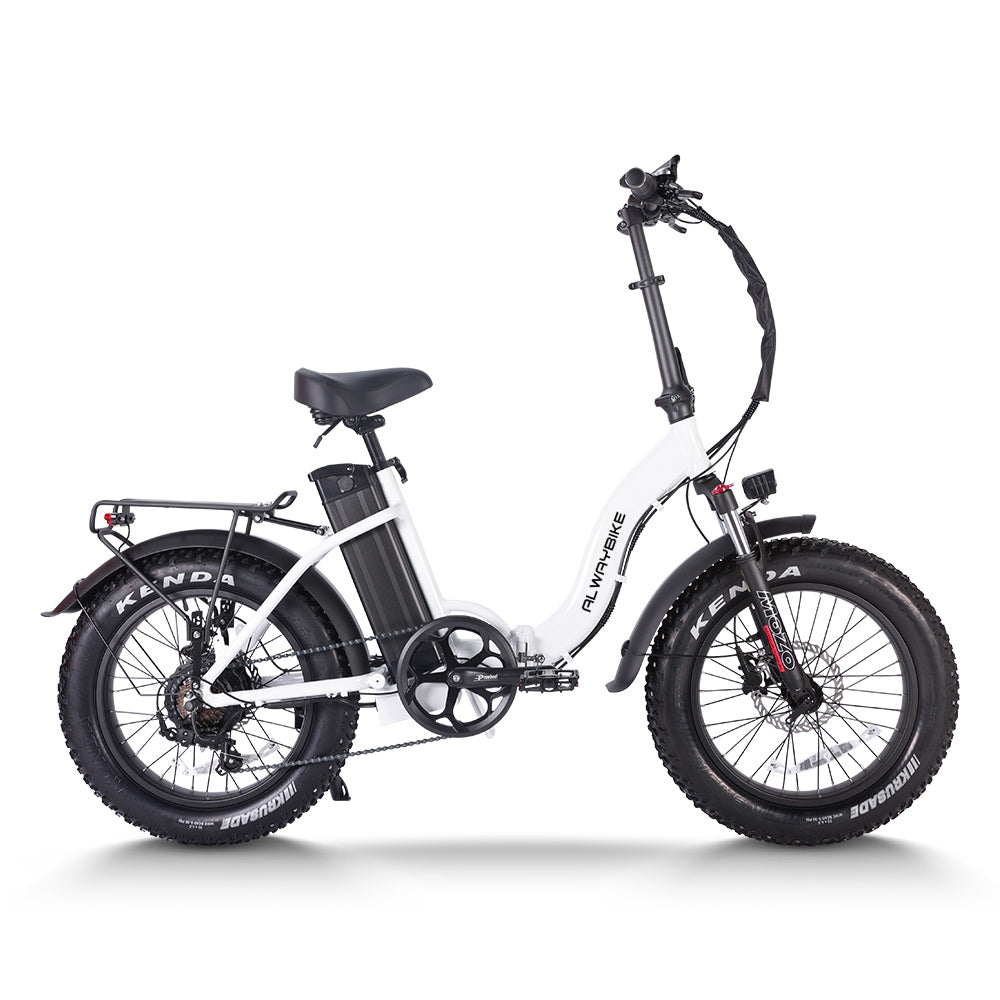
Folding E-Bike Wheel Size: Compactness vs. Ride Comfort


Smaller wheels usually make compactness and frequent carrying easier, while larger wheels tend to deliver a steadier, more forgiving ride over uneven pavement. The right folding electric bike depends on your tightest storage opening, carrying routine, usual streets, and trip length—not wheel diameter alone.
Smaller wheels generally favor compactness and frequent carrying; larger wheels generally favor comfort, bump response, and steadier handling. That is a useful starting point for a folding electric bike, but it is not a storage guarantee or a complete prediction of ride quality. Before you choose, measure the space where the bike will go, consider how often you will lift it, and compare the current product-page dimensions, weight, tire details, and comfort equipment.

Start With the Space and Carrying Routine
A smaller wheel can support a compact folding design, but only the bike's actual folded length, width, and height can show whether it fits your apartment, closet, or trunk. Wheel diameter is a starting point for comparison—not a substitute for the folded package and carrying weight.
Start with the tightest part of your routine. Measure the narrowest doorway, closet opening, stair landing, elevator entrance, or trunk opening, then measure the usable space beyond it. For a car, include the opening height and the interior length after accounting for seats, cargo covers, and the loading angle. For an apartment or closet, measure the space where the folded bike will actually sit, not just the doorway.

Compare your measurements with all three folded dimensions listed on the current product page:
- Folded length: the longest direction when the bike is collapsed.
- Folded width: often affected by the handlebar, pedals, hinges, racks, or fenders.
- Folded height: important for trunk openings, shelves, and upright storage.
Leave enough clearance to load and remove the bike. A folded measurement that exactly matches an opening may still be impractical if you cannot angle the bike through it or keep your fingers clear of the frame and hinges.
Weight is a separate portability question. Check the complete-bike weight, battery location, available carrying points, hinge layout, handlebar position, and whether racks or other hardware remain attached when folded. A compact folding electric bike may still be inconvenient to lift or difficult to grip. For more storage ideas, see our guide to apartment e-bike storage, but use the current product listing—not a general storage article—to verify fit.
Compare the Ride Feel on Your Usual Streets
Larger wheels generally roll over small pavement irregularities more forgivingly, while smaller wheels can feel more maneuverable and support a compact design. The difference is conditional: tire construction and pressure, steering geometry, frame design, suspension, rider fit, and seat position can all change how the same nominal wheel size feels.
| Ride factor | Smaller-wheel tendency | Larger-wheel tendency |
|---|---|---|
| Bump response | Can react more noticeably to sharp edges | Often rolls over small irregularities more smoothly |
| Steering feel | Can feel quick and maneuverable | Often feels steadier through longer, faster lines |
| Low-speed handling | Compact and responsive, depending on geometry | May feel planted, though frame design still matters |
| Uneven pavement | Places more importance on tire volume and pressure | Usually gives the wheel more ability to bridge small gaps |
| Rider effort | May require more careful line choice over repeated bumps | Can reduce how abruptly small bumps interrupt the ride |
This is a tendency comparison, not a promise that every 20-inch folding e-bike is more comfortable or stable than every 16-inch model. Research on small-wheel bicycles supports the narrower point that handling depends heavily on front-steering geometry and frame design, rather than wheel diameter alone, as described in small-wheel bicycle handling research. A smaller-wheel design can be well controlled when its geometry is properly matched; a larger-wheel design can still feel harsh or awkward if its tires, fit, or frame setup do not suit the rider.
Other technical work provides context for a conditional stability tendency with larger wheels, but it does not establish a universal 16-inch-versus-20-inch result for folding e-bikes. Bicycle small-wheel dynamics research is best read as design context, not as an exact production-bike test. Research on small-wheel bicycles and e-scooters likewise shows why the complete design matters more than wheel diameter alone (small-wheel rideability study).
Tires are especially important to the comfort comparison. Width, casing, construction, and pressure affect how much of a crack or curb edge reaches the rider. A non-folding bicycle tire comparison also treats setup as a comfort variable rather than assigning a fixed advantage to one wheel size (tire setup comfort comparison). Suspension, if included, may change the result, but it does not eliminate the need to check tire setup and frame fit. If your route includes repeated cracks, rough pavement, or longer rides, give the larger-wheel tendency more weight—but compare the complete specification rather than relying on the wheel label.
Match Folding Electric Bike Wheel Size to the Way You Will Ride
The basic folding e-bike wheel-size comparison is a matter of priorities: lean toward smaller wheels when compactness and carrying matter most, and give larger wheels more weight when pavement quality, steadiness, and ride duration matter most. Each choice involves a tradeoff, so the better fit can change when your storage space or route changes.
- Maximum compactness and frequent carrying: Start with the smaller-wheel direction if you fold the bike for transit transfers, carry it up stairs, or store it behind furniture several times a week. Expect rough pavement to feel more noticeable, and remember that the folded package still needs to be measured. If the bike is too heavy or awkward to grip, the compactness advantage may not matter in practice.
- Mixed commuting with tight storage: A smaller wheel may be the better compromise when the bike must fit a closet or trunk but also handle short urban trips. Give up some potential bump forgiveness in exchange for easier storage, then look for suitable tires, a manageable complete-bike weight, and a riding position that fits you.
- Rougher urban pavement: Give larger wheels more weight when your regular route includes pothole edges, cracked pavement, or frequent surface changes. The tradeoff is usually a potentially larger folded package, so compare the three folded dimensions before deciding that the bike works for your storage space.
- Longer, comfort-focused rides: Lean toward larger wheels when you ride for longer periods and value steadier tracking over the smallest possible package. This does not guarantee comfort; tire pressure, frame geometry, suspension, saddle position, and fit can change the result. If storage or carrying becomes a daily obstacle, a smaller wheel may still be the more usable choice.
After identifying your priority, you can compare foldable e-bikes using the specifications that matter for your routine. Do not treat the collection category or wheel-size label as proof that a particular model fits your trunk or delivers a specific level of comfort.
Verify the Product Page Before Choosing a Model
A model-level recommendation is justified only when the current listing provides the wheel size, folded dimensions, complete-bike weight, carrying details, and relevant comfort specifications. If any measurement that controls your decision is missing, treat compactness and portability as unverified rather than inferring them from a 16-inch or 20-inch label.
- Confirm the actual wheel and tire details. Check the wheel diameter and tire dimensions, including width, rather than relying only on marketing language. Tire volume can affect bump response, and the wheel label may not tell you how the bike is equipped.
- Record all three folded dimensions. Write down the folded length, width, and height from the exact current listing. Compare each measurement with the narrowest opening and usable storage area you measured, including clearance for loading and folding hardware.
- Check complete-bike weight and carrying configuration. Confirm whether the stated weight includes the battery and what remains attached when folded. Look for carrying points, battery placement, hinge layout, pedal position, and handlebar position.
- Review comfort-related equipment and fit information. Note tire construction, the stated pressure range when available, suspension, rack or fender clearance, frame dimensions, rider-height range, and any rider or cargo limits. These details can change whether a wheel-size tendency is useful for your route.
- Compare the specification with your real route and storage path. If folded dimensions, wheel size, or complete-bike weight are absent, ask the seller how and where the measurements were taken. Until the answer is documented for the exact configuration, do not make a model-level recommendation. Listings and configurations can change, so recheck the page before ordering.
The practical rule is simple: use wheel size to choose a direction, then use verified product facts to approve a model. A 16-inch wheel does not guarantee the smallest folded package, and a 20-inch wheel does not guarantee a smoother ride. Once you have confirmed your storage limits and riding priority, compare current listings with this checklist and the foldable e-bike collection.
FAQs
These questions focus on measurements, fit, and missing listing details that can change your choice.
How do I measure a folded e-bike for my car trunk?
Measure the trunk opening and usable interior, then compare the bike's length, width, and height with its folded dimensions. Leave room for the loading angle and your hands.
Does a 20-inch folding e-bike always ride more comfortably than a 16-inch model?
No. Tire setup, suspension, geometry, fit, and road surface can outweigh the general larger-wheel tendency. Compare the complete specification.
Are 16-inch folding e-bike wheels suitable for adults?
They can be, but check the rider-height range, adjustments, rider and cargo limits, tire volume, and intended surface. Wheel diameter alone does not establish adult fit.
What if the listing gives wheel size but not folded dimensions?
Treat compactness as unverified. Request all three folded dimensions and the complete-bike weight for the exact configuration; if the seller cannot provide them, do not make a model-level choice.
