

Lightweight E-Bikes: Choose Between Easy Carrying and Longer Range

Compare carrying limits, route demands, battery evidence, storage, stairs, rack transport, charging access, and product-page details before choosing a lightweight e-bike.
If you often lift an e-bike, set your personal full-carry limit first. If you take longer trips or cannot count on charging, define your route and charging needs first. Let the stricter requirement eliminate options before you compare secondary benefits.
A lightweight e-bike is not automatically the best choice. Compare the bike's complete weight, battery details, wheel and frame format, storage path, transport needs, and the conditions behind its stated range. The goal is a bike you can control wherever you need to carry it and use on the routes you actually ride.
Lightweight E-Bike or Longer Range: Which Should You Choose?
Choose carrying ease first if you regularly use stairs, move the bike through tight spaces, or load it onto a vehicle. Choose documented range first if your trips are longer, charging access is limited, or hills, cargo, weather, and speed make the route demanding. Use the harder requirement as your first rejection rule.
Before you shop, measure the entire carrying path. Include stairs, turns, doorways, storage movement, and vehicle loading. Set the maximum full-carry weight you can control along that path. Do not use a universal weight cutoff—the right limit depends on your strength, route, and available handling space.
| Situation | Prioritize first | Product details to verify |
|---|---|---|
| Frequent stairs | Carrying ease and a personal full-carry limit | Complete listed weight, included components, balance, hand positions, and control through turns and doorways |
| Occasional vehicle or rack transport | Actual transport weight and loading fit | Bike weight in the transport setup, rack rating, support method, wheel and tire fit, clearance, and securing requirements |
| Limited charging or longer routes | Documented route range and battery capacity | Battery capacity, stated range conditions, terrain, load, speed, assist use, weather, and charging method |
| Small-space storage | Physical fit, then carrying ease | Folded and unfolded dimensions, handlebar width, frame shape, folded handling, and charging location |
Use this screen as a decision prompt, not a measured product score. Carry-first means your carrying limit comes before range comparison. Range-first means your route and charging needs come first. Fit verification applies in every scenario.
The table does not identify one universally lightest model. It helps you decide which failure would be hardest to live with. A bike that passes the carrying screen but cannot cover your route is not a practical choice. A bike with suitable documented range that you cannot safely control on stairs fails just as clearly.
Match Bike Format to Stairs, Racks, and Storage
For stairs, choose a setup you can control through the entire path—not simply the model with the lightest label. Check where you will place your hands, how you will keep the bike balanced, how you will turn on landings, how you will pass through doorways, and where you will set it down. If you cannot control the bike through the complete stair or loading path, choose a more manageable format instead of compensating with a larger battery.
Vehicle and rack transport require a separate fit test. Verify the bike's actual transport weight, including any configuration you will load. Check the rack's load rating, how the bike is supported, clearance around the vehicle, wheel and tire fit, possible frame contact, and how the bike will be secured. Do not load an e-bike onto a vehicle rack until the rack and mounting system are rated for that bike's actual transport weight and design.
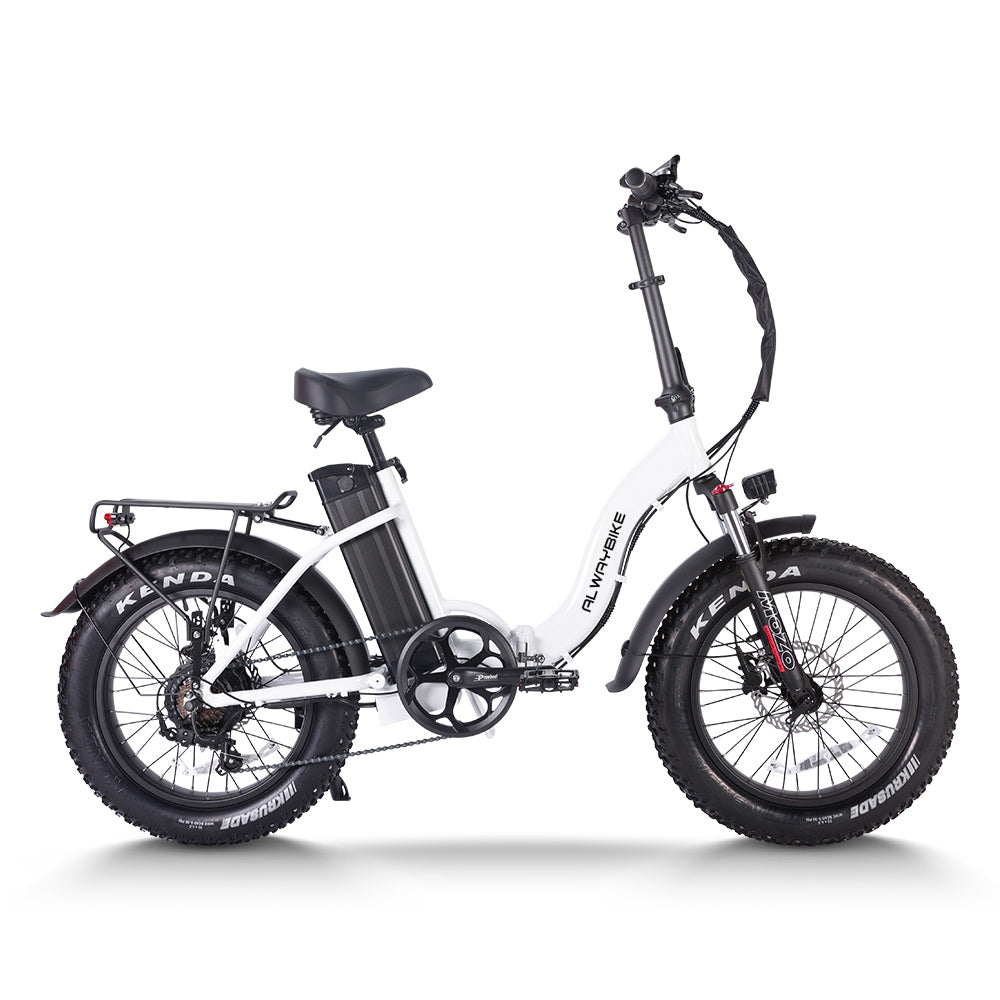
A folding format can help when compact storage or loading space is the main problem. It does not automatically mean easier carrying, better balance, or longer range. Compare folded weight, folded dimensions, balance, handlebar width, and the effort needed to move the folded bike. Then confirm that the unfolded format still suits your route.
For a small apartment, garage, or workplace, compare both the folded and unfolded footprint. Measure the doorway, storage area, and charging location. A bike that fits in a closet but cannot be moved comfortably from the door to that closet has not solved the entire storage problem. When compact storage is the main need, you can review foldable options, but check the individual product details to confirm fit.
Keep this physical-handling decision separate from range planning. Wheel format, frame geometry, and folding may improve storage or transport convenience, but none of these labels proves that the battery will cover your route.
Plan Range Around Your Actual Route
Set a route-specific range requirement before accepting a heavier bike for a larger battery or rejecting one because of its weight. Record the one-way distance, repeat-trip pattern, terrain or grade, rider and cargo load, expected speed, assist use, weather, and dependable charging access. Then compare those inputs with the product's battery details and the conditions behind its stated range.
A headline range figure is not a promise for every route. Range conditions vary with speed, acceleration, load, hills, and temperature, so your route conditions matter. This is general electric-vehicle guidance, not a product-specific e-bike test.
Battery capacity describes the stored energy available to the electric drive system. Compare the capacity, often listed in watt-hours, with the product's stated range and test conditions. Do not turn capacity into a universal miles-per-charge formula. Without product-specific assumptions about speed, assist, load, terrain, and temperature, that calculation would create false precision.
A lightweight e-bike with good range can be a sensible compromise when its documented battery setup and stated conditions cover your route requirement. If you have no dependable charging option and your route is sensitive to hills, load, weather, or assist level, favor a documented battery-capacity margin over the lowest possible bike weight.
You can estimate route-specific range as a planning step after checking the tool's inputs and assumptions. Treat the result as a planning aid, not product testing, a guarantee, or a substitute for the product page's specifications.
Verify the Product Page Before You Choose
Before adding a candidate to your cart, record its key details side by side. Reject it if it fails your personal carry limit, route requirement, or physical transport and storage fit. Consider only candidates that pass all three screens.
Record the complete listed weight and what that figure includes. If the seller provides the removable battery or accessory weight, record those separately. Then capture battery capacity, stated range conditions, charging method, charger information, and whether the battery is removable. These details let you compare the candidate with your route and charging plan without guessing.
Next, check the physical specifications. Record the wheel and frame format, folded and unfolded dimensions, payload, brakes, tires, intended riding environment, and any details that affect rack loading or storage. Verify the actual transport configuration rather than assuming that a removable battery resolves every loading issue.
Finally, review the purchase terms shown for US buyers: assembly requirements, delivery contents, returns, warranty, and replacement-battery availability. These terms do not make a bike lighter or extend its range, but they can change the practical purchase decision when a specification or support detail is unclear.
Use the format that passes your screens—not a generic label—to guide the next comparison. If your notes point to a commuter shape, you can compare commuter e-bikes. If several formats pass your carry, route, and fit screens, shop all electric bikes and verify each product page individually. We recommend using our collections as a starting point for comparison, not as proof that a particular bike meets your requirements.
FAQs
What Is the Lightest E-Bike?
There is no useful universal answer without comparable complete-weight definitions and a clear job for the bike to perform. Compare the verified full-bike weight with your personal carrying limit, storage path, transport task, battery needs, and route. The lightest e-bike for one rider may not be the best fit for another rider's range or handling requirements.
Are Lightweight E-Bikes Worth It?
They are worth prioritizing when frequent lifting, stairs, vehicle loading, or storage is the problem you cannot work around and the route requirement is still covered. A heavier option may be a better fit when longer trips, demanding terrain, or limited charging are harder to satisfy. Judge the handling benefit against the complete route and transport task.
Do Lightweight E-Bikes Have Less Range?
Not automatically. Weight alone does not determine range. Battery capacity, stated test conditions, speed, acceleration, load, terrain, temperature, and assist use all affect the comparison. Check those product and route details instead of assuming that a lighter e-bike must provide less range.
