

E-Bike Repair Cost vs. Replacement Cost: Build a Serviceability Budget


Use e-bike repair cost scenarios to compare labor, battery exposure, downtime, support, and useful life before choosing repair or replacement.
The most useful way to compare e-bike repair cost with replacement cost is to model two complete scenarios over the same ownership period. Enter your actual parts, diagnosis, labor, battery exposure, downtime, support uncertainty, and expected usable life. Don’t compare a repair invoice with only a new bike’s sticker price. The result should point to one of three actions: repair now, plan for replacement, or get more diagnosis before spending.

Build the e-bike repair cost versus replacement worksheet
Start by choosing one ownership period—the time you expect to keep using the current bike or the replacement. Then enter the repair-now and replace-now assumptions side by side. Add a third repair-plus-future-battery scenario only when the bike’s condition, service history, charging behavior, or diagnosis makes that event plausible.
| Planning input | Repair scenario | Replacement scenario | Reader notes |
|---|---|---|---|
| Parts or bike price | Compatible repair part: $___ | Actual replacement bike: $___ | Use a quote or product-specific assumption |
| Diagnostics, labor, setup, or assembly | Diagnostics $; labor $ | Setup or assembly $___ | Mark repair work as fixed or conditional |
| Consumables, accessories, or transition | Consumables/follow-up $___ | Required accessories, shipping, taxes, disposal, resale, or transition: $___ | Count transferred accessories only if compatible |
| Battery exposure | Immediate or future battery scenario: $___ / unknown | Battery and charger assumptions: $___ / unknown | Add only when relevant; verify compatibility |
| Downtime consequence | ___ days, rides, trips, or alternate-transport measure | ___ days, rides, trips, or alternate-transport measure | Apply the same measure to both paths |
| Support and parts uncertainty | Verified / conditional / unknown | Verified / conditional / unknown | Record documentation, orderability, warranty, and service responsibility |
| Expected usable life | ___ over the chosen period | ___ over the chosen period | Keep uncertain life as an assumption, not a forecast |
Use separate totals for cash cost, downtime consequence, uncertainty, and expected usable life. A simple comparison formula is:

Repair scenario = parts + diagnostics + labor + consumables/follow-up + relevant battery event + transition costs
Replacement scenario = bike price + setup + required accessories + relevant shipping/taxes + transition costs
Review downtime and expected usable life separately instead of hiding them inside a made-up dollar value. If the repair scenario is incomplete, the right next step is more diagnosis—not a guessed average. There is no supported universal price or repair-to-replacement percentage that can decide this comparison for every bike.
Build a complete e-bike repair cost estimate
A repair quote becomes useful for comparing e-bike ownership cost for parts and labor only when it shows what is known, what is conditional, and what may come next. Record these fields before comparing the quote with a replacement:
- Failed component: Identify the suspected or confirmed battery, motor, controller, wiring, brake, drivetrain, charger, or other component. Keep “suspected” separate from “confirmed.”
- Compatible replacement part: Record the exact part information available for the specific bike, along with any compatibility condition.
- Diagnostics: Enter the shop’s diagnostic charge or your clearly labeled owner estimate separately from repair labor.
- Labor: Record shop labor as quoted. For owner-performed work, record time, tools, and the work you can safely perform instead of treating labor as free.
- Consumables and adjustments: Include required small materials, setup, adjustments, testing, and any follow-up work needed to return the bike to use.
- Estimate status: Mark the amount as fixed, conditional on diagnosis, or dependent on parts availability. A conditional estimate is not the same as a confirmed repair total.
Separate a one-time repair from recurring exposure. Replacing one confirmed component is a different planning case from repeated failures or a fault that remains unresolved after testing. Before approving or attempting work involving the battery, motor, wiring, or another component you cannot safely diagnose, confirm the fault and obtain a parts-and-labor estimate from a qualified repair shop.
Build a realistic replacement-cost scenario
A realistic replacement scenario includes more than the advertised bike price. Enter the actual purchase assumption for the bike you would select, then add the costs and time needed to make the transition usable.
- Add setup or assembly, required accessories, relevant shipping, and taxes when they apply to your estimate.
- Record disposal, resale, trade-in, or other transition assumptions. Don’t assign a value you haven’t established.
- Count an existing rack, lock, charger, or other accessory as transferable only when compatibility is confirmed. Put required replacements into the new-bike scenario.
- Record selection, ordering, delivery, assembly, and learning time without usable transportation when that matters to your commute or routine.
Use the same ownership period as the repair scenario. If the replacement is expected to remain useful for a different period, write down that difference as an assumption rather than treating “new” as an automatic lifetime advantage. For a recalled or damaged battery in the transition scenario, follow the manufacturer’s or CPSC’s instructions and confirm that your local household hazardous waste program accepts it before transport or disposal. Don’t assume a general retail battery-recycling box is suitable; CPSC disposal guidance is specific to that safety situation.
Test battery exposure against the bike’s remaining useful life
Battery condition and the useful life a repair is expected to buy deserve separate treatment because either can change the comparison even when the immediate repair quote stays the same.
Model a possible battery expense
Add a separate battery line when the bike’s condition, charging behavior, service history, or current diagnosis makes a future battery event plausible. Keep it conditional if timing or cost is unknown. This makes e-bike battery replacement cost visible without presenting a battery interval or price as a universal fact.
Before counting a battery or charger as a usable input, verify compatibility with the specific bike. Use an approved replacement battery pack and the manufacturer-supplied charger rather than an unverified substitute, as advised in CPSC battery charging guidance. Similarly named batteries, connectors, or chargers are not automatically interchangeable.
Keep the battery event separate from the immediate repair. Compare three states when relevant: repair now, repair plus a possible future battery event, and replacement now. Show whether the conditional event changes the result, and leave its timing or cost unknown when you cannot support a fixed assumption.
Estimate the useful life the repair buys
Write down the period over which the repaired bike is expected to remain useful, then identify other age-related work that could arise during that period. Use the current diagnosis, service history, battery behavior, and intended use as inputs. Don’t turn an uncertain lifespan into a guaranteed forecast.
Record the useful period you’re assuming for the replacement as well. If remaining life could change the result, keep the affected outcomes visible in the comparison instead of treating the repair invoice as the whole decision.
Account for downtime, support, and parts access
Downtime and support belong in the serviceability budget even when you leave them unpriced. Choose one measure that fits your situation, such as days without transportation, alternate-ride expense, missed work or errands, lost riding time, or an inconvenience you deliberately leave as a note. Apply it consistently to repair and replacement. This makes e-bike downtime cost a visible planning variable instead of an unsupported dollar estimate.
For each path, verify whether the needed part or service is:
- identifiable for the specific model;
- compatible with the bike and its other components;
- orderable through a usable channel;
- supported by clear documentation; and
- connected to a defined service responsibility, warranty path, or repair provider.
These checks may reduce uncertainty or repair friction, but they don’t prove lower total ownership cost, guaranteed availability, or shorter downtime. A modular e-bike total cost of ownership comparison still depends on actual parts, labor, battery, support, and usable-life assumptions.
For a prospective purchase, check certification information separately from compatibility. Ask what standard or testing claim is being made and who performed the testing. PeopleForBikes provides context on certification terminology and accredited laboratories in its certification testing guidance. Treat certification as a safety and verification input, not proof of lower ownership cost.
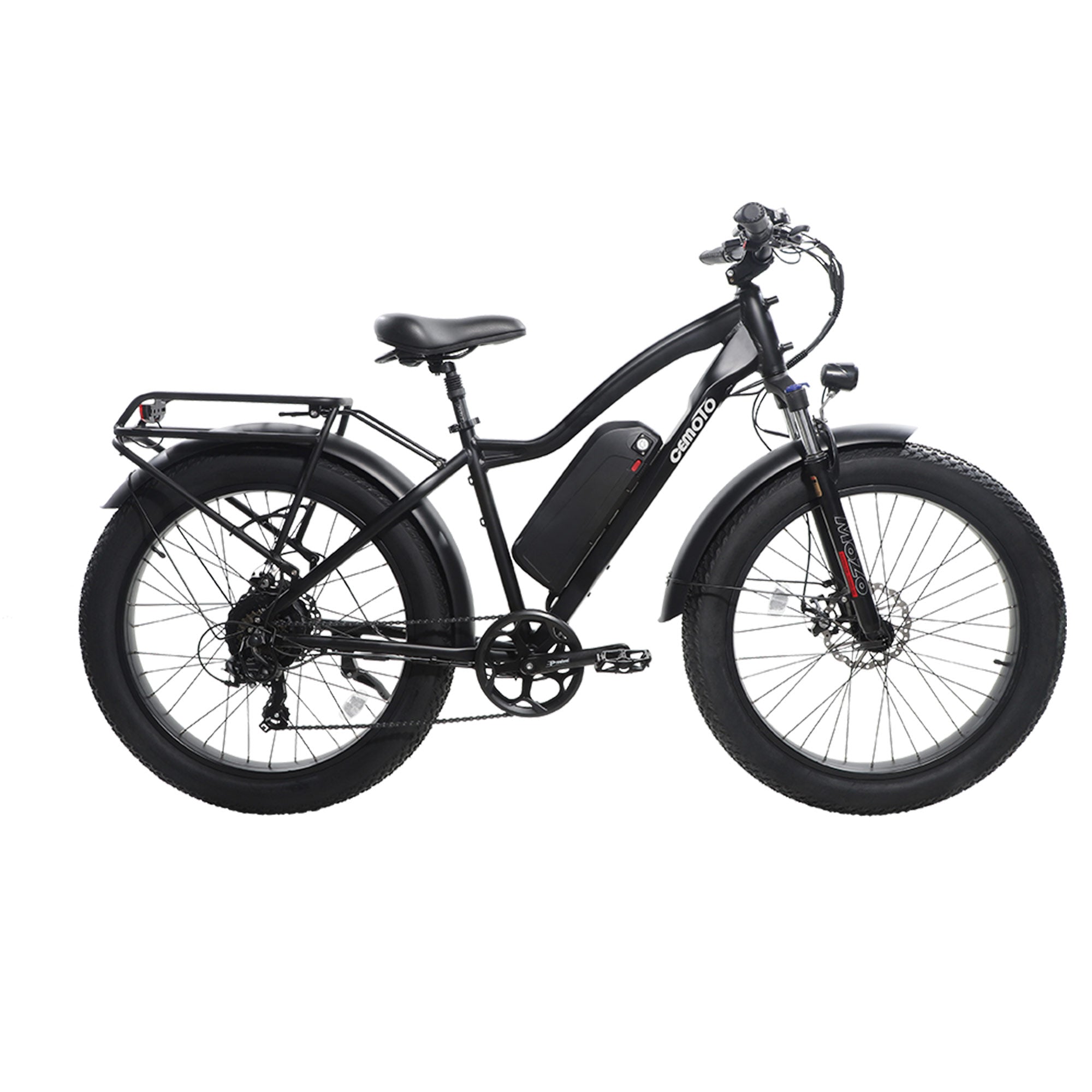
We offer replacement parts for certain Cemoto systems. Before treating that access as a serviceability advantage, verify fit, availability, documentation, warranty terms, and who performs the work for the specific model. You can use Cemoto replacement parts as a starting point for that model-specific investigation, and the right-to-repair guide for additional serviceability questions. The catalog itself isn’t proof of savings or future availability.
Use the completed budget to choose your next service step
Fill in the worksheet with the diagnosis, parts-and-labor estimate, battery scenario, expected usable life, downtime consequence, and replacement assumptions. Then identify the one unresolved input most likely to change the result.
- Proceed with repair when the complete repair path fits your budget and intended use, and the diagnosis and compatibility inputs are sufficiently supported.
- Plan for replacement when future exposure, expected usable life, transition requirements, or downtime no longer fit your needs under your stated assumptions.
- Obtain more diagnosis when the failed component, follow-up exposure, battery compatibility, or remaining life is still uncertain enough to change the choice.
For complex electrical work, get a qualified shop’s estimate before approving the repair and rerun the comparison with confirmed inputs. If you’re evaluating a future purchase, resolve the decisive input using model-specific documentation before lowering your uncertainty or downtime assumption. The best next step is the one supported by your completed scenarios, not a universal rule about repair versus replacement.
Frequently Asked Questions
These answers apply the same reader-input framework to common repair and ownership questions.
Is it cheaper to repair or replace an e-bike?
The lower total is the scenario whose complete inputs fit your stated ownership period and use. Compare both paths, then focus on the input most likely to change the result, such as battery exposure, remaining life, downtime, or diagnosis.
What should be included in e-bike ownership cost?
Include purchase or repair costs, parts, diagnostics, labor, consumables, setup, required accessories, battery exposure, downtime consequences, support and parts uncertainty, transition costs, and expected usable life.
How do parts and labor affect e-bike ownership cost?
Parts determine direct replacement and compatibility inputs, while diagnosis and labor determine cash and time inputs. Recording them separately keeps conditional quotes, owner work, and follow-up repairs visible.
How should I budget for an e-bike battery replacement?
Make battery replacement a separate scenario when the bike’s condition, charging behavior, service history, or diagnosis makes it plausible. Verify that the battery and supplied charger fit the specific bike before counting the scenario as usable.
